
HQIP-commissioned PICANet data reveals inequalities in children’s intensive care

11 Jul 2025

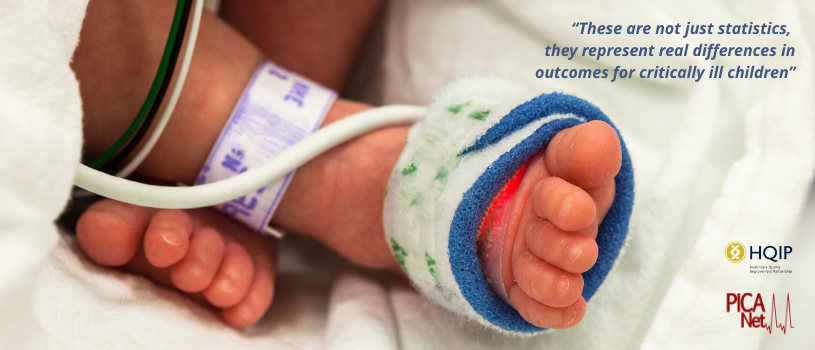
New research published in The Lancet Child & Adolescent Health has used data from the Paediatric Intensive Care Audit Network (PICANet), commissioned by HQIP, to highlight inequalities for children admitted to intensive care in the UK. It found that that children of minority ethnicities and those living in poverty were disproportionally affected following admission to paediatric intensive care units (PICUs).

Informed by 14 years of national data, the study found that these groups were more likely to die after admission. More specifically, it showed that children living in areas with higher poverty were more severely ill on arrival to intensive care, while those from non-White ethnic backgrounds were more likely to need to stay longer in intensive care and to be readmitted unexpectedly after discharge.

Children of minority ethnicities and those living in poverty were disproportionally affected following admission to paediatric intensive care

These findings underline an urgent need for targeted interventions in intensive care for children. By analysing this data, health care providers and policy makers can gain a deeper understanding of what is happening, and focus on improving the care provided to all children. As such, studies like these bring the importance of national clinical audit to the fore. Chris Gush, HQIP’s CEO adds: “Every child in intensive care represents a family in crisis, and this data shows that some face even greater challenges than others. National clinical audit helps us see where change is most needed, giving us the evidence to act with compassion and focus. It’s about making care fairer and outcomes better for every child, no matter their background.

Armed with this information, policymakers and healthcare leaders have the opportunity to improve access to healthcare, and deliver urgent and sustained action to improve care and reduce child deaths. This national-scale evidence is especially important, given that 4.5 million children are now growing up in poverty in the UK*. One of the study leads, Associate Professor Sarah Seaton, PICANet and the University of Leicester, expands on this point: “Since paediatric intensive care offers the highest level of support for the sickest children, we must act with urgency. These are not just statistics – they represent real differences in outcomes for critically ill children.

PICANet is a collaboration between the Universities of Leeds and Leicester, established to improve how we treat and care for children in critical care. It collects data from a range of paediatric critical care providers, auditing the quality of care delivered against relevant standards including those from the Paediatric Critical Care Society (PCCS). Its value to the healthcare community is far-reaching. While this study focused on UK-based PICU admissions from PICANet, the findings have international relevance – highlighting the need for health systems globally to consider the social context in which critically ill children present for care.

Read the paper in full

Hannah K Mitchell, Sarah E Seaton, Khurram Mustafa, Gareth A L Jones, Hannah Buckley, Peter Davis, Christopher Leahy, Richard G Feltbower, Padmanabhan Ramnarayan; Contribution of ethnicity and deprivation to paediatric critical care outcomes in the UK, 2008–21: a national retrospective cohort study, The Lancet, July 2025, https://www.thelancet.com/journals/lanchi/article/PIIS2352-4642(25)00156-7/fulltext.

Copyright: © 2025 The Author(s). Published by Elsevier Ltd. This is an Open Access article under the CC BY 4.0 license.

Further information

  • National paediatric critical care report (PICANet): PICANet’s 2024 State of the Nation report summarised paediatric critical care activity within designated Level 3 paediatric intensive care units (PICU) and Specialist Paediatric Critical Care Transport Services in the UK and Republic of Ireland between 2021 and 2023. It found that there were 18,498 admissions to PICU in 2023, averaging around 50 per day, with respiratory admissions being the most common primary diagnosis (making up just under 30% of all PICU admissions in 2023). Read in full: 2024 PICANet report.
  • Further information about PICANet: www.hqip.org.uk/a-z-of-nca/paediatric-intensive-care-audit-picanet (scroll to the bottom of the page for all PICANet reports).
  • PICANet is part of a wider programme of audits and outcome reviews (NCAPOP), commissioned by HQIP, on a range of clinical disciplines, from asthma to vascular care: All HQIP-commissioned reports.
New resources published July 2025

10 Jul 2025

We are pleased to announce that the following new resources from HQIP-commissioned audits and programmes have been published. They include infographics, data and recommendations to support quality improvement:

Epilepsy12 combined organisational and clinical audits report

Royal College of Paediatrics and Child Health (RCPCH) This report looks at the first year of care for children and young people following a first paediatric assessment. It includes findings spanning mental health and care planning as well as the appropriateness of assessments and the professionals involved. It also contains five key recommendations for improvement.

Life-limiting conditions, and palliative & end-of-life care report

National Child Mortality Database (NCMD)

This latest NCMD report covers service provision and policy recommendation learning relating to children with life-limiting conditions, and palliative and end of life care. It identifies a number of themes identified from reviews: parallel planning and engagement with palliative care; advance care planning; prescribing or drug delivery issues; if there was a named medical specialist; the use of a cold bedroom or cot after death; issues relating to commissioning and funding of palliative care services; and bereavement support.

More data on cancer and stroke care


All reports: All HQIP-commissioned reports can be accessed via our dedicated reports webpage. Stay up to date: Join our mailing list to receive notifications when new reports are published.

The importance of data in the ‘Patient Safety Review’

9 Jul 2025

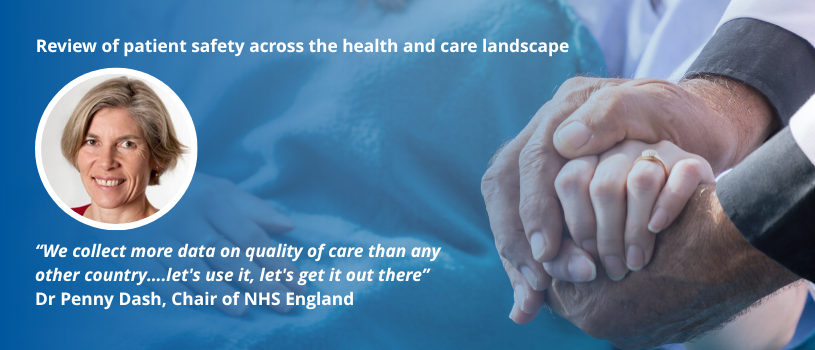
HQIP’s Chair and former NHS deputy Medical Director, Dame Celia Ingham Clark, agrees with NHS England’s Chair, Dr Penny Dash, when she says “we collect more data on quality of care than any other country…let’s use it, let’s get it out there”. Here Celia outlines why data – and clinical audit and outcomes data – will be crucial to the success of the ‘Review of patient safety across the health and care landscape’, published this week.

“Before seeing the ‘Patient Safety Review’, I read an article in The Sunday Times with Penny Dash where she explained more about its remit, setting the tone for its release a few days later. What immediately jumped out at me was her strong focus on the key role that data would play in her vision for improved patient safety.

This was evident when I saw the published version of the Review, which states: “The NHS is one of the most data-rich healthcare systems in the world and has historically been at the forefront of collecting and reviewing data for clinical audit purposes. There is considerable opportunity to build on this with more data sharing across organisations…enabling [them] to identify and focus on the most significant issues and challenges to improve care”. At HQIP, where we run the largest national clinical audit and outcomes review programme in the UK (NCAPOP) on behalf of the NHS, we have long-since advocated this sentiment.

We collect more data on quality of care than any other country. Let’s use it, let’s get it out there,” Dr Penny Dash, then NHS England Chair

The Review was by the commissioned by the Secretary of State for Health and Social Care, Wes Streeting, to examine the patient safety landscape and make recommendations to support improved quality of care. It is littered throughout with references to the value of data, and clinical audits (including those delivered by HQIP*), in achieving this; and rightly so.

The role of national clinical audit

National clinical audits provide independent, transparent evidence for improvements that will have maximum impact on patient care, including keeping them safe. They are trusted by healthcare providers and patients alike. The 44 audits and programmes in HQIP’s NCAPOP, identify where current practices are falling short, highlight what ‘good’ looks like, and make the case for changes that will improve and save patients’ lives. They often demonstrate that survival rates improve when certain interventions need to be delivered earlier in the care pathway.

Data and analytics should be playing a far more significant role in supporting the quality of health and social care,” Patient Safety Review, July 2025

However, data alone is not enough; it’s the interpretation of that data that matters. Or, as the Review puts it: “insufficient use is made of the NHS’s data resources to generate insights and support improvement”. At HQIP, we understand the need to translate data into quality services. We do not simply publish data; we help healthcare providers and leaders to understand what to do with it. It’s critical that we all work together to turn insights into meaningful action.

Putting patients at the centre of patient safety

What do we mean by ‘meaningful’ (forgive the duplication here, but it’s that important)? It’s a phrase that’s often bandied about, but it is critical in relation to patient care. To me, it means delivering safe care that meets the needs of patients. Nothing more, nothing less. If it isn’t what patients want and need, then it isn’t valuable. This, too, is reflected in the Review and indeed the ‘NHS 10 Year Health Plan for England’ published days before. When care falls short, patients deserve answers and action. Importantly, HQIP works with patients to co-design its audit programmes, and ensure that recommendations for change are clear, fair and focused on outcomes. So, I was pleased to read the Review’s emphasis on working with patients to improve safety, concluding with a call to “capture and learn from user or patient experience” and involve the “voice of the user”.

Transparency, transparency, transparency

Another theme that comes across loud and clear from the Review, and other recent announcements from the DHSC, is the need for transparency. Without it, we cannot build trust. It makes perfect sense. The more that we can all see what is happening, the more we can all work together to improve. Again, HQIP’s clinical audit programme is uniquely positioned to support transparency. Through the NCAPOP, clinical data is brought into the open. Every report, finding and recommendation is publicly available for all to see and use – from clinicians and healthcare leaders through to patients and their representative groups, everyone can access the programme’s data.

I will conclude by turning my attention to the Review’s recommendations for the “revamped, revitalised and reinforced” National Quality Board (NQB) which, it states, “should be responsible for developing a comprehensive strategy to improve quality of care”. It’s telling that the very first item in the first of these recommendations is a need to build on data and analysis that supports current quality of care. It states that the NQB should “make more effective use of existing NHS data resources (including large-scale audits or registries and routine data)”. The Review goes on to say that “data and analytics should be playing a far more significant role in supporting the quality of health and social care”. This goes without saying. However, I will say it nonetheless – I couldn’t agree more.

*Review of patient safety across the health and care landscape, July 2025: “Data on the quality of care is collected through a range of mechanisms, including national clinical audits commissioned by the Healthcare Quality Improvement Partnership (HQIP) and other registries and audits (such as those run by colleges, NHS England and others).”

More on patient safety from HQIP

Clinical audit is critical for NHS 10 Year Plan

4 Jul 2025

The NHS 10 Year Health Plan for England was published this week, promising extensive reform and focusing on three ‘shifts’: prevention, community care, and technology. It is an ambitious strategy that asks a great deal of the health service, and crucially it acknowledges the important role that national clinical audit will play in its delivery. The Plan makes a strong case for a renewed focus on outcome measures and quality improvement, recognising that the NHS must make full use of the clinical audit and registry programmes already in place.

As noted in the Plan, HQIP’s National Clinical Audit and Patient Outcomes Programme (NCAPOP)* will play a key role in ensuring that reform is grounded in evidence. The largest programme of its kind in the UK, it includes 44 national clinical audits and clinical outcome review programmes, covering a wide spectrum of conditions and services across the NHS. Managed independently, and trusted by patients and clinicians alike, these audits measure quality of care, providing a clear view of what is working well and where improvement is needed most. Data from this programme has been collected, analysed and published for decades, and supports clinical effectiveness, patient safety, equity in access, and outcomes for patients. Its impact is well evidenced, for example improving survival, identifying variation, supporting better use of NHS resources and informing clinical guidance (eg Epilepsy12 contributed to NICE guidance on the importance of timely specialist input for children with suspected epilepsy).

This NHS Plan emphasises transparency and accountability, including commitments to publish provider-level quality data, and expand the use of digital tools such as the NHS App. It outlines plans to enable patients to search for healthcare providers based on clinical outcomes, patient feedback and waiting times (pages 13-14). This is precisely the kind of data that HQIP already commissions. Our audits are structured, trusted, publicly available and co-designed with patients. Used by clinicians, regulators, commissioners and patient groups, they provide a robust foundation for the Plan’s ambitions. Their inclusion in this document reinforces this credibility, and underscores their value to the NHS in the future: “There are multiple audits and reviews of quality of care routinely carried out within the NHS in England…for example, 30 audits as part of the national clinical audit programme [and] 5 clinical outcome review programmes” (page 87).

Chris Gush, HQIP’s CEO, explains: “Audit data is one of the few constants across the system, cutting across organisational boundaries and clinical disciplines to track the impact of reforms.” In other words, clinical audit is uniquely placed to support improvements that will deliver maximum impact, and hold a mirror up to the system as it changes.

How will HQIP clinical audits support the 10 Year Plan?

By supporting “an NHS that is fit to face the future” (Prime Minister, Kier Starmer, 3rd July 2025) through the three ‘shifts’ set out in the Plan:

  1. From sickness to prevention

Audits can identify where avoidable harm occurs and where earlier intervention can reduce the need for crisis care. CVDPrevent, which focuses on the prevention of cardiovascular disease, has seen increases in interventions to reduce the risk of CVD eg 85% of people with, and 62% of high-risk patients without pre-existing, CVD are now prescribed lipid-lowering therapy. By highlighting both successes and areas needing improvement, it provides GPs, neighbourhood teams and commissioners with the information they need to act earlier, direct investment more intelligently, and design services around keeping people well. Equally important is the role that audits play in tackling health inequalities. Whether through neonatal mortality data revealing stark ethnic disparities, or stroke audits showing variation in access to post-acute rehabilitation, audit data makes inequality visible, measurable and actionable.

  1. From hospital to community

Audits follow the patient, not the building. By tracking care across the pathway, they generate evidence on where services could – and should – be delivered closer to home. For example, the National Respiratory Audit Programme (NRAP) has recently published a review of asthma and COPD care across both hospitals and the community recommending that patients should be offered alternatives to centre-based care where appropriate. These insights help local systems redesign care around the person, not the institution. Furthermore, patient voice is embedded in HQIP’s audit system, supporting the move towards personalised, community-based services that respond to what matters most to the individual.

  1. From analogue to digital

Audit data is already structured, standardised and linkable across settings. It works on the principle of ‘collect once, use multiple times’, and is well-placed to feed into the development of single patient records and real-time dashboards. HQIP’s audit data are already publicly available and they are linked to primary and secondary care data, hospital episodes, mortality statistics and disease-specific registries. This creates a unified view of care quality over time, which can be easily fed into platforms such as the NHS App and the broader ‘digital ecosystem’ that the Plan seeks to make more available to both patients and healthcare providers. For example, HQIP already publishes comparative provider-level outcomes for stroke, cancer, orthopaedics (we host the National Joint Registry) and many other specialties. These are exactly the kinds of metrics that will prove pivotal when delivering informed patient choice, to improve standards across the system.

So, it’s clear that the 10 Year Plan recognises the critical value of data in delivering reform, stating that ‘as healthcare becomes more data-driven, the NHS has a huge advantage’. Professor Danny Keenan, HQIP’s Medical Director and Associate Medical Director at Manchester University NHS Foundation Trust, agrees, providing a clinician’s point of view: “If we are to reduce variation, improve outcomes, and drive smarter investment in services, then the system needs high quality, trusted data.”

Given that the aim of the Plan is to “bring the state – and the people it serves – into a partnership” (Kier Starmer, 3rd July 2025), that partnership must be based on patient feedback. As such, the final word should go to an NHS patient, Phil, who volunteers with HQIP: “There is a moral obligation to use the data that is already available, for the benefit of patients”. We are heartened to know that the NHS is in agreement.

*Page 87 of the NHS 10 Year Plan: “There are multiple audits and reviews of quality of care routinely carried out within the NHS in England. These include, for example, 30 audits as part of the national clinical audit programme, 5 clinical outcome review programmes and the Getting it Right First Time programme.” Note that the National Clinical Audit and Patient Outcomes Programme (NCAPOP) includes ten audits that fall under one ‘umbrella’ cancer audit

Further information

Blog: HQIP’s role in delivering NHS priorities

2 Jul 2025

From Data to Action

How HQIP, Clinical Audits, and Registries Can Support National NHS Priorities for 2025/26

As the NHS shares its operational planning guidance for 2025/26 this week, it’s vital to understand the role that clinical audits and registries can play in supporting the delivery of the priorities it outlines. By providing high-quality data, they are an essential tool for improving patient care, reducing inequalities, and enhancing productivity. HQIP’s CEO, Chris Gush, explains how the national programmes commissioned by HQIP, on behalf of the NHS, are critical to delivering NHS 2025/26 priorities. HQIP manages several national clinical audits (NCAs), clinical outcome review programmes (CORPs), and hosts the National Joint Registry (NJR). These initiatives, delivered by our partner organisations, generate essential data covering a spectrum of clinical disciplines ranging from asthma to vascular care. With key insights and clear recommendations for improvement, they enable healthcare providers to evaluate care quality, support continuous improvement, and inform strategies to achieve national NHS objectives. Importantly, they have the potential to save and improve lives, at the same time as reducing the burden on resources. Find below just some examples of the many ways these programmes contribute to the NHS’s 2025/26 priorities and operational planning guidance, illustrating their vast potential to support improvement in healthcare.
  1. Reducing Time for Elective Care and Cancer Treatment Standards

National Priority:
  • 65% of patients to receive elective treatment within 18 weeks by March 2026.
  • Improve cancer waiting time standards: 75% compliance with the 62-day target and 80% with the 28-day Faster Diagnosis Standard (FDS).
HQIP’s Role in Priority Delivery:
  • National Joint Registry (NJR): Tracks outcomes of hip, knee, shoulder, elbow, and ankle joint replacements, providing data on implant longevity, surgical performance, and patient outcomes. Insights can help reduce elective care delays by improving surgical pathway efficiency and resource allocation.
  • National Cancer Audit Collaborating Centre (NATCAN): This ground-breaking centre, the first of its kind, consolidates ten cancer audits including breast, ovarian, pancreatic, non-Hodgkin lymphoma, prostate, oesophago-gastric, bowel, lung, and kidney cancer. These audits provide up-to-date essential data on diagnosis, treatment pathways, and outcomes, enabling faster and more effective care delivery.
These programmes guide local and national strategies to optimise referral management, streamline diagnostics, and improve patient choice within elective and cancer care pathways.
  1. Improving A&E and Ambulance Response Times

National Priority:
  • Improve A&E waiting times (78% of patients admitted, discharged, or transferred within 4 hours).
  • Reduce Category 2 ambulance response times to 30 minutes on average.
HQIP’s Role in Priority Delivery:
  • National Respiratory Audit Programme (NRAP): Provides key data on the management of acute exacerbations of asthma and COPD in emergency settings. This audit supports improvements in A&E care for respiratory patients by identifying gaps in treatment protocols and patient flow management.
  • Sentinel Stroke National Audit Programme (SSNAP): Examines the quality of care delivered to stroke patients in the crucial hours following stroke onset and monitors long-term management and rehabilitation. It provides ambulance trusts with intelligence on response and conveyance times for stroke patients. The audit also supports quality improvement activities, helping patients to recover faster and with better results.
By identifying current best practice and areas for improvement in urgent and emergency care, these audits contribute to reducing handover delays, enhancing same-day emergency care, and improving operational efficiency.
  1. Enhancing Access to General Practice and Dental Care

National Priority:
  • Increase the number of urgent dental appointments and improve general practice access and patient experience.
HQIP’s Role in Priority Delivery:
  • National Diabetes Audit (NDA): Tracks the management of diabetes across primary and secondary care, identifying gaps in care and opportunities for better integration between general practice and specialist services.
  • National Audit of Cardiovascular Disease Prevention in Primary Care (CVDPrevent): Supports improvements in the prevention and management of cardiovascular disease (CVD) by providing data on care delivery in primary care settings. This audit highlights opportunities for better integration of preventive measures, particularly for at-risk populations, to reduce long-term complications and hospital admissions.
These audits enable Integrated Care Boards (ICBs) to develop targeted action plans to address variations in care delivery and access, ultimately improving patient outcomes and experience.
  1. Improving Mental Health and Learning Disability Care

National Priority:
  • Reduce average length of stay for adult acute mental health inpatients and expand access to CYP mental health services.
HQIP’s Role in Priority Delivery:
  • National Clinical Audit of Psychosis (NCAP): Focuses on measuring the quality of care provided by Early Intervention in Psychosis (EIP) teams, ensuring prompt, evidence-based assessment and treatment for first-episode psychosis. The audit aims to improve service access, optimise care pathways, and reduce inpatient stays.
  • National Audit of Eating Disorders (NAED): Focuses on improving the quality of care for patients with eating disorders, particularly children and young people (CYP). This audit examines early intervention strategies, care pathways, and treatment outcomes, supporting better access to timely, evidence-based mental health services.
  • Mental Health Clinical Outcome Review Programme (NCISH): Examines incidents of suicide among mental health service users. By identifying risk factors and systemic issues, this programme helps improve patient safety, ensuring patients receive timely, high-quality interventions and support.
  • National Child Mortality Database (NCMD) – Suicide in Children and Young People: This report investigates the factors and characteristics associated with child and adolescent suicides. It provides critical recommendations for improving mental health support services, early intervention, and prevention strategies for vulnerable young individuals. The findings guide service providers and policymakers in reducing risks and enhancing support systems for children and young people.
These projects help identify systemic barriers to timely mental health care, supporting reforms to reduce unnecessary inpatient stays and improve service access for children and young people.
  1. Addressing Inequalities and Shifting Towards Prevention

National Priority:
  • Reduce health inequalities through the Core20PLUS5 approach and enhance prevention strategies for conditions such as cardiovascular disease and diabetes.
HQIP’s Role in Priority Delivery:
  • National Vascular Registry (NVR): Evaluates the care and outcomes for patients undergoing major vascular procedures such as aneurysm repair and lower limb revascularisation. The NVR identifies variations in access and outcomes, supporting improvements in preventive care and reducing inequalities in vascular health.
  • National Paediatric Diabetes Audit (NPDA): Maintains a focus on identifying and addressing variations in paediatric diabetes care processes, treatment, and outcomes by socio-demographic groups. The audit highlights health inequalities through detailed reporting, breaking down outcomes by ethnic category and deprivation quintile. This work is part of the NPDA’s 2022-2027 Quality Improvement Strategy, which earned the Health Inequalities Hero Award in recognition of its efforts to reduce disparities in diabetes care.
  • Maternal, Newborn and Infant Clinical Outcome Review Programme (MBRRACE-UK): Identifies factors contributing to maternal and infant mortality, providing targeted recommendations to reduce inequalities in perinatal and maternal outcomes.
  • National Audit of Cardiovascular Disease Prevention in Primary Care (CVDPrevent): A national primary care audit that extracts routinely held GP data to support primary care in understanding how many people with cardiovascular disease (CVD), or conditions that lead to a higher risk of developing CVD, are potentially undiagnosed, undertreated, or overtreated. The audit prioritises working with system partners to drive CVD quality improvement at individual GP, Primary Care Network (PCN), and Integrated Care System (ICS) levels.
These projects support ICBs and providers in developing strategies to improve early intervention, disease management, and access to care in underserved communities. Blog – Yes we can: The importance of national clinical audit in addressing health inequalities. In this article, Professor Danny Keenan, Medical Director at HQIP, explains how clinical audits can support a better understanding of, and help to address, healthcare inequalities.
  1. Driving Digital Transformation

National Priority:
  • Shift from analogue to digital systems, with increased use of digital communications, electronic patient records (EPR), and integrated data platforms.
HQIP’s Role in Priority Delivery:
  • HQIP is actively collaborating with EPR providers, trust-based Business Intelligence Units (BIUs), and the clinical audit community to drive digital transformation. This involves integrating clinical audits and outcome review data into digital platforms to facilitate real-time access for clinicians and system leaders, enhancing data-driven decision-making and care improvement efforts.
  • National Joint Registry (NJR): Integrates with digital systems to provide up-to-date data on surgical outcomes, enhancing decision-making for elective care and resource planning.
These efforts support the adoption of digital tools that improve patient outcomes and operational efficiency, reducing administrative burden and enabling data-driven care.
  1. Reducing Costs, Improving Productivity, and Living Within Budget

National Priority:
  • Achieve a 1% reduction in the cost base and a 4% improvement in productivity, including a 30% reduction in agency expenditure.
HQIP’s Role in Priority Delivery:
  • Clinical audits help identify inefficiencies and areas for cost-saving, such as reducing unwarranted variation in clinical practice and optimising procurement processes.
  • The Falls and Fragility Fracture Audit Programme (FFFAP): Highlights preventive measures, such as improved fracture care and falls prevention strategies, which can reduce hospital admissions and associated costs.
By providing evidence on productivity and efficiency improvements, HQIP supports the NHS’s goal to live within budget while maintaining high-quality care.
  1. Ensuring Quality and Safety

National Priority:
  • Deliver key actions of the maternity and neonatal ‘Three Year Delivery Plan’ and maintain a strong focus on service quality and safety.
HQIP’s Role in Priority Delivery: These projects provide essential data to improve patient safety, reduce clinical risks, and ensure compliance with national standards for maternity and neonatal care. HQIP recognises that the path to reform, as outlined in the 2024 ‘Darzi Report,’ presents significant challenges. Achieving the NHS’s current priorities requires sustained effort and collaboration across the health and care system. However, by working together – using robust evidence to drive targeted improvements where they will have the greatest impact – we can share this responsibility and achieve meaningful progress. As demonstrated above, HQIP’s national clinical audits and outcome review programmes are instrumental to the delivery of the NHS’s 2025/26 priorities. By providing timely, comprehensive, and high-quality data on a national scale, these initiatives support Integrated Care Boards (ICBs), trusts, and providers in addressing key objectives. This includes improving patient care, reducing health inequalities, and driving efficiency and productivity. With a shared commitment to data-driven reform and continuous quality improvement, we can collectively deliver sustainable, high-quality healthcare that meets the evolving needs of patients and healthcare professionals alike.

Further information

Data, infographics and other outputs from HQIP-commissioned programmes: www.hqip.org.uk/resources/?fwp_resource_type=reports

Audit drives improvements in neonatal care

2 Jul 2025

Data from the National Neonatal Audit Programme (NNAP), commissioned by the Healthcare Quality Improvement Partnership (HQIP), shows a significant improvement in the adoption of a life-saving intervention for preterm babies. The audit has played a vital role in identifying neonatal care providers with lower-than-national-average rates of Deferred Cord Clamping (DCC), a practice which is known to reduce mortality.

In 2023, 68.3% of babies born at less than 34 weeks’ gestation in England, Wales, Scotland and the Isle of Man received DCC. In 2022, the proportion was 60.4%, indicating a striking 7.9% improvement in one year. This demonstrates the vital role that clinical audit plays in saving lives, given that evidence shows that DCC may reduce the chance of mortality by around 32%*.

Clinical Lead for the NNAP, Dr Sam Oddie explains: “Deferring cord clamping in preterm babies, as opposed to clamping the umbilical cord immediately after birth is highly recommended, because it has been shown to reduce mortality by approximately a third.”

The world stopped and nothing else mattered,” Nick and Gemma, parents of baby Allegra

Data from the NNAP shows that adoption of DCC in the UK has previously been very low, at less than 29% as recent as 2020. However, there has been a steady increase since, with the rate expected to be over 70% in 2024 (publication date October 2025). By identifying neonatal networks and units with lower than national average rates, the NNAP has played an important part in supporting this major change in clinical practice, assisting partner agencies and programmes to increase adoption of DCC. Importantly, it can also lead to even further improvements. Dr Oddie shares how: “While UK neonatal clinicians can – rightly – be proud of their evidence-informed change in practice, they should now reflect on occasions when DCC doesn’t seem appropriate. This will support the next stages in researching how it should be delivered, and help to achieve even better outcomes.”

Delivered by the Royal College of Paediatrics and Child Health (RCPCH), the NNAP assesses whether babies admitted to neonatal units receive consistent high-quality care, identifying variation and supporting improvement through evidence-informed change. In addition to neonatal care, the audit also reports on perinatal care, maternal breastmilk feeding, parental partnership, neonatal nurse staffing levels, and other important care processes. The NNAP’s data dashboard is a frequently updated resource for those involved in neonatal and perinatal care (details at the bottom of this article). It provides care providers with monthly-updated results, as well as benchmarking and data cleaning tools. As such, it gives an accurate and up-to-date picture of their performance, enabling early intervention where improvement initiatives are needed.

Evidence shows that DCC may reduce the chance of mortality by around 32%

The NNAP is one of more than 40 national clinical audits and programmes commissioned by the Healthcare Quality Improvement Partnership (HQIP) on behalf of the NHS and other bodies, as part of the National Clinical Audit and Patient Outcomes Programme (NCAPOP). This unique programme – the largest of its kind in the UK – measures and reports on a variety of clinical disciplines, from asthma to vascular care, and helps to drive local, regional and national improvements in healthcare.

Chris Gush, HQIP’s CEO, commented: “As demonstrated by the NNAP, audit data highlights the changes that will have the greatest impact on patient outcomes. It is critical in ‘lighting the way’ for system leaders and clinicians alike, to understand where to target resources, particularly in these changing times when pressures have never been greater.”

The NNAP’s impact does not stop at improving the adoption rates of DCC. Other reported improvements include a 9.4% increase (between 2022 and 2023) in the national adherence to screening for retinopathy of prematurity (ROP), with 78.4% of eligible babies being screened according to the guideline. There was also 4.1% increase over that same time period of babies born at less than 34 weeks being admitted with a temperature within the recommended range. In addition, their work also focuses on parent partnership in care – reporting that breastmilk feeding at two days of life increased to 62% in 2023, an increase of 13% from 2022.

The importance of these improvements cannot be underestimated. Driven by national clinical audit, they represent not just newborn babies – whose lives have been saved and improved as a result – but also their loved ones. As such, the final word must go to one such family. Nick and Gemma, the parents of baby Allegra, who further underline the importance of improved neonatal care, when they describe the “feeling of how the world stopped and nothing else mattered” when their daughter was born at 31 weeks’ gestation.

* Fogarty, M. et al. Delayed vs early umbilical cord clamping for preterm infants: a systematic review and meta-analysis. Am J Obstet Gynecol. 2018 Jan;218(1):1-18. doi: 10.1016/j.ajog.2017.10.231. Available at: https://pubmed.ncbi.nlm.nih.gov/29097178/

Links to further information on this article

Case studies on DCC

Further information on HQIP

Healthcare Quality Improvement Partnership (HQIP)

Every patient deserves safe, high quality care, and national clinical audits and similar programmes (such as the NCAPOP and the National Joint Registry, both run by HQIP) help to make that happen, by measuring the quality of care across hospitals and services. These programmes collect and analyse data to show what is working well in healthcare, and where improvements are needed. HQIP is an independent, not-for-profit long-term partner of the NHS that is led by the Academy of Medical Royal Colleges and the Royal College of Nursing. More data and quality improvement resources from HQIP.

Further information on NNAP

National Neonatal Audit Programme (NNAP)

The NNAP supports professionals, families and commissioners to improve care provided by neonatal services who look after babies born too early, with a low birth weight or who have a medical condition requiring specialist treatment. For more information on the impact of the NNAP for 2024.

Reports: The NNAP publishes an annual summary, and extended analysis, reports on the previous year’s data. The summary report summarises key messages and national recommendations, based on NNAP data relating to babies discharged from neonatal care in England, Wales, Scotland and Isle of Man for that year. The extended analysis report provides in-depth results and a summary of findings by audit measure, along with next steps and resources. You can find these reports here.

Dashboard: NNAP has two publicly available dashboards:

1) NNAP Online: Report Data, which can be used to:

  • view an overall annual summary report for a chosen neonatal unit or network
  • view and compare the results for specific NNAP audit measures for different units, unit designations or networks
  • view, via the outlier analysis section, whether a result for a unit or network is outside the expected range.

2) Public Access Dashboard, which provides results for each of the 10 NNAP performance metrics as annual rolling averages. Results can be displayed for neonatal units, Integrated Care Systems and Health Boards (Wales and Scotland), and by neonatal network. These results are updated monthly. There is also a Restricted Access Dashboard, for unit and network users to view their NNAP data (access to this resource is limited to participating neonatal units and networks).

Resources for parents & carers: The NNAP also publishes a parent and carer guide to the audit, Your baby’s care. The guide covers the NNAP measures most relevant to parents and carers, as chosen by parents and carers of preterm babies, supported by neonatologists. It includes images and quotes from parents and carers of preterm babies who received neonatal care. We encourage neonatologists and paediatricians to share it with parents. You can find this report here.

Celebrating clinical audit success at Sheffield Children’s Hospital

30 Jun 2025

Clinical audit, including national programmes like those commissioned by HQIP, plays a critical role in improving healthcare – and so saving and improving lives. By measuring the quality of care provided, it highlights what is working well and where improvements are needed. At a local level this work is vitally important, supporting Trusts and other providers to focus on improvements that will have the greatest impact on their patients. This month, we were proud to join Sheffield Children’s NHS Foundation Trust at their Clinical Audit and Service Evaluation for Quality Improvement (CASE4QI) Summit. Professor Danny Keenan, Medical Director at HQIP, reflects on a thought-provoking and inspiring day: I want to thank Dan Hawley, Hazel Collis and Jack Hiscock for inviting me to give the keynote talk at their Annual Clinical Audit conference, held in the beautiful Forth Court University building. It was wonderful meeting those who actually do the hard work of the audits and helped me to better understand their efforts and challenges. I delivered a talk concerning the benefits of benchmarking and suggested, post COVID, that this has become a ‘softer’ approach – with more emphasis on what to do about one’s position on the benchmark, rather than remaining complacent when one is in ‘middle of the pack’. We must focus more on how the high performers can help the low performers, and how everyone needs to work together to push the mean to the good side. However, for me the real event was the presentations from the floor. There were nine presentations competing for various audit accolades, having already been shortlisted as the best audits/service evaluations at the Trust. And they were all brilliant. I was particularly impressed with the evaluation from the emergency department of injuries incurred while riding e-scooters. This exceptional piece of work showed that most injuries involved head and long limb injuries. Given that these scooters can legally get up to 15mph, one can understand such injuries. Unfortunately, the message concerning wearing helmets had not got through to these children and their parents. There were other important messages too, which are leading to further collaborative work with other children’s hospitals. The children’s anaesthetists were very active and had several presentations. There was an exceptional presentation concerning the development of an enhanced recovery protocol following scoliosis surgery. This was a valuable piece of work extending over two years with great outcomes, including discharge after this major surgery being brought down to three-four days. The anaesthetists had two different presentations concerning a pre-operative obesity clinic. Both gave excellent insight into this important problem in children, which has ramifications through life. Where these differed was that there was also input from the children and their own responses to this problem. It’s very insightful work and possibly a first in England. There was a fascinating presentation concerning the increased use of immunosuppressive drugs in children. These are being used for rheumatological, dermatological, and gastrointestinal diseases more frequently. A key concern was what to do when the children had not had complete immunisations, in particular when deficient concerning vaccines using live viruses. All the presentations were insightful – and, given that these were the best of the audits and service evaluations competing, we can see there is a lot of great activity taking place in Sheffield. Many thanks again for allowing me to participate and judge the presentations. In truth, everyone on the day was a winner. I am already looking forward to another great event next year. Danny Keenan

How HQIP could help you

As a not-for-profit and trusted partner of the NHS, we understand complex healthcare challenges and take a patient-focused, evidence-informed approach to providing high quality solutions. So whether an organisation needs support with patient engagement, transformation strategy, improvement training, or value-based procurement support, we can help – with proven expertise across multiple areas of quality improvement. Contact our expert team for a free, no obligation conversation: workwithus@hqip.org.uk

Latest news: June 2025 eBulletin

26 Jun 2025

The June edition of HQIP’s eBulletin is out now! It features the most recent clinical audit updates and resources to support healthcare improvement, including:
  • Latest reports and data – A reminder about new findings on intensive care rehabilitation, and respiratory and vascular care, released earlier this month.
  • Patient Partnership Week resources – Ahead of Patient Partnership Week starting on 30 June, we are sharing resources to support, and highlight the impact of, person-centred healthcare design.
  • Case study: Listening to marginalised voices in maternity – This HQIP-led project gathered insights from underrepresented groups to co-develop an inclusive Patient-Reported Experience Measure (PREM) for maternity care.
  • Podcast: Involving patients in procurement – HQIP’s Kim Rezel and Dr Ollie Burton joined HCSA’s Supplycast to explore the value of involving patients and the public in NHS procurement.
  • Improving sepsis care through clinical audit – A new video and podcast on how clinical audit is improving sepsis care and patient outcomes.
  • Benchmarking data available – Benchmarking data on vascular care, hip fracture, emergency laparotomy, and dementia care is now available.
Read the eBulletin here.
Don’t forget to sign up: Keep up to date with our latest news, events and work programmes by subscribing to our mailing list today. You can also follow us on LinkedIn and X: @HQIP

Patient and public voice in procurement podcast

17 Jun 2025

Kim Rezel (Head of Patient and Carer Engagement, HQIP) and Dr Ollie Burton (Clinical Fellow, HQIP) recently joined Healthcare Supply Chain Association’s Supplycast to discuss the benefits of involving patients, carers and the public in procurement. The wide-ranging conversation covers topics including how to undertake patient and public involvement in a sustainable way when pressures on the NHS are high, examples of this type of activity in action and the clinical perspective on outcomes from this work.
“If we’re procuring services that are for patients, carers and service users we need to know what their priorities and concerns are – what’s important for them – because if we are not procuring for them, we could be prioritising things that are not important to them. And this actually affects outcomes and patient experience, because it has a long term effect on how patients are experiencing care.” Kim Rezel, Head of Patient and Carer Engagement, HQIP
Kim and Ollie share examples of clinical audit programmes that have successfully included patient engagement in commissioning. They also consider how to close the gap between procurement teams and clinicians, explaining how HQIP brings a wide range of stakeholders together to draft specifications – from patients and clinicians to analysts and methodologists. Listen to the podcast here Or find out more about how HQIP supports other healthcare organisations with patient engagement.

How HQIP could help you

As a not-for-profit and trusted partner of the NHS, we understand complex healthcare challenges and take a patient-focused, evidence-informed approach to providing high quality solutions. So whether an organisation needs support with patient engagement, transformation strategy, improvement training, or value-based procurement support, we can help – with proven expertise across multiple areas of quality improvement. Contact our expert team for a free, no obligation conversation: workwithus@hqip.org.uk

Job opportunity: Associate Director – Association for Clinical Audit and Registries (ACAR)

15 Jun 2025

Location: Remote (Home Worker Contract) – Occasional travel to central London required for scheduled corporate activity Salary: Circa £80,000 per annum Contract Type: 12-month fixed term (Secondments welcomed) Application deadline: Midnight, Sunday 29 June 2025
Interview dates: 8 and 11 July 2025

This is a unique opportunity to lead the creation of a new national platform that will unite, represent, and empower the clinical audit and registry community.

As the founding Associate Director of the Association for Clinical Audit and Registries (ACAR), you will play a central role in establishing a member-led, independent organisation that provides a national voice for professionals across clinical audit, registries, and outcomes data.

Hosted by HQIP and supported by NHS England, Royal Colleges, and national leaders, ACAR will be a platform for collaboration, influence, shared learning, and professional recognition.

As Associate Director, you will:
  • Lead the strategic development and early operationalisation of ACAR
  • Build and inspire a national community of contributors and founding members
  • Shape ACAR’s governance, membership model, and digital infrastructure
  • Represent ACAR with credibility to senior system partners and frontline teams alike
  • Deliver early pilots including CPD offers, collaborative events, and shared standards
This role is ideal for someone who understands the power of data and improvement, has credibility with national stakeholders, and thrives on building purposeful movements from the ground up. Why Join HQIP?

HQIP is an independent, not-for-profit long-term partner of the NHS that is led by the Academy of Medical Royal Colleges and the Royal College of Nursing.

National clinical audits and clinical outcome review programmes play a vital role in improving patient outcomes, supporting clinicians, and strengthening the NHS by delivering robust, data-driven insights that drive quality improvement. As the organisation responsible for commissioning and managing the National Clinical Audit and Patient Outcomes Programme (NCAPOP) on behalf of NHS England, HQIP ensures that healthcare quality and outcomes are measured against explicit standards, providing actionable insights that enhance care at both national policy and local patient levels. As such, HQIP works in partnership to enable those who commission, deliver, and receive healthcare to harness clinical data to drive meaningful, lasting improvements in patient safety and care quality across the UK. How to Apply

Full details of the role and application forms are available here.

Please note:
  • CVs submitted without a completed application form will not be considered
  • Applicants must have the right to work in the UK – HQIP is unable to sponsor candidates
  • Due to high application volumes, feedback will be provided only to shortlisted applicants
Further information: Contact Chris Gush via HQIP.HR@hqip.org.uk.

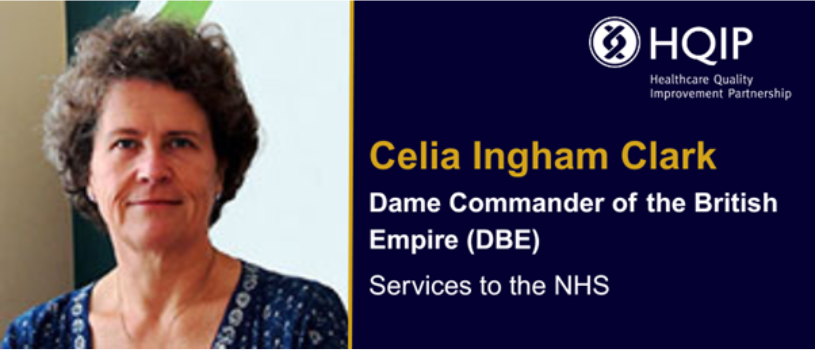
HQIP’s Chair Celia Ingham Clark recognised in King’s Birthday Honours List

14 Jun 2025

We are proud to share that HQIP’s Chair, Celia Ingham Clark, has been made a Dame Commander of the British Empire (DBE) for Services to the NHS. This prestigious award recognises Celia’s invaluable contribution to improving the nation’s healthcare services. A former deputy Medical Director at NHS England, Dame Celia commented: “I am honoured and feel very privileged. This achievement reflects the commitment of the great teams with whom I have worked, past and present, whose focus is always on improving care for patients”. Celia Ingham Clark joined HQIP in late 2024, after decades as a clinician and medical leader in the NHS championing the use of data to deliver targeted improvements in healthcare. Her wealth of experience is a perfect match for HQIP’s clinical audit resources, supporting the delivery of our vision of improved health outcomes for all through high-quality, evidence-driven healthcare. Working together presents a significant opportunity to maximise the impact that data has on patient outcomes. Since starting her career as a consultant general surgeon, Celia was presented with an MBE in 2013 and retired from the NHS in 2024. HQIP’s CEO, Chris Gush, added: “HQIP is delighted to join the roll-call of congratulations for Celia’s Damehood. This is an extremely well-deserved honour that recognises the pivotal role she has played in saving and improving patients’ lives for many years. We are privileged that Celia is Chair of our Trustee Board”. Importantly, in addition to celebrating past achievements, this award will also support the delivery of further improvements in healthcare. In these challenging times (when resources are stretched across the NHS and beyond), it will help when, for example, reaching out to new collaborators and participating in policy discussions. Or, as Dame Celia herself states: “This Honour will help me to support healthcare providers and their clinical staff to deliver quality improvements in patient care.Further information

Benchmarking data available

12 Jun 2025

The following datasets have been published on the National Clinical Audit Benchmarking (NCAB) website, HQIP’s online portal which provides access to national audit performance data.
  • The National Vascular Registry. This data was updated on NCAB on 22 May 2025 from the NVR report published November 2024 covering data January 2023 to December 2023.
  • The National Hip Fracture Database. This data was updated on NCAB on 3 June 2025  from the NHFD report 2024 published on 12 September 2024 covering data January 2023 to December 2023.
  • The National Emergency Laparotomy Audit. This data was updated on NCAB on 3 June 2025 from the NELA Year 9 report published in 2024 covering data 1/12/2021 to 31/03/2023.
  • The National Audit of Dementia. This data was updated on NCAB on 5 June 2025 from the NAD report 2024 published on 12/12/2024 covering data August 2023 to January 2024.

NCAB is an online portal, hosted by HQIP, which provides access to national audit performance data. Users do not need to register, and can access audit benchmarked data searchable by speciality, Trust, hospital or unit. For all datasets currently published, go to the NCAB site.

New resources published June 2025

12 Jun 2025

We are pleased to announce that the following new resources from HQIP-commissioned audits and programmes have been published. They include infographics, data and recommendations to support quality improvement:

Recovery Beyond Survival report

National Confidential Enquiry into Patient Outcome and Death (NCEPOD) This report reviews the quality of rehabilitation care provided to patients following admission to an intensive care unit, identifying both examples of excellent practice and areas for improvement. Themes that emerge include the need for co-ordinated multidisciplinary care and good communication between professional groups, patients and their families. The report also contains recommendations to support national and local quality improvement initiatives.

Catching our breath: Time for change in respiratory care report

National Respiratory Audit Programme (NRAP)

This report identifies continued and highly significant deficiencies in the delivery of many key interventions for patients with asthma and COPD that are known to improve health and outcomes. However, it also highlights reasons for optimism, including the NRAP Healthcare Improvement Programme, as well as and several recommendations for improvement.

More data from the National Vascular Registry (NVR)

The NVR’s latest data release (covering procedures between January 2022 and December 2024) is now available here.
All reports: All HQIP-commissioned reports can be accessed via our dedicated reports webpage. Stay up to date: Join our mailing list to receive notifications when new reports are published.

Clinical Audit Awareness Week 2025 round-up

9 Jun 2025

Run in collaboration with N-QI-CAN, Clinical Audit Awareness Week (#CAAW25) took place from 2-6 June 2025. THANK YOU to everyone who took part! Find below a summary of this year’s campaign, including award winners, resources, event recordings and more…

Clinical Audit Heroes Awards

The Clinical Audit Heroes Awards are an essential part of #CAAW25, shining a light on exemplar audits and projects that support improvement in healthcare. This year there were seven categories, the winners of which can be found using the links below: All awards categories: A summary of all award winners can be found on the dedicated 2025 Clinical Audit Heroes Awards page.

#CAAW25 resources

Clinical Audit Awareness Week is an opportunity to highlight excellence in clinical audit and quality improvement, supporting improved healthcare. Find below a summary of the resources resulting from HQIP’s activities during the week of 2-6 June 2025.

Patient Safety

  • NEW video (YouTube) – Improving sepsis care through clinical audit (also available as a podcast)
  • NEW case study showcasing how Haywood Community Hospital is using clinical audit to strengthen sepsis recognition, escalation and treatment
  • Patient Safety Lunch & Learn Video recording (YouTube) and presentation slides
  • Signposting to key resources relating to patient safety

Patient & Public Involvement (PPI)

  • NEW video (YouTube) on Patient Advocacy in Healthcare (also available as a podcast)
  • NEW video (YouTube) on Shared Decision Making (also available as a podcast)
  • NEW blog article – My Data, My Health (Patient engagement in data access), featuring patient members of HQIP’s Data Access Request Group
  • Patient & Public Involvement (PPI) Lunch & Learn – Presentation slides; the recording will be shared in due course
  • Signposting to resources relating to Patient & Public Involvement (PPI)

Healthcare Inequalities

  • NEW video (YouTube) / podcast (HQIP’s Spotify channel) – Addressing healthcare inequalities through clinical audit
  • NEW blog article – The value of audit in identifying health inequalities, from the National Prostate Cancer Audit (NPCA)
  • NEW case study – Embedding health inequality assessment within routine clinical audit (West Suffolk NHS Foundation Trust)
  • Healthcare Inequalities Lunch & Learn – Presentation slides and video recording
  • Webinar Better cardiovascular care through data, with CVDPREVENT and The King’s Fund. Presentation slides and video recording (podcast)
  • Signposting to resources relating to healthcare inequalities

Influencing Change

Efficiencies & Impact

More about #CAAW25: For everything about #CAAW25, head over to the Clinical Audit Awareness Week page.

Join HQIP at NHS ConfedExpo 2025

9 Jun 2025

Are you attending NHS ConfedExpo? Come and meet us on stand E2! NHS ConfedExpo, being held on 11-12 June at Manchester Central, is dedicated to driving innovation and improving care for patients and the public. As a long-term partner of the NHS, we understand the complex challenges that healthcare providers and commissioners face. That’s why we provide tailored, expert support in quality improvement, clinical audit, patient engagement, and value-based procurement – helping organisations drive real change. Our team are looking forward to understanding your challenges and discussing how we could collaborate and support you to build effective and sustainable solutions.

Contact us now to pre-arrange a meeting

Find us on stand E2, right by the main entrance to the conference. Or contact us on workwithus@hqip.org.uk to arrange a meeting with our expert team at a time that suits your schedule. We look forward to meeting you and discussing how HQIP can support your improvement goals. View the event agenda and book your tickets on the NHS ConfedExpo website.