12 Jan 2026
HQIP Audit Drives Earlier Lung Cancer Diagnosis.
Lung cancer is one of the most significant challenges facing the NHS, representing the leading cause of cancer death in the UK. But HQIP-commissioned data released in 2025 highlights a particularly encouraging trend of lives being extended and saved: a sustained increase in the proportion of patients diagnosed at stage 1 or stage 2, when the disease is most amenable to curative treatment.
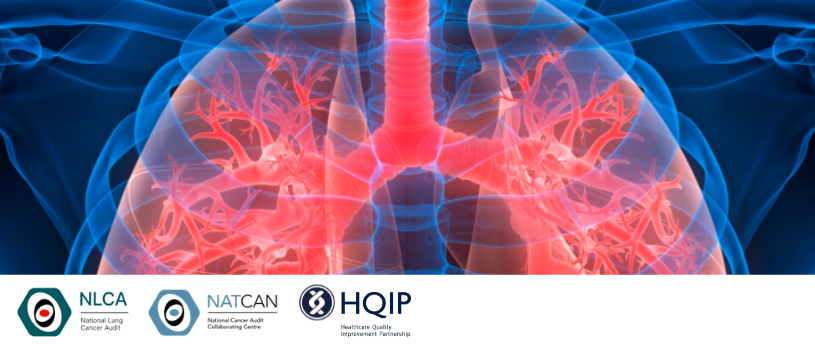
Over the past decade, the National Lung Cancer Audit (NLCA), which is commissioned by HQIP and part of the National Cancer Audit Collaborating Centre (NATCAN), has played a pivotal role in driving improvements in lung cancer diagnosis and survival. Its 2025 State of the Nation report is an audit of the NHS care received by people diagnosed with lung cancer in England and Wales during 2023. Importantly, we have seen a 7-percentage point increase in England in people diagnosed with stage 1 or 2 in 2023 (37%, up from 30% in 2021). In Wales, there’s even greater improvement, with a 10-percentage point increase (up to 34%, from 24% in 2021).
Early-stage diagnosis is fundamental to improving survival. Historically, most lung cancer cases were identified at advanced stages, limiting treatment options. Through systematic audit, benchmarking, and recommendations, identifying unwarranted variation, and providing actionable insights, the NLCA is helping to shift this pattern.
This improvement in early diagnosis aligns directly with UK healthcare priorities. The NHS 10-year plan, which highlighted that cancer outcomes in England lag behind other countries, aspires to shift the NHS from a service primarily focused on sickness to one that prioritises prevention and early diagnosis. HQIP-commissioned NATCAN, part of the Clinical Effectiveness Unit in London (a collaboration between the Royal College of Surgeons of England and the London School of Hygiene and Tropical Medicine), has a crucial role to play here. The national centre of excellence has brought all NHS national cancer audits together under one umbrella and is shining a spotlight on the care and treatment of patients who are diagnosed with cancer in England and Wales.
No progress whatsoever was made in diagnosing cancer at stage I and II between 2013 and 2021. Since then, rates have risen… with notable improvements in the early detection of lung cancer due to the targeted lung check programme.” Lord Darzi, Independent Investigation of the NHS in England, 2024
Treatment and waiting times: A mixed picture
Even with earlier diagnosis, improved patient outcomes depend heavily on timely and effective treatment. And here the picture is mixed.
People with stage 1 or 2 non-small cell lung cancer (NSCLC) in addition to a good performance status (0-2) are candidates for treatments with curative intent. The proportion of this group who had curative treatment was 80% across the whole of England in 2023, meeting the expected standard set by the audit. The proportion of people with NSCLC who had surgery also met the audit standard and exceeded pre-pandemic levels. In England, 7,018 people had lung cancer operations in 2023, an increase from 5,865 people in 2022. The audit also shows individual results for each hospital. Through these benchmarks, it helps to reduce unwarranted variation and ensure that all patients have equitable access to potentially curative treatment.
The NLCA does, however, highlight a need for improved uptake of systemic anti-cancer therapy (SACT). Clinical trials have demonstrated that SACT can transform patient outcomes for people with advanced NSCLC – extending survival, as well as improving cancer related symptoms and quality of life. In 2017, the NLCA set a standard that at of people with advanced NSCLC (stages 3B-4) and a good performance status (0-1) should receive SACT; yet the proportion who received SACT in 2023 was 62% in England. As well as being too low, this has also remained largely static in recent years
This is where clinical audits, like those in the National Clinical Audit and Patient Outcomes Programme commissioned by HQIP, make a real difference. By identifying areas for improvement and robustly monitoring progress against these, they help ensure that every patient gets the best possible treatment.
Lung cancer treatment waiting times also show cause for concern, particularly given that earlier diagnosis means demand is increasing. Delays in accessing treatment heighten stress and uncertainty for patients and, in some cases, allow the cancer to advance, limiting the effectiveness of potential treatments.
The National Optimal Lung Cancer Pathway for England (NOLCP) states that time from referral to the start of treatment for people with NSCLC should be no longer than . However, time to surgery exceeded 49 days for seven out of eight people with NSCLC at stage 1 or 2 in England, with a median time of 83 days. In Wales it was longer still, with the median time to surgery 97 days for these patients.
Timely diagnosis and treatment for people with Small Cell Lung Cancer (SCLC) is imperative too, as these tumours are highly aggressive, rapidly progressive, and can quickly spread, ultimately leading to fatal outcomes. In 2017, the NLCA set a standard that at least 80% of people with SCLC should receive SACT within 14 days of pathological diagnosis. The NLCA’s 2025 report highlights that in 2023, the median time from diagnosis to treatment in England was 15 days – with only 48% starting treatment within the target timeframe of 14 days.
It is in precisely situations like this that national clinical audit has an important role to play, working with the sector to provide evidence that highlights where changes would have an impact on patient outcomes. This will hopefully help deliver future treatment improvements, following the progress already made on earlier diagnosis.
Despite the mixed picture on treatment, crucially, more lives are being extended and saved. 2025’s NLCA report sees the median survival of the 18,653 patients in England diagnosed between 1 January and 30 June 2023 reach 358 days (compared to 267 days in 2021), with 50% surviving one year. While clinical audit is just one part of a healthcare system working hard to achieve improvements in care, to save and improve lives, it is an essential tool in healthcare providers’ armoury. HQIP Chief Executive, Chris Gush, explains:
The NLCA is a model for how systematic audit can drive measurable, life-changing improvements. It reflects a shared commitment to ensuring that every person with lung cancer is diagnosed earlier, treated faster, and given the best possible chance of survival. Continued collaboration between clinicians, service users, data analysts, cancer charities, and policymakers will be essential to sustain this, to ensure that every patient benefits.”
Find out more