Latest news: January 2025 eBulletin

30 Jan 2025

January’s edition of HQIP’s eBulletin is available now. It features the most recent clinical audit and quality improvement updates, including:
  • New resources published in January
  • Clinical Audit Awareness Week 2025
  • Former NHS leader appointed HQIP Chair
  • NHS England Quality Accounts List 2025-26
  • Blog: Why MCF4 falls short for NHS procurement
  • Transforming Public Procurement: Get Ready webinars
  • Impact reports published
  • NJR 2024 annual report update
  • CVDPREVENT improvement tool updates
Read the eBulletin here.
Don’t forget to sign up: Keep up to date with our latest news, events and work programmes by subscribing to our mailing list today. You can also follow us on LinkedIn and X: @HQIP

Clinical Audit Awareness Week 2025 announced

30 Jan 2025

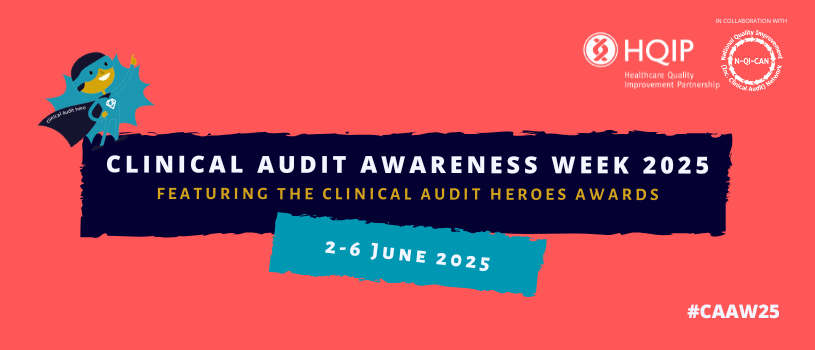
We are delighted to announce the return of Clinical Audit Awareness Week (#CAAW25), which will take place from 2-6 June 2025. This national campaign is designed to share and celebrate the impact of clinical audit and quality improvement in healthcare, and plays an important part in promoting the value of this work across healthcare. Run in collaboration with the National Quality Improvement (incl. Clinical Audit) Network (N-QI-CAN), this year’s campaign will again centre around the Clinical Audit Heroes Awards. Details on how and when to submit entries to these awards will be available in early spring, so keep an eye on our monthly eBulletins and website for updates.

Date for your diary

We will be launching #CAAW25 at a short online event on Wednesday 12 March, 12:30 – 1:00 pm. This will include a presentation by Professor Danny Keenan, HQIP Medical Director, who will talk about the impact of clinical audit and quality improvement, as well as details of how to get involved in this year’s campaign. Details of how to join this event will be available on HQIP’s Clinical Audit Awareness Week page in February. Please share: We are keen to involve the wider health and care sector in this campaign. As such, we will be announcing events and activities aimed at promoting the benefits of translating data and evidence into meaningful quality improvement. We will also be sharing a toolkit to support you in organising your own events and activities. Please share news of 2025 Clinical Audit Awareness Week with teams throughout your organisation, and forward details to Communications teams to share via newsletters and websites.

Stay up-to-date

Stay up-to-date: Further information on the awards, and on the wider #CAAW25 campaign and events, will be available in the coming months. Updates will be included in future HQIP eBulletins, on social media (follow @HQIP and @NQICAN on X and HQIP on LinkedIn), and posted to our dedicated Clinical Audit Awareness Week and Clinical Audit Heroes Awards webpages. In the meantime, make a note of the date of this campaign and the launch event in your diaries, and share this news on social media using #CAAW25! More information: Clinical Audit Awareness Week.

NHS England Quality Accounts List 2025-26 confirmed and available from HQIP website

22 Jan 2025

NHS Trust healthcare providers are required to publish a Quality Account report annually, covering the quality of their services. The NHS England Quality Accounts List comprises National Clinical Audits, Clinical Outcome Review Programmes and other national quality improvement programmes which NHS England advises Trusts to prioritise for participation and inclusion in their Quality Accounts for 2025-26.

The NHS England Quality Accounts List 2025-26, plus further information and guidance can be found on our website.

Former NHS leader appointed HQIP Chair

17 Jan 2025

New Board appointment promises new era for evidence-based healthcare

We are pleased to announce that Dr Celia Ingham Clark MBE, former deputy Medical Director and senior leader at NHS England, has been appointed Chair of HQIP’s Trustee Board. Her wealth of healthcare knowledge, together with our expertise in evidence-informed improvement, provides a significant opportunity to maximise the impact that data has on patient outcomes.

“Our current healthcare challenges require bold, data-driven solutions,” Dr Celia Ingham Clark MBE, Chair of HQIP’s Board of Trustees

With decades of experience in healthcare leadership, Dr Ingham Clark is well positioned to guide us in delivering our vision of ‘improved health outcomes for all through high-quality, evidence-driven healthcare’. At a time when targeted improvement is more critical than ever, her strategic insights will be pivotal when working in partnership with commissioners, providers and clinicians to translate data into tangible improvements in care.

Dr Ingham Clark, who was awarded an MBE in 2013 for services to the NHS, recently retired as Medical Director for Professional Leadership and Professional Standards at NHS England. Having held senior roles in clinical governance, patient safety, medical education and population health, she understands not only the systemic challenges facing healthcare today, but also the difference that patient-centred, sustainable improvement can make.

Commenting on her appointment, Dr Ingham Clark said: “Our current healthcare challenges – which range from health inequalities to resource constraints – require bold, data-driven solutions. HQIP’s role in translating evidence into action is critical to ensuring better outcomes for patients. I look forward to building on this vital work.” Her comments align with the findings of the recent Darzi Report, which highlights the potential of healthcare data, stating “The extraordinary richness of NHS datasets is largely untapped either in clinical care, service planning, or research.”

Since starting her career as a consultant general surgeon, Dr Ingham Clark has held multiple national leadership roles including National Clinical Director for Acute Surgery and Enhanced Recovery, National Director for Reducing Premature Mortality, and Medical Director for Clinical Effectiveness. As clinical lead for the National Clinical Audit Programme, she is a longstanding advocate for data-informed quality improvement.

Dr Ingham Clark’s appointment, which is immediate, comes as our focus is on collaboration and data-driven decision-making. By leveraging the NHS’s extraordinary data resources and strengthening partnerships with the wider sector, she can support us to address healthcare challenges head-on and deliver lasting improvements for patients.

Chris Gush, HQIP’s Chief Executive, explains: “Celia’s understanding of NHS systems, and her passion for healthcare improvement, align perfectly with our core purpose of improving results through evidence, patient engagement and partnership-working. Her leadership will help us maximise the impact of clinical audit and evidence-based interventions to improve patient safety, experience and outcomes. Put simply, if we maximise the value of healthcare data, we will save and improve lives, at the same time as reducing the burden on healthcare providers.”

Find out more: About HQIP, our work and our vision

Blog: The uncomfortable truth – Why MCF4 falls short for NHS procurement

14 Jan 2025

Clare Fountain, Associate Director of Quality Improvement

When it comes to procurement, it’s not just about how much you spend – it’s about how well you spend it. A tailored approach aligns every pound with quality outcomes, ensuring that each investment directly contributes to a better, more effective solution. In contrast, a generic approach spreads resources thinly; often compromising on fit, efficiency and impact.

If you’re an NHS organisation considering the Crown Commercial Services Management Consultancy Framework 4 (MCF4) as a compliant route to market, you’re not alone. But will MCF4 be the right tool for your complex procurement needs? While MCF4 offers value in certain contexts, it often struggles to address the unique demands of healthcare procurement:
  • Favouring the same large organisations with their ‘off-the-shelf’ solutions: NHS projects frequently require specialist expertise, deep NHS system knowledge and tailored specifications, KPIs and benefits realisation. Solutions via MCF4, particularly by large consultancies, tend to be generic rather than carefully tailored to meet individual organisational needs. This means opportunities for long-term value and sustainable improvement are often missed.
  • Not tapping the most specialist expertise: Suppliers selected during the framework’s setup may not represent the most innovative or specialised in the market. MCF4’s design can unintentionally sideline many SMEs – organisations that often bring specific expertise, agility and a deep understanding of NHS systems. These qualities are not just beneficial, they’re essential for addressing the complex, multi-layered challenges facing healthcare services today.

What’s the answer?

In-house procurement teams can run bespoke invitations to tender (ITTs), but they risk reinventing the wheel or struggle with resourcing. In certain situations, employing a procurement specialist will pay dividends for NHS trusts by offering:
  • A transformational focus: Procurement isn’t just about sourcing or signing contracts. It should be a catalyst for long-term healthcare improvement with:
    • A deep understanding of the challenges to be addressed
    • Consideration of value along the whole pathway
    • Clear benefits realisation – contracting is not the end point!
  • Contracting the right solutions, not just the usual suspects: SMEs with expertise, innovation and deep NHS insight are sidelined by rigid framework structures, but procurement specialists like HQIP can do the leg work for you to find the best fit.
  • Effective pre-market engagement, including patient involvement: Patient voices are often added late in the process, or not at all, reducing alignment with real-world healthcare needs. NHS procurement teams are also not always equipped to do this effectively. Procurement specialists with patient engagement experience can support teams with a strategic approach to embedding this throughout the procurement process.
  • Higher value delivered: When done right, tailored procurement delivers better outcomes – outcomes that are sustainable, impactful and aligned with the needs of patients, clinicians and healthcare teams.

Procurement + Patient Engagement + Quality Improvement = Better Value

HQIP’s exemplary commissioning approach: Delivering better outcomes

We go beyond transactional procurement by embedding quality improvement principles, patient involvement and social value into every stage of our commissioning work. With years of experience developing and refining our exemplary commissioning approach, we can help you navigate some common pitfalls. HQIP commissions the National Clinical Audit and Patient Outcomes Programme (NCAPOP), a nationally recognised quality improvement initiative funded by NHS England since 2009. Through rigorous, specification-driven commissioning, we measure the quality of care across a range of medical specialties, driving:
  • Clinical pathway improvement
  • Reduced variability in care standards
  • Improved patient outcomes

Reasons to commission HQIP procurement

Aligned with NHS values Quality and value for the NHS is at our core. As a not-for-profit organisation, we share NHS values, focusing on long-term outcomes over short-term returns.
Flexible, tailored procurement Our approach is adaptive and context-specific, ensuring each procurement strategy is fit for purpose. We can provide capacity or manage procurements end-to-end, as well as mentoring and training your local procurement team.
Pre-market engagement We can help you maximise the benefits. A unique strength of HQIP is how we embed the patient voice through every stage of the procurement. Doing this produces significant benefits by ensuring all commissioning considers exactly what end users want – delivering better value and outcomes.
Social value-driven We are experienced in awarding suppliers based on multiple criteria that assess their capacity to impact long-term patient outcomes and social value, in addition to cost.
Continuously improving HQIP leads best-practice in procurement by continuously refining commissioning and supportive practices for greater social benefit.
When healthcare commissioning demands flexibility, deep NHS expertise and meaningful patient involvement, contact us at: workwithus@hqip.org.uk Our value-based Procurement+ service combines expertise in procurement, patient engagement and quality improvement to ensure you achieve better value and outcomes. Schedule a consultation with our team today.

Cancer performance indicators updated

9 Jan 2025

Important news for anyone involved in cancer care… The National Cancer Audit Collaborating Centre (NATCAN), commissioned by the Healthcare Quality Improvement Partnership (HQIP) for NHS England, has released updated performance indicators for nine of its cancer audits; meaning that all NATCAN audits are now publishing data on a quarterly basis via an interactive dashboard. The first quarterly data dashboards for ovarian, pancreatic, kidney, bowel, oesophago-gastric, and breast (primary and metastatic) cancer audits have been published. While the non-Hodgkin lymphoma and lung cancer audits have also published updated quarterly data dashboards. Healthcare provider teams can utilise these dashboards to review their data completeness and to find out where improvements are needed. The dashboards also enable NHS Trusts to track their progress against key performance indicators over time, and monitor the impact of local quality improvement activities. Click here to find out more and access the interactive dashboards: www.natcan.org.uk/reports/natcan-quarterly-data-dashboards.

NEW reports (January 2025)

Don’t miss new reports on oesophago-gastric, prostate, and bowel cancer out this month. These, together with all cancer (and other) reports and infographics commissioned by HQIP, can be found here: HQIP reports.

More about the National Cancer Audit Collaborating Centre (NATCAN)

‘In 2023, Professor Peter Johnson, National Clinical Director for Cancer at NHS England acknowledged the transformative power of healthcare data, saying: “We’re in the middle of a real data revolution in the health service”. It goes without saying that the clinical audit community plays a pivotal role in that ‘data revolution’. However, to best realise the potential of data in healthcare, it too is going through a transformation.’ Read more about this ′umbrella approach′ to clinical audit in an article on page 19 of HQIP’s online quality improvement magazine: CORNERSTONE. See also: National Cancer Audit Collaborating Centre (NATCAN) programme webpage.

New resources published January 2025

9 Jan 2025

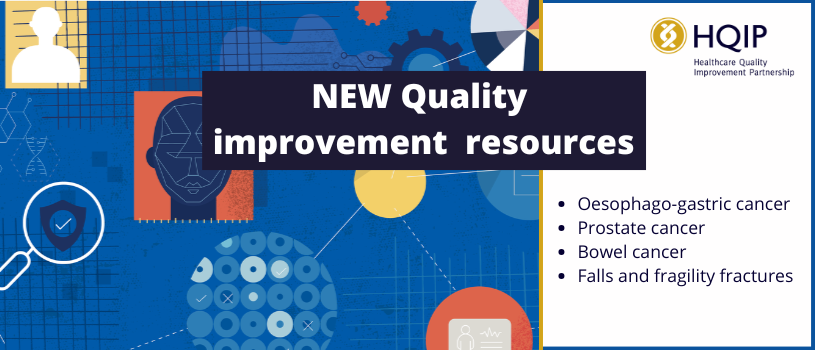
We are pleased to announce that the following new quality improvement resources (including reports, infographics, data and other outputs) from HQIP-commissioned national clinical audits and outcome review programmes have been published today:
  • Oesophago-gastric cancer report – National Oesophago-Gastric Cancer Audit (NOGCA), part of the National Cancer Audit Collaborating Centre (NATCAN)
  • Prostate cancer report – National Prostate Cancer Audit (NPCA), part of the National Cancer Audit Collaborating Centre (NATCAN)
  • Bowel cancer report – National Bowel Cancer Audit (NBOCA), part of the National Cancer Audit Collaborating Centre (NATCAN)
  • Falls and fragility fracturesFracture Liaison Service Database (FLS-DB) report – Falls and Fragility Fractures Audit Programme (FFFAP)

Find out more about these reports

These reports are available to view and download using the links above, while summaries about all of these reports can be read online here.

More cancer data

The National Cancer Audit Collaborating Centre (NATCAN) has also released updated performance indicators for nine cancer audits, with all audits now publishing data on a quarterly basis via an interactive dashboard. Find out more: NATCAN quarterly data dashboards.
All reports: All HQIP-commissioned reports can be accessed via our dedicated reports webpage. Stay up to date: Join our mailing list to receive notifications when new reports are published.