Latest news: September 2025 eBulletin

25 Sep 2025

The September edition of HQIP’s eBulletin is out now! It features the latest news and updates relating to clinical audit, outcome reviews and data-informed healthcare improvement, including: What’s new?
  • Transforming care for young people with epilepsy
  • Article: The power of patient engagement in improvement
  • HQIP audits pave the way to better cancer care
  • Paediatric benchmarking data available

A chance to revisit:

  • Case study: Using audit data to improve end-of life-care by 2025 Clinical Audit Hero award winner
  • Ten new reports published this month on maternity and perinatal care, hip fracture, and cancer
In other news:
  • Child mortality data and news
  • Cardiovascular care: Quality improvement data packs
  • National Vascular Registry (NVR) data released
  • Call for ideas: National Confidential Enquiry into Patient Outcome and Death
  • Opportunity: Scientific Advisory Council Healthcare Professional Member
Read HQIP’s latest eBulletin here.
Don’t forget to sign up: Keep up to date with our latest news, events and work programmes by subscribing to our mailing list today. You can also follow us on LinkedIn and X: @HQIP

HQIP audits pave the way to better cancer care

24 Sep 2025

With World Cancer Research Day shining a light on cancer care today, we share an update on the HQIP-commissioned National Cancer Audit Collaborating Centre (NATCAN), which has recently published seven reports to support improving patient outcomes. These reports use anonymous data from all patients cared for in England and Wales so that patients and the NHS can assess how well standards are being met, with data provided for individual hospitals, regions and nationally. Additionally, the audit projects use the data in their quality improvement work, providing support to hospitals to improve their care. The ovarian cancer project, for example, will work with individual regional teams to support them to improve the percentage of women diagnosed with ovarian cancer who receive treatment within 28 days after an emergency admission. The latest NATCAN reports cover breast (primary and metastatic), kidney, non-Hodgkin Lymphoma, ovarian, pancreatic and oesophago-gastric cancer and set out recommendations for NHS cancer services. For the first time, they were published alongside results for individual NHS Trusts, Health Boards, and regions in the new NATCAN data dashboards. Services can review their own data and benchmark the care they provide against other services. Reports for bowel, prostate and lung cancer will follow in the months ahead. Each audit considers the complexity of cancer care, recognising that a patient’s treatment plan must reflect the stage of their cancer, their fitness, and how likely they will respond to treatments. The latest reports show where and how variations in the quality of cancer care persist across the NHS.
“NATCAN audits should act as a beacon of improvement in cancer care. By learning from the findings, we can work together to ensure every cancer care professional delivers best clinical practice, and every patient gets the highest standard of care.” Professor Frank Smith, Vice President of the Royal College of Surgeons of England
With more than 900 new cancer cases per day, improving care and outcomes for patients has never been more crucial. Opportunities for improvements to cancer diagnosis and care can be found throughout the NHS 10 Year Plan, after Lord Darzi’s 2024 investigation of NHS England stated “the UK has appreciably higher cancer mortality rates than other countries”. This underlines the crucial importance of clinical audit in understanding where changes can lead to improvements in care and, in turn, patient outcomes. NATCAN also places particular emphasis on patient engagement, with a patient and public involvement forum in place for each audit. Patients contribute to the development of the work right from the start, ensuring that people with lived experience of cancer play a central role in defining the quality improvement goals and activities of each audit, as well as co-creating outputs specifically designed to be patient-friendly.
“These reports provide a comprehensive overview of patterns of care and outcomes for patients, highlighting both progress and areas where further improvement is needed. We are proud to collaborate with professional groups, charities, and people with lived experience of cancer to ensure that our audits reflect real-world needs and drive meaningful change.” Dr Julie Nossiter, Director of Operations, NATCAN

Gold standard, collaborative commissioning

HQIP developed an innovative, umbrella approach to commissioning clinical audit so that one centre could host the ten NHS national cancer audits that are part of the National Clinical Audit and Patient Outcomes Programme (NCAPOP). By bringing these audits under one organisation, rather than commissioning individual projects, benefits and efficiencies can be maximised early. This includes sharing good practice, centrally developing online dashboards and minimising operating costs. Ultimately – and crucially – this supports improved patient care and outcomes. NATCAN has become a centre of clinical, data science, methodological and epidemiological expertise, providing gold standard annual data. The Centre focuses on three “Rs”, ensuring that all activities are clinically relevant, methodologically robust, and technically rigorous. Professor Ajay Aggarwal, Clinical Director of NATCAN explains: “The power of NHS data to support major improvements in the quality of cancer care has never been greater. We expect the findings from the NATCAN audits will be used by NHS Trusts to continue to drive standards of care and reduce inequalities.”

Find out more:

Benchmarking data available

18 Sep 2025

We’re pleased to share that following two datasets on paediatric care have been published on the National Clinical Audit Benchmarking (NCAB) website, HQIP’s online portal which provides access to national audit performance data:

  • National Paediatric Diabetes Audit (NPDA): This data was published on NCAB on 10 September 2025, and covers the period from 1/4/2023 to 31/3/2024 (NPDA report published in March 2025)
  • Paediatric Intensive Care Audit (PICANet): This data was published on NCAB on 12 September 2025, and covers the period from 1/1/2023 to 31/12/2023 (PICANet report published on 12 Dec 2024).

This data is accessible by going to the NCAB website.

HQIP-Commissioned Audit Sees 72.8% Increase in School Healthcare Plans for Young People with Epilepsy

17 Sep 2025

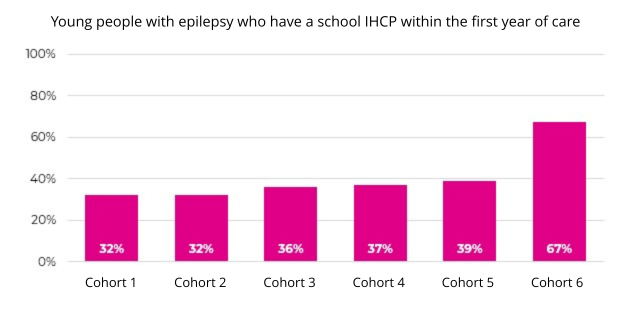
The proportion of children and young people with epilepsy who have a school Individual Healthcare Plan (IHCP) within the first year of care has jumped 72.8%, from 38.9% in the 2024 annual report to 67.2% in the latest Epilepsy12 audit 2025 report. This marked increase, after previously being broadly static for several years, highlights a major step forward in ensuring that children with epilepsy receive the support they need in school.

Epilepsy12, the national clinical audit of seizures and epilepsies in children and young people, is commissioned by HQIP as part of the National Clinical Audit and Patient Outcomes Programme (NCAPOP) and has tracked paediatric epilepsy care since 2009 across England and Wales. Delivered by the Royal College of Paediatrics and Child Health (RCPCH), the audit provides essential data to benchmark services against national standards, and drive improvements and reduce variation in care.

A key factor behind the increased proportion of children and young people with IHCPs has been the direct involvement of children, young people and families themselves. The Epilepsy12 Youth Advocates group, who are epilepsy experienced or interested young people and families volunteering to improve care for patients, has been instrumental in shaping what is measured, helping to define Epilepsy 12’s key performance indicators and highlighting the issues and potential solutions.

This brings patient-led priorities to the audit, ensuring that topics such as school care plans and the mental health of children and young people with epilepsies are central, alongside more traditional healthcare metrics. This shift in focus, and the resulting improvements at scale, is a major success for the young people driving and benefitting from the improvements.

The Importance of School Healthcare Plans

IHCPs have been a key focus for the Youth Advocates (YAs) and other stakeholders over the last few years. The YAs have consistently emphasised that a good, individualised plan in school can be transformative, especially in the first year after diagnosis. Having an IHCP is key to ensuring that children and young people with epilepsy receive appropriate support, safety, and full participation in education and school life. They are vital for epilepsy, as what is right for one child can be completely different from what is right for another.

The YAs emphasised the importance of IHCPs and how they can support not only the young person, but also their family, teachers and friends to feel more confident about epilepsy. They also advocated for a comprehensive epilepsy IHCP template for schools that included crucial information, including seizure details, aspirations, and mental health, but was also easy to use. An example template was developed and is available online.

“I was diagnosed with epilepsy in 2018. My parents and I met with the School Nurse and Headmaster to create a plan. Teachers were informed and updates were made as needed. It was a learning curve for everyone. The plan allowed me to attend day trips, complete two Duke of Edinburgh’s expeditions, and go on a 7-night trip to America. Without this support, travelling would have been much more difficult.” A young person with epilepsy

Looking forward: Opportunities for further improvements

Given that having an IHCP is a statutory requirement for a young person with epilepsy, Epilepsy12 is aiming for 100% adoption and identifying easier ways to enable the sharing of key information between families, health and education. As well as continuing to build upon existing successful work to improve this KPI, encouraging further data entry and service participation will also be important. There have been significant increases in the total cohort size of health service providers submitting data to the audit and of data completeness this year, something which is extremely important when drawing conclusions from the audit data; particularly trends over time and variation between subgroups.

150 NHS Health Boards and Trusts providing paediatric epilepsy care in England and Wales were registered into the Epilepsy12 audit in 2025, via a bespoke data platform launched in December 2023. This is an increase from the 138 Health Boards and Trusts registered to the platform used previously. Of the Health Boards and Trusts registered, 80% (120/150) submitted data in this latest round of reporting (cohort 6, covering children and young people with a first paediatric assessment undertaken between 1 December 2022 and 30 November 2023).

The cohort size also increased considerably, with 3,105 young people with newly-diagnosed epilepsy included in the 2025 analysis. This compares to the previous five cohorts, which all had around 2,000 young people. Furthermore, data completeness has improved from 86% in cohort 5 (2024 report) to 98.5% in cohort 6 (2025 report).

The increased cohort size and improved data completeness may be a reflection of the streamlined data entry process on the new Epilepsy12 data platform. Find out more about this and other highlights, including epilepsy specialist nurse provision improvements, in the 2025 Epilepsy12 report.

Going forward, as well as striving to further improve data entry and service participation, the focus of the audit will continue to be reviewed. Indeed, Epilepsy12 has often seen the ambition for a particular KPI advance over time, building upon initial progress by resetting aspirations and targets. This means that the current KPI focused upon young people with epilepsy having a school care plan may well evolve – for example to having a ‘comprehensive’ IHCP and then an ‘impactful’ plan.

Epilepsy12’s latest findings underscore the importance not only of robust data, but also the power of involving children and young people in shaping the care that directly impacts their lives. By embedding patient and family at the heart of its work, it has demonstrated how genuine collaboration and co-production can deliver real-world change.

These noteworthy improvements in paediatric epilepsy care reflect not only robust national audit and patient-led advocacy, but also the ongoing commitment of key stakeholders. Initiatives such as the NHS England Epilepsy Oversight Group, including the publication of the national bundle of care for children and young people with epilepsy, and targeted programmes like the Epilepsy Quality Improvement Programme (EQIP) have driven up performance and consistency.

Furthermore, the collaborative efforts of key stakeholder groups, including Young Epilepsy, Epilepsy Action and others, ensure that the needs of children, young people, and families remain central, embedding best practice and delivering meaningful change.

Having an effective individual school healthcare plan is a vital step towards safer, equitable and empowering support for young people with an epilepsy. Seeing such a dramatic improvement in schools shows what is possible when professionals, families and young people work together at many different levels.” Dr Colin Dunkley, Clinical Lead for Epilepsy12

Further information and resources

New resources published September 2025

11 Sep 2025

We are pleased to announce that the following new resources from HQIP-commissioned audits and programmes have been published. Focused on maternity and perinatal care, hip fracture, and cancer (seven reports), they include data, findings, infographics, recommendations and more, to support quality improvement:

Maternity and perinatal care

Hip fracture

Cancer

  • Primary breast cancer2025 report National Audit of Primary Breast Cancer (NAoPri/NATCAN) Based on care received by people diagnosed with primary breast cancer from 2020 to 2022 in England and Wales, this report found that, among those diagnosed with primary breast cancer (Stage 0 to 3C), three-year all-cause survival was 92%, while three-year breast cancer-specific survival was 97%.
  • Metastatic breast cancer 2025 report National Audit of Metastatic Breast Cancer (NAoMe/NATCAN) Based on care received by people diagnosed with metastatic breast cancer from 2020 to 2022 in England and Wales, this report found that the percentage of patients who survived for at least one year was 65%, and for three years was 44% (England and Wales combined, where metastatic disease was identified at the time of initial diagnosis).
  • Ovarian cancer 2025 report National Ovarian Cancer Audit (NOCA/NATCAN) This report is based on care received by women diagnosed with ovarian cancer between 1 January and 31 December 2022 in England, and 1 January 2022 and 31 December 2023 in Wales. It found that approximately seven out of ten patients in England, and three out of four in Wales, survived at least one year after diagnosis.
  • Pancreatic cancer 2025 report National Pancreatic Cancer Audit (NPaCA/NATCAN) This report is based on care received by people diagnosed with pancreatic cancer between 1 January 2021 to 31 December 2022 in England, and 1 January 2022 and 31 December 2023 in Wales. It found that the percentage of people who survived for 30 days was 78% (England) and 79% (Wales).
  • Non-Hodgkin lymphoma 2025 report National Non-Hodgkin Lymphoma Audit (NNHLA/NATCAN) This report found that the percentage of people who survived at one year was 81% (England) and 83% (Wales), and at two years was 74% in England (data not available for Wales).
  • Kidney cancer 2025 report National Kidney Cancer Audit (NKCA/NATCAN) This report is based on care received by people diagnosed with kidney cancer from 2018-2022 in England, and from 2022-2023 in Wales. It describes national trends in kidney cancer diagnoses and treatments, and contains five recommendations for improvement.
  • Oesophago-gastric cancer 2025 report National Oesophago-Gastric Cancer Audit (NOGCA/NATCAN) Based on care received by people diagnosed with oesophago-gastric between 1 January 2022 and 31 December 2023 in England and Wales. This report highlights both the strengths and the ongoing challenges facing oesophago-gastric cancer services in England and Wales.

All reports: All HQIP-commissioned reports can be accessed via our dedicated reports webpage. Stay up to date: Join our mailing list to receive notifications when new reports are published.

NEW case study on using audit to improve end of life care

4 Sep 2025

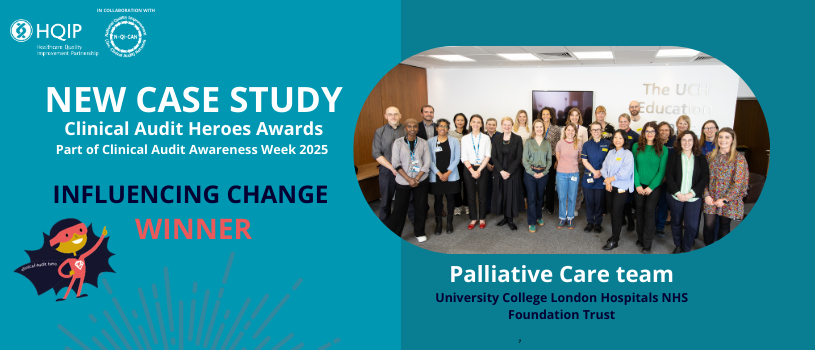
This case study by the 2025 Clinical Audit Hero Award Influencing Change winner, the Palliative Care Team at University College London Hospitals NHS Foundation Trust (UCLH), showcases how their project used audit data to improve end of life treatment planning, decision making and care, and bereavement support.

It highlights how audit-driven change can influence service delivery, and demonstrates the impact of collaborative working to improve access, experience and outcomes for patients requiring palliative care. Key achievements include:

  • Innovative use of VR to ease isolation and distress
  • Positive survey results from bereaved carers
  • A commendation of excellence from the National Audit of Care at the End of Life (NACEL).

Download the case study: Case Study – Influencing Change Winner Palliative team

This case study was developed as part of Clinical Audit Awareness Week 2025 (which took place 2–6 June 2025, #CAAW25). You can explore other available #CAAW25 resources by heading over to the #CAAW25 main webpage.