Listening to marginalised voices in maternity case study

8 Jun 2025

Commissioned by NHS England and delivered by HQIP in 2024, this qualitative insight project set out to inform the development of an inclusive Patient-Reported Experience Measure (PREM) for maternity care. It focused on capturing the experiences of groups underrepresented in existing feedback mechanisms – particularly those facing socio-economic, cultural, or health-related disadvantage. The project combined a literature review, targeted outreach, and co-design with maternity charities to ensure engagement was inclusive and meaningful. The approach uncovered fresh insights, guided the prioritisation of participant groups and informed the design of engagement activities. Thematic analysis of participant insights and accompanying recommendations have supported the maternity PREM and contributed to broader efforts to reduce inequalities in maternity care.

This case study outlines:

  • The need for this work to deliberately reach those most affected by systemic disadvantage
  • The multi-stage, inclusive methodology used to capture diverse perspectives across the maternity care pathway
  • The impact the project had
The case study can be viewed by clicking the button below: [button url=”https://www.hqip.org.uk/wp-content/uploads/2025/03/Case-study-Embedding-patient-voice-into-complex-procurement.pdf” target=”self”]Case study: Listening to marginalised voices in maternity[/button]  

How HQIP could help you

As a not-for-profit and trusted partner of the NHS, we understand complex healthcare challenges and take a patient-focused, evidence-informed approach to providing high quality solutions. So whether an organisation needs support with patient engagement, transformation strategy, improvement training, or value-based procurement support, we can help – with proven expertise across multiple areas of quality improvement. Contact our expert team for a free, no obligation conversation: workwithus@hqip.org.uk

#CAAW25 event recording now available – Data-driven improvements in maternity care

6 Jun 2025

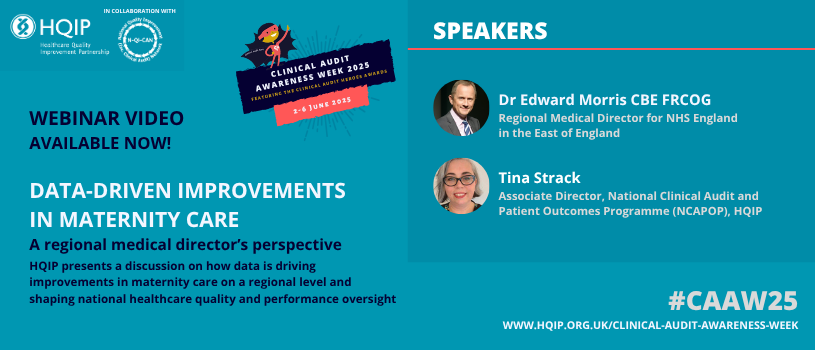
As part of Clinical Audit Awareness Week 2025 (2–6 June, #CAAW25), HQIP is pleased to share the recording of the live event Data-driven improvements in maternity care: A Regional Medical Director’s perspective from 5th June 2025 is now available.

This event features Dr Edward Morris CBE FRCOG, Regional Medical Director & Chief Clinical Information Officer, NHS England (East of England Region) in conversation with Tina Strack, Associate Director, National Clinical Audit and Patient Outcomes Programme (NCAPOP) at HQIP. They explore how data is being used to improve maternity care at a regional level, and shape national healthcare strategies.

This event is ideal for maternity clinicians, service managers, data analysts, commissioners, and patient advocates.

Listen/watch again

Please share this resource on social media using the hashtag #CAAW25, and explore other available #CAAW25 event videos and resources by heading over to the #CAAW25 main page.

#CAAW25 event recording available now – Commendations award winners

6 Jun 2025

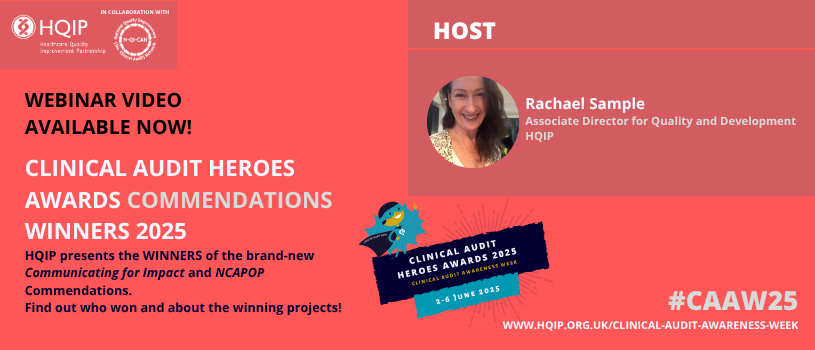
As part of Clinical Audit Awareness Week 2025 (2–6 June, #CAAW25), HQIP is pleased to share that the recording of the Clinical Audit Heroes Awards 2025 – Commendations webinar from 6th June 2025 is now available to watch.

This special event celebrates excellence in clinical audit, and features presentations by the winners of two new award categories:

Using NCAPOP Data

  • WINNER: Improving Physical Healthcare Audit (Morris ward, Low secure forensic unit – Emmanuel Okoro, Mamun Rahman, Ikenna Agbo, Bernard MacMaddy & Tapankumar Brahmbhatt); Goodmayes Hospital, North East London NHS Foundation Trust
Find out more about the Using Data from the NCAPOP winners and runners-up.

Communicating for Impact

  • JOINT WINNER: Implementation of the Cornell Assessment for Paediatric Delirium as a Vital Sign in the Paediatric Post-Anaesthetic Care Unit (Isabel Diez-Martin, Peter Brooks, John Paul & the Paediatric Recovery Team); Chelsea and Westminster Hospital NHS Foundation Trust NHS
  • JOINT WINNER: National Audit of Care at the End of Life (NACEL)
Find out more about the Communicating for Impact winners and runners-up.

Watch the winning teams present their projects, share lessons learned, and offer practical insights into how data and communication are driving real improvements in healthcare.

Watch/listen again

Please share this resource on social media using the hashtag #CAAW25, and explore other available #CAAW25 event videos and resources by heading over to the #CAAW25 main page.

Efficiencies Hero 2025 award announced

6 Jun 2025

The winners of the Clinical Audit Awareness Week 2025 Efficiencies Hero award have been announced! Congratulations to: WINNER: Contraception after childbirth (Courtney Taylor, Rachel Massey & Rahel Odonde); King’s College Hospital NHS Foundation Trust
This clinical audit aimed to evaluate and improve access to postnatal contraception, as fertility can return as early as three weeks postpartum, and short interpregnancy intervals are associated with increased maternal and neonatal risks. The team achieved improved antenatal discussion rates and postnatal discussions within 7 days, with contraception uptake rising from 3.9% to 5%. Key interventions included structured teaching for junior doctors and the launch of a dedicated monthly Postnatal Contraception Clinic in the Maternity Assessment Unit.
RUNNER-UP: Tracheostomy standards of practice (Laura Atkins); County Durham & Darlington Foundation Trust
This audit was developed since compliance with tracheostomy standards, and staff knowledge and understanding of those standards, was identified as an area that required attention. Improvements introduced as a result included formalised 3-hour teaching sessions, with the opportunity to practice practical skills on mannequins, basic care/manoeuvres, inner tube removal/replacement, and equipment cleaning and tracheal suction technique. Practice was then supervised, and tracheostomy competencies were devised and completed, with one to one teaching time providing the opportunity to discuss key learning points.
Laura explains: “I initially did the audits to ensure that what I was doing was actually working within the clinical environment. But, with the help of our audit team, we were then able to use the data gathered to see how this was having an effect on a wider scale – and I am thrilled with the results!”
Fur

Clinical Audit Heroes Awards

This award is one of seven categories in this year’s Clinical Audit Heroes Awards. The winners of each main category award were announced at a series of daily Lunch & Learn events, hosted by N-QI-CAN, on each of the award topics from 2-6 June 2025; while two new commendation awards were announced at an event on Friday 6 June. The recordings of these events, for those who wish to listen again (in addition to news of all the winners and a range of other events and activities) will be available on the Clinical Audit Awareness Week webpage. Further information about the awards: Clinical Audit Heroes awards.

Clinical Audit Awareness Week

Find out more about all activities and events: Clinical Audit Awareness Week.

Don’t miss out!

To find out about all award winners, resources and events relating to #CAAW25, subscribe to HQIP’s mailing list (you will normally receive two emails per month). You can also follow HQIP on X, and on LinkedIn (look out for and use #CAAW25). Finally, don’t forget to join in the fun by sharing online, using #CAAW25!

Have your say

Tell us what you thought of #CAAW25 using this short online feedback form.

NEW case study: Optimising doctor rotas to improve safety and efficiency

6 Jun 2025

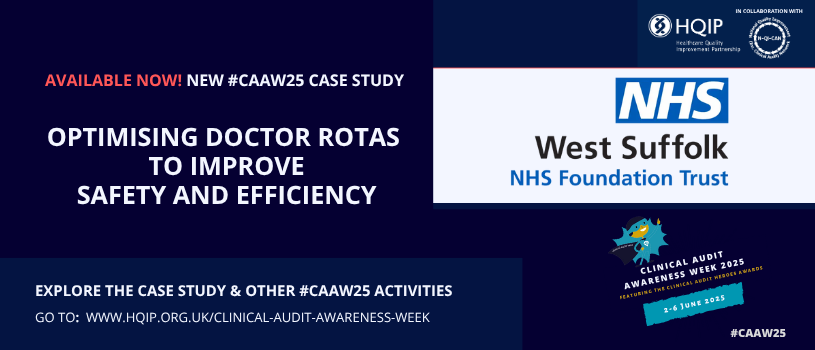
As part of Clinical Audit Awareness Week 2025 (2–6 June 2025, #CAAW25), HQIP is pleased to share a new case study from Epsom and St Helier University Hospitals NHS Trust, highlighting how redesigned junior doctor rotas in critical care improved efficiencies in delivering patient safety, and improved staff wellbeing.

Led by John Dixon, the project involved developing a unified rota across two sites—St Helier ICU and Epsom HDU—following successful accreditation of the HDU by the Faculty of Intensive Care Medicine (FICM).

Key improvements included:

  • Rota gaps reduced by 94.4%
  • Patient safety incidents decreased by 24.5%
  • Junior doctor satisfaction increased from 71.3% to 92.5%
  • Cost savings of over £224,000.

Changes were co-designed with doctors, prioritising education, wellbeing, and safe staffing. The case study shows how thoughtful rota design can deliver meaningful efficiencies and safer care.

Click this link to read the case study: Optimisation of resident doctor rotas in critical care – HQIP

Please share this resource on social media using the hashtag #CAAW25, and explore other available #CAAW25 event videos and resources by heading over to the #CAAW25 main page.

Communication & Using National Data Heroes 2025 announced

6 Jun 2025

The winners of the following Clinical Audit Awareness Week new awards for 2025 (Using NCAPOP Data and Communicating for Impact) have been announced! Congratulations to:

Using NCAPOP Data

NCAPOP is the National Clinical Audit and Patient Outcomes Programme (NCAPOP) commissioned by HQIP behalf of the NHS and others WINNER: Improving Physical Healthcare Audit (Morris ward, Low secure forensic unit – Emmanuel Okoro, Mamun Rahman, Ikenna Agbo, Bernard MacMaddy & Tapankumar Brahmbhatt); Goodmayes Hospital, North East London NHS Foundation Trust
This project was informed by findings from the NCAPOP, particularly national data highlighting the physical health inequalities experienced by individuals with Severe Mental Illness (SMI). These insights underscored the urgency of addressing reduced life expectancy in this population due to preventable physical health conditions. The team used NCAPOP benchmarks to guide the design of the audit, focusing on areas such as cardiovascular risk (QRisk), obesity, smoking, and access to national screening programmes. By comparing local data trends, they identified key service gaps, including limited screening access and delays in specialist referrals, and introduced a range of interventions.
RUNNER-UP: Transforming End of Life Care Quality Improvement Project (Transforming End of Life Care Team); University College London Hospital NACEL (as a part of NCAPOP) contributed a reliable set of data to build this project on, and also offered comprehensive sequential appraisals to evaluate its performance, thereby transforming and promoting improvements across all aspects of end-of-life care. These include: clinical (recognition of dying, addressing – as well as implementation of – personalised needs, and bereavement services); educational (communication skills teaching focusing on EDI); and leadership-focused in both hospital and community settings, with the unification of Palliative, End Of Life and Supportive Care being the way forward to further improve responsiveness and equity of access.

Communicating for Impact

JOINT WINNER: Implementation of the Cornell Assessment for Paediatric Delirium as a Vital Sign in the Paediatric Post-Anaesthetic Care Unit (Isabel Diez-Martin, Peter Brooks, John Paul & the Paediatric Recovery Team); Chelsea and Westminster Hospital NHS Foundation Trust NHS This project’s impact was communicated through in-service training, visual prompts in PACU, regular staff huddles, and patient stories that underscored the real-world effects of Emergence Delirium. Presentations were delivered to stakeholders across divisions, to support the tool’s integration into the EMR and standard workflows. It will be presented at BARNA 2025, will be featured during NIHR International Nurses Day with the “Dragon’s Den” competition, and is shortlisted for the APAGBI 2025 conference for oral presentation. It will also be presented at the RIQI event at Chelsea and Westminster Hospital. These high-visibility platforms have ensured broad dissemination, promoted cross-site collaboration, and reinforced a cultural shift in how Emergence Delirium is recognised and managed. JOINT WINNER: National Audit of Care at the End of Life (NACEL) Communications examples include: A monthly newsletter to 700+ health and social care professionals; three academic publications; and professional presentations delivered at national and international conferences, webinars and meetings. This project also contributed to the palliative care and end of life care roundtable submission of intent for the 10 Year Health Plan, and provided data to the Health and Social Care Committee’s Independent Evaluation of Palliative Care in England. In addition, the NACEL Portal hosts a dynamic, interactive space to share best practice in quality improvement work. RUNNER-UP: Falls Prevention Improvement Project (Anna Skipper); Norfolk and Norwich University Hospitals NHS Foundation Trust
Outcomes have been shared in multiple forums including best practice on the National Falls Prevention Practitioners group on NHS Futures platform. The project’s Falls Lead presented at the 2023 National Falls Prevention Summit: Reducing Inpatient Falls and Harm, and collaborated with AGE UK Norwich to raise awareness of the value of co-produced, patient stories highlighting patient pathways across the system, and realities of missed healthcare opportunities. The judges were particularly impressed with ‘Alice’s Story’, a video highlighting data, experiences, and stories of local Norwich residents, which has been widely shared online and was presented at Norfolk and Waveney Integrated Care System events and other forums.

Clinical Audit Heroes awards

These awards are two of seven categories in this year’s Clinical Audit Heroes Awards. The winners of each main category award are announced at a series of daily Lunch & Learn events, hosted by N-QI-CAN, on each of the award topics from 2-6 June 2025; while these two new commendation awards were announced at an event on Friday 6th June. The recordings of these events, for those who wish to listen again (in addition to news of all the winners and a range of other events and activities) will be available on the Clinical Audit Awareness Week webpage. Further information about the awards: Clinical Audit Heroes awards.

Clinical Audit Awareness Week

Find out more about all activities and events: Clinical Audit Awareness Week.

Don’t miss out!

To find out about all award winners, resources and events relating to #CAAW25, subscribe to HQIP’s mailing list (you will normally receive two emails per month). You can also follow HQIP on X, and on LinkedIn (look out for and use #CAAW25). Finally, don’t forget to join in the fun by sharing online, using #CAAW25!

Have your say

Tell us what you thought of #CAAW25 using this short online feedback form.

#CAAW25: Key resources on Efficiencies in Healthcare

6 Jun 2025

As part of Clinical Audit Awareness Week (#CAAW25), which is designed to share the value of clinical audit and quality improvement in improving patient outcomes, we are signposting to useful resources from HQIP, the clinical audit community and the wider healthcare sector relating to Efficiencies in healthcare: Embedding sustainability into healthcare quality improvement is an approach to improve health outcomes whilst minimising the environmental, social and financial impacts. Sustainable quality improvement highlights potential waste in resources and any health and social inequalities. NHS trusts are assessed by the Care Quality Commission on their environmental sustainability. Tools are available on the Institute for Healthcare Improvement website that can assist healthcare organisations to highlight areas of opportunity in lowering their carbon emissions from care delivery. In addition, the following resources from HQIP are also useful:
  • Article on the potential of EPRs to deliver safer, more efficient care, Real-time data is only valuable if it informs real-time decisions: hqip.org.uk/untapped-potential-in-nhs-eprs.
  • Article: HQIP’s CEO, Chris Gush, explains how national clinical audit helps Integrated Care Systems (ICSs) and other healthcare leaders to maximise resources and deliver priorities: hqip.org.uk/blog-system-priorities.
  • Article: Prof Danny Keenan, HQIP’s Medical Director, shares his experience of sharing knowledge and working collaboratively to target resources, and save and improve lives, in The Big ‘C’ – Collaboration: http://staging-hqip-org-uk.stackstaging.com/blog_collaboration_dk_mar25.
  • Blog: From Data to Action, HQIP’s role in delivering NHS priorities: hqip.org.uk/blog-nhs-priorities-2025-26.
  • Blog: Insights from Lord Darzi’s independent investigation of the English NHS: hqip.org.uk/blog-darzi-response-sept2024.
  • Article: In IN FOR THE LONG HAUL, Vicky Patel, Chair of National Quality Improvement incl. Clinical Audit Network (N-QI-CAN), explores how to take an effective and sustainable approach to clinical audit – pdf (article on pages 28-31).
  • Case study on a 2022 Clinical Audit Awareness Week winning project from the Sustainable Respiratory Care Audit Team at Newcastle Hospitals NHS Foundation Trust on their project designed to reduce the environmental impacts of healthcare – Sustainable Respiratory Care Audit 2022 case study.
Note that, for those published outside of HQIP, we are unable to take responsibility for the content within – please contact the provider direct if you have any questions.

Also on Efficiencies in Healthcare for #CAAW25

Fri 6 June, 12.30–1.45pm: Online Lunch & Learn – Sustainability, hosted by NQICAN and featuring the Efficiencies award announcement (use this link to REGISTER IN ADVANCE).

Clinical Audit Awareness Week, featuring the Clinical Audit Heroes awards

There is a packed agenda of events and activities across the week of 2-6 June 2025 – everything is FREE, but please note that you will need to register in advance for live events:
  • Fri 5 June, 10–11am: Webinar –Clinical Audit Heroes Commendation Awards, with presentations by winning projects that 1) use NCAPOP data to drive healthcare improvements, and 2) communicate effectively. Register here
Who are the Clinical Audit Heroes? There is also a series of daily Lunch & Learn events, hosted by N-QI-CAN, on each of the Clinical Audit Heroes awards main categories from 2-6 June 2025 (registration required). The winners these awards are announced at these events; while two new commendation awards are announced at this event on Friday 6th June. Further information: Clinical Audit Awareness Week.

Don’t miss out!

To find out about all award winners, resources and events relating to #CAAW25, subscribe to HQIP’s mailing list (you will normally receive two emails per month). You can also follow HQIP on X, and on LinkedIn, where information will be posted daily from 2-6 June (look out for and use #CAAW25). And don’t forget to join in the fun by sharing online, using #CAAW25!

Have your say

Tell us what you thought of #CAAW25 using this short online feedback form.

Influencing Change Hero 2025 award announced

5 Jun 2025

The winners of the Clinical Audit Awareness Week 2025 Influencing Change Hero award have been announced! Congratulations to: WINNER: Transforming End of Life Care Quality Improvement Project  (Dr Emily Collis and the Transforming End of Life Care Team); University College London Hospital
A report into end of life care (EOLC) identified that significant improvements were required, and the team coordinated a response, ensuring that EOLC was named as a priority for the trust and identifying and reporting on annual quality priorities around EOL decision making, bereavement support and EOL clinical care. The preferred model for improvement was a clinical EOLC service, building on the SWAN model of care, with 7 days per week holistic clinical reviews of all patients identified to be in their last days of life, regardless of complexity of symptoms.
RUNNER-UP: Evaluating the Impact of a Novel Digital Service Alongside Routine Clinical Care for Post-Covid Syndrome (Suffolk and North Essex Long Covid Team); East Suffolk and North Essex Foundation Trust
This project involved integrating a digital tool alongside routine clinical practice, to enhance recovery support for people living with Long Covid. It introduced a digitally enabled, patient-centred intervention into the Post-Covid Service (PCS), helping individuals to understand and optimise their everyday movement to manage fatigue and improve functional outcomes. Central to the project is a structured clinical audit that has driven continuous service evaluation and improvement. Also, by embedding this model into routine care, the project has facilitated a more sustainable, personalised approach to Long Covid management.
.

Clinical Audit Heroes awards

This award is one of seven categories in this year’s Clinical Audit Heroes Awards. The winners of each main category award are announced at a series of daily Lunch & Learn events, hosted by N-QI-CAN, on each of the award topics from 2-6 June 2025; while two new commendation awards are announced at an event on Friday 6 June. The news of all the winners and a range of other events and activities – can be found on the Clinical Audit Awareness Week webpage. Further information about the awards: Clinical Audit Heroes awards.

Clinical Audit Awareness Week

In addition to the award announcements and the above events (at which the award announcements are made), there was a packed agenda of FREE events, activities and resources across the week of 2-6 June 2025. Find out more: Clinical Audit Awareness Week.

Don’t miss out!

To find out about all award winners, resources and events relating to #CAAW25, subscribe to HQIP’s mailing list (you will normally receive two emails per month). You can also follow HQIP on X, and on LinkedIn (look out for and use #CAAW25). Finally, don’t forget to join in the fun by sharing online, using #CAAW25!

Have your say

Tell us what you thought of #CAAW25 using this short online feedback form.

#CAAW25 event recording now available – Better cardiovascular care through data

5 Jun 2025

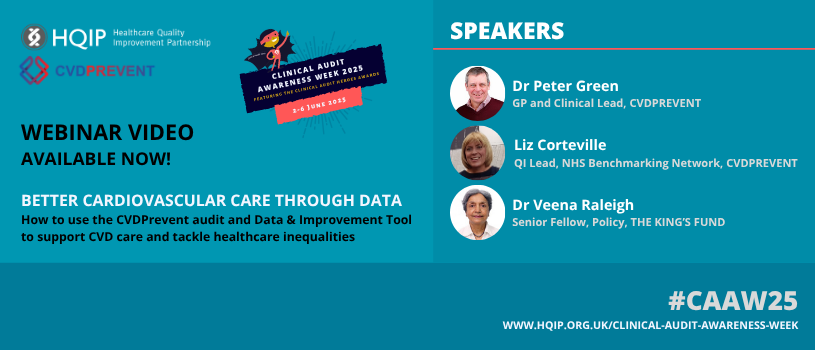
As part of Clinical Audit Awareness Week #CAAW25 (2–6 June 2025), the recording of the live webinar and Q&A on Better cardiovascular (CVD) care through data on 5th June is now available.

Hosted by HQIP and CVDPREVENT, the session features expert insights on how to use the CVDPREVENT audit and Data & Improvement Tool to support CVD care and address healthcare inequalities.

Panel includes:
  • Dr Peter Green (CVDPREVENT Clinical Lead)
  • Liz Corteville (NHS Benchmarking Network)
  • Dr Veena Raleigh (The King’s Fund)

Watch/listen again

Please share this resource on social media using the hashtag #CAAW25, and explore other available #CAAW25 event videos and resources by heading over to the #CAAW25 main page.

#CAAW25: Key resources on Influencing Change in Healthcare

5 Jun 2025

As part of Clinical Audit Awareness Week (#CAAW25), which is designed to share the value of clinical audit and quality improvement in improving patient outcomes, we are signposting to useful resources from HQIP, the clinical audit community and the wider healthcare sector relating to influencing change and improvement in healthcare:
  • Clinical audit helps identify areas for improvement in patient care and outcomes by comparing current clinical practice to evidenced based standards. The National Institute for Health and Care Excellence (NICE) are experts in evidence-based best practice who consider both clinical effectiveness and value for money when evaluating new health technologies and producing guidance for healthcare practitioners to deliver the best care.
  • All NCAPOP projects aim to have a positive impact on patient care and the national, system, local and public key impacts are reported on each year. The 2024, 2023, 2022, 2021, 2020 and 2019 compendium of NCAPOP impact reports can all be found here, along with in-depth reports on specific projects up to 2025.
  • To aid local quality improvement (QI), HQIP have reshaped NCAPOP outputs to include tools to support this at a trust level. A QI guide has also been created to signpost healthcare services to a broad range of QI tools and advice on how to implement them. Further to this, is an information governance in local quality improvement guide.
  • Another NHS England programme designed to improve patient care is Getting It Right First Time (GIRFT). By undertaking an in-depth review of specialities along with a broad data gathering and analysis exercise, they are able to highlight both underperformance and excellence of individual trusts. The GIRFT team then supports trusts through an implementation phase of report recommendations that tackle unwarranted variation and lead to improved productivity, efficiency, and capacity.
In addition, the following resources from HQIP are also useful:
  • Influencing Change case study from the winner of the 2024 Clinical Audit Hero award, Improving Diabetic Foot Infection Outcomes (Diabetic Foot Infection Team, Ashford and St Peter’s Hospitals): hqip.org.uk/news/influencing-change-case-study.
  • Article: In Avoiding ‘lost in translation’, Jill Stoddart, Director of Operations (National Clinical Audit and Patient Outcome Programme) at HQIP, discusses how you can use national healthcare data to support meaningful change – pdf (article on pages 14-18).
  • Case study on a 2023 Clinical Audit Awareness Week winning project from Cambridge University Hospitals NHS Foundation Trust on using data from the National Clinical Audit Benchmarking (NCAB) site to provide a single place to access and evaluate national audit and registry data 24/7 – Influencing Change CUH 2023 case study.
  • Case study on a 2023 Clinical Audit Awareness Week winning project from Cambridgeshire Community Services on their Peer-to-Peer clinical record keeping auditing programme – Influencing Change CCS 2023 case study.
Note that, for those published outside of HQIP, we are unable to take responsibility for the content within – please contact the provider direct if you have any questions.

Also on Influencing Change in Healthcare for #CAAW25

Thurs 5 June, 12.30–1.45pm: Online Lunch & Learn – Influencing Change, hosted by NQICAN and featuring Sam Riley, Intensive Support Improvement Director at NHS England, as well as the Influencing Change award announcement (use this link to REGISTER IN ADVANCE).

Clinical Audit Awareness Week, featuring the Clinical Audit Heroes awards

There is a packed agenda of events and activities across the week of 2-6 June 2025 – everything is FREE, but please note that you will need to register in advance for live events:
  • Thurs 5 June, 2.15–3.00pm: Webinar – Data-Driven Improvements in Maternity Care: A Regional Medical Director’s Perspective. Register here
  • Fri 5 June, 10–11am: Webinar –Clinical Audit Heroes Commendation Awards, with presentations by winning projects that 1) use NCAPOP data to drive healthcare improvements, and 2) communicate effectively. Register here
Who are the Clinical Audit Heroes? There is also a series of daily Lunch & Learn events, hosted by N-QI-CAN, on each of the Clinical Audit Heroes awards main categories from 2-6 June 2025 (registration required). The winners these awards are announced at these events; while two new commendation awards are announced at this event on Friday 6th June. Further information: Clinical Audit Awareness Week.

Don’t miss out!

To find out about all award winners, resources and events relating to #CAAW25, subscribe to HQIP’s mailing list (you will normally receive two emails per month). You can also follow HQIP on X, and on LinkedIn, where information will be posted daily from 2-6 June (look out for and use #CAAW25). And don’t forget to join in the fun by sharing online, using #CAAW25!

Have your say

Tell us what you thought of #CAAW25 using this short online feedback form.

NEW case study: Tackling health inequalities through local audit

4 Jun 2025

As part of Clinical Audit Awareness Week 2025 (2–6 June 2025, #CAAW25), HQIP is pleased to share a new case study from West Suffolk NHS Foundation Trust, which highlights how health inequality assessment is being embedded into routine clinical audit.

Led by Dr Bryn Hilton, Public Health Registrar, this project reviewed 115 audits and found that only a small number considered health inequalities—highlighting a key area for improvement.

This case study highlights key actions, which included:

  • Assessing how often health inequalities are currently considered in clinical audits performed in the Trust
  • Creating a template to support staff with assessment of health inequalities
  • Launching new training on health inequalities and how to assess for them

This practical approach shows how small changes to audit design and training can make a big difference in tackling healthcare inequalities.

Click this link to read the case study.

Please share this resource on social media using the hashtag #CAAW25, and explore other available #CAAW25 event videos and resources by heading over to the #CAAW25 main page.

Healthcare Inequalities Hero 2025 award announced

4 Jun 2025

The winners of the Clinical Audit Awareness Week 2025 Healthcare Inequalities Hero award have been announced! Congratulations to: WINNER: Inpatient Nicotine Replacement Therapy QI Project (Nicotine Replacement Therapy QI Team); St Richard’s Hospital, University Hospitals Sussex
Smoking is the single biggest cause of preventable morbidity, mortality and health inequalities in the UK. Guidelines state that inpatients should receive timely Nicotine Replacement Therapy (NRT) to prevent withdrawal symptoms, but feedback and baseline audits revealed a need for improvement. Having generated a driver diagram, the team ran a series of mini ‘Plan, Do, Study, Act’ cycles, including: mandatory electronic documentation of smoking status on admission; a simple, high-dose NRT protocol to facilitate prescribing; and increasing the availability of NRT products on wards. Data demonstrated a 50% increase in the delivery of NRT and, as such, the project is now being used as a model quality improvement.
RUNNER-UP: Families in Mind – Supporting parents in the transition to parenthood (Charlotte Gatehouse); Hampshire and Isle of Wight Healthcare NHS Foundation Trust
This is an innovative integrated specialist health visiting service that delivers evidence based 1:1 and group-based interventions to families who are expecting a baby or have a child under 5 – with the aim of providing improved support to families in the transition to parenthood, and improving parental emotional wellbeing, parenting confidence and early relationships. The team deliver three strands of work: direct services to families, training and support for professionals and collaboration and engagement with the community and wider system.
.

Clinical Audit Heroes awards

This award is one of seven categories in this year’s Clinical Audit Heroes Awards. The winners of each main category award are announced at a series of daily Lunch & Learn events, hosted by N-QI-CAN, on each of the award topics from 2-6 June 2025; while two new commendation awards are announced at an event on Friday 6 June. Further information about the awards: Clinical Audit Heroes awards.

Clinical Audit Awareness Week

In addition to the award announcements and the above events (at which the award announcements are made), there is a packed agenda of FREE events, activities and resources across the week of 2-6 June 2025. Find out more: Clinical Audit Awareness Week.

Don’t miss out!

To find out about all award winners, resources and events relating to #CAAW25, subscribe to HQIP’s mailing list (you will normally receive two emails per month). You can also follow HQIP on X, and on LinkedIn, where information will be posted daily from 2-6 June (look out for and use #CAAW25). And don’t forget to join in the fun by sharing online, using #CAAW25!

Have your say

Tell us what you thought of #CAAW25 using this short online feedback form.

#CAAW25: Key resources on Healthcare Inequalities

4 Jun 2025

As part of Clinical Audit Awareness Week (#CAAW25), which is designed to share the value of clinical audit and quality improvement in improving patient outcomes, we are signposting to useful resources from HQIP, the clinical audit community and the wider healthcare sector relating to Healthcare Inequalities: Health inequalities are known to cause unjust and preventable differences in health outcomes so it is essential that health services address the needs of these underserved communities. Accurate and reliable data is required in order to identify barriers in current practice so it is essential that ethnicity and deprivation are included in National Clinical Audit and Patient Outcomes Programme (NCAPOP) specifications. For further information on this, please see Improving health inequality data in the national clinical audit and patient outcomes programme and infographic.

NEW FOR #CAAW25

  • Video (YouTube) / podcast (HQIP’s Spotify channel) – Addressing healthcare inequalities through clinical audit, with NHS England’s Dr Aoife Malloy and HQIP’s Professor Danny Keenan
  • Blog article – The value of audit in identifying health inequalities. The National Prostate Cancer Audit (NPCA) explains how their data is helping to identify multiple inequalities in diagnosis and treatment
  • Case study – Embedding health inequality assessment within routine clinical audit (West Suffolk NHS Foundation Trust)
The following NCAPOP programmes have reported on healthcare inequalities:
  • National Lung Cancer Audit – State of the Nation report – There was a gradient in the proportion of patients with lung cancer who came from the most deprived to the least deprived areas (1=Most: 25.8%, 3=19.9%, 5=Least: 15.1%).
  • National Paediatric Diabetes Audit – Report on Care and Outcomes – Despite improvements in outcomes and use of technologies across different ethnicities and areas of deprivation, inequalities remain evident. In terms of rtCGM use, the inequality gap by deprivation has reduced however the difference in use between Black and White children with Type 1 diabetes has widened from 8.6% in 2021/22 to 14% in 2022/23.
  • Fracture Liaison Service Database – Annual Report – Indices of multiple deprivation (IMD) bring together 37 separate indicators that each reflect a different aspect of deprivation experienced by individuals living in an area. IMD is used to identify those living in the most and least deprived areas. The most deprived IMD, in line with Core20PLUS5, were less likely to have a timely bone health assessment (57% vs 66%) or DXA (25% vs 33%), lower falls assessment (52% vs 60%), recommended bone therapy (48% vs 57%) and follow up at 16 weeks (38% vs 46%).
  • Mothers and Babies: Reducing Risk through Audits and Confidential Enquiries across the UK – A comparison of the care of Black and White women who have experienced a stillbirth or neonatal death – Major or significant issues were found with antenatal care provision for 83% of black women compared with 69% of white women. 33% of black women and 54% of white women had major or significant care issues during postnatal and bereavement care. 67% of black mothers and babies and 46% of white mothers and babies had major or significant issues identified with respect to pathology. 75% of black parents and 66% of white parents had major or significant issues identified at follow-up or during review of their care and that of their babies.
In addition, the following resources from HQIP are also useful:
  • Yes We Can, a blog by Professor Danny Keenan, Medical Director at HQIP, exploring the importance of national clinical audit in addressing health inequalities: https://www.hqip.org.uk/health-inequalities-ncapop/.
  • Article: In Mind the (health) gap, Dr Josie O’Heney, 2021/22 National Medical Director’s Clinical Fellow at HQIP, discusses the role of data and quality improvement (QI) in addressing health inequalities – pdf (article on pages 14&15).
  • Case study on a 2023 Clinical Audit Awareness Week commended project from Sandwell & West Birmingham NHS Trust on an audit of homeless patients – a population which has high rates of substance and alcohol dependence, hepatitis C and multiple morbidity, compared to the general population – Health Inequalities SWB 2023 case study
  • Report: In Spotlight on the Early Years from HQIP, we aim to identify cross-cutting lessons relating to early years healthcare with a focus on health inequalities and variation in care – Spotlight on the Early Years – HQIP.
Note that, for those published outside of HQIP, we are unable to take responsibility for the content within – please contact the provider direct if you have any questions.

Also on Healthcare Inequalities for #CAAW25

Wed 4 June, 12.30–1.45pm: Healthcare Inequalities, hosted by NQICAN with HQIP’s Professor Danny Keenan, and featuring the Healthcare Inequalities award announcement (use this link to REGISTER IN ADVANCE).

Clinical Audit Awareness Week, featuring the Clinical Audit Heroes awards

There is a packed agenda of events and activities across the week of 2-6 June 2025 – everything is FREE, but please note that you will need to register in advance for live events:
  • Wed 4 June, 1.45–2.30pm: Webinar and Q&A – Better cardiovascular care through data. Register here
  • Thurs 5 June, 2.15–3.00pm: Webinar – Data-Driven Improvements in Maternity Care: A Regional Medical Director’s Perspective. Register here
  • Fri 5 June, 10–11am: Webinar –Clinical Audit Heroes Commendation Awards, with presentations by winning projects that 1) use NCAPOP data to drive healthcare improvements, and 2) communicate effectively. Register here
Who are the Clinical Audit Heroes? There is also a series of daily Lunch & Learn events, hosted by N-QI-CAN, on each of the Clinical Audit Heroes awards main categories from 2-6 June 2025 (registration required). The winners these awards are announced at these events; while two new commendation awards are announced at this event on Friday 6th June. Further information: Clinical Audit Awareness Week.

Don’t miss out!

To find out about all award winners, resources and events relating to #CAAW25, subscribe to HQIP’s mailing list (you will normally receive two emails per month). You can also follow HQIP on X, and on LinkedIn, where information will be posted daily from 2-6 June (look out for and use #CAAW25). And don’t forget to join in the fun by sharing online, using #CAAW25!

Have your say

Tell us what you thought of #CAAW25 using this short online feedback form.

The Big ‘C’ – Collaboration

3 Jun 2025

The power of an evidence-based, knowledge-sharing approach to cancer care – and how we can learn from this across healthcare

With more than 1,000 new cancer diagnoses, and almost half that number dying, every day in the UK1, the stakes have never been higher for those engaged in cancer care. But they are not alone. They have data. More importantly, they are supported by dedicated professionals across the healthcare system, all committed to harnessing that data to enhance care and, ultimately, improve outcomes. Professor Danny Keenan, Medical Director at the Healthcare Quality Improvement Partnership (HQIP), shares his experience of being a part of that system, sharing knowledge and working collaboratively to target resources, and save and improve lives. The National Cancer Audit Collaborating Centre (NATCAN) is a unique centre of excellence, commissioned by HQIP on behalf of NHS England and the Welsh government; the first of its kind in the UK. Delivered by the Clinical Effectiveness Unit (CEU) at the Royal College of Surgeons of England (RCSEng), it encompasses ten cancer audits including prostate, kidney and colon2. While a recent BBC article highlighted variations in care identified by NATCAN’s data for these cancers in particular, it is this level of detailed understanding that will be key to improving patient outcomes. These audits provide up-to-date essential data on diagnosis, treatment pathways, and outcomes, and, as such, have the potential to support more effective care delivery. Or, to quote Professor Ajay Aggarwal, Clinical Director at NATCAN: “We often hear people talking about what the next breakthrough is but, the fact remains, using what we have better could make a huge difference.” While it’s important to share issues such as variations in care, we need to acknowledge the unbelievable work and dedication that goes into collecting and analysing the data to produce these insights, as they point the way to improvement. But data alone cannot bring about meaningful change. For that, you need the combined efforts of multidisciplinary professionals, to scrutinise the data, and its resultant recommendations, from a myriad of perspectives.
We often hear people talking about what the next breakthrough is but, the fact remains, using what we have better could make a huge difference,” Professor Ajay Aggarwal, Clinical Director at NATCAN
The Executive Quality Group National Clinical Audit (EQG-NCA) is one such team (one of many, of course, dedicated to translating data into actionable improvement across healthcare). Reporting to the NHS England National Quality Board and the Welsh Government, this group exists to condense the national recommendations from the National Clinical Audit and Patient Outcomes Programme (NCAPOP), managed by HQIP, into clear actions improvement within the NHS. At a recent cancer-focused EQG-NCA meeting (involving HQIP, NATCAN, NHS England and others3), we discussed the first major output from the Centre, reviewing the full breadth of outcomes from all ten NATCAN audits. Chaired by the National Lead for Secondary Care, Stella Vig, I was struck by how vibrant it was. With such an important issue to address, it was intense, as you can imagine – but this was fuelled only by a shared determination to understand what is working well and what is not, in order to deliver maximum benefit for patients.
We’re in the middle of a real data revolution in the health service,” Professor Peter Johnson, National Clinical Director for Cancer at NHS England (2023)
The meeting began with presentations from HQIP, NATCAN and NHS England; the content of which immediately brought home to me the advantage of gathering such a diverse set of colleagues together. These presentations covered the first reports from the six newer NATCAN audits as well as annual reports from the remainder2 (see Resources – HQIP for these, and other, reports commissioned by HQIP). It was also a chance to share more about the benefits and logistics of having a single collaborative ‘umbrella’ centre to ‘house’ all the major cancer audits, as well as underline HQIP’s change in emphasis to fewer metrics and more focused recommendations. More specifically, we heard that the ten audits had reduced the total number of recommendations to just 48 – with Care Pathway and Treatment each accounting for 20%, and Staffing and Training representing 14%. This approach supports the translation of data into action. The complexity of NATCAN’s work is exemplified by the fact that they collate data from a wide range of sources including the National Cancer Registration and Analysis Service (NCRAS), the Cancer Outcomes and Service Dataset (COSD), Hospital Episode Statistics (HES), and the Office for National Statistics (ONS) as well as seven other national datasets. This alone demonstrated to me the expertise needed to create their outputs. Speaking for NATCAN, Professor Aggarwal, highlighted some key points:
  • For some cancers, such as ovarian and pancreatic, outcomes remain poor with much variation nationally
  • Variation in the management of older cancer patients in particular is a key theme across the audits.
We also heard concerns about getting robust data back to units in a timely manner. There was discussion around the delays in receiving some sources of non-NATCAN data. The NHS England Treatment Variation team gave an update on the role of the Cancer Networks in addressing this issue. These are an invaluable resource in managing this and many other aspects of cancer care. They also emphasised the need to work closely together, as epitomised by NATCAN.
“There is an extraordinary richness of NHS datasets [that] is largely untapped…in clinical care,” Lord Darzi, NHS England 2024 review
There were many positive messages coming out of the data too. We heard about a great example of a positive outlier, and discussed how to share the learning from that unit. Professor Aggarwal concluded by stressing that clinical communities, professional bodies and others from across cancer care now need to use NATCAN’s data to define a new ‘standard of care’ for some measures.

Recent reports from NATCAN

Details of outcomes from England and Wales from the National Cancer Audit Collaborating Centre (NATCAN) published in January 2025 include:
  • National Oesophago-Gastric Cancer Audit (NOGCA) report(care received between 1 Apr 2021 and 31 Mar 2023).
  • National Prostate Cancer Audit (NPCA) report (care received from 1 Jan 2019 to 31 Dec 2023)
  • National Bowel Cancer Audit (NBOCA) report (care received between 1 April 2022 and 31 March 2023).
More data: All cancer, and other, clinical audit and outcome review reports commissioned by HQIP can be found here.
Following on from the presentations, there was an incredibly stimulating discussion led by the Chair, Stella Vig, and the National Clinical Director for Cancer, Peter Johnson (NHS England), together with Ajay Aggarwal. This covered multiple themes including integrating recommendations for GIRFT and registries. Other topics covered were: the need to highlight the influence of factors such as age, frailty and ethnicity; the use of Artificial Intelligence (AI); updating datasets; and the role of consultant job planning in supporting audits. In summary, it was extremely inspiring to meet with a group of people with such diverse expertise, all of whom have the same aim: better outcomes for patients. For me, what was unique was the interplay and knowledge-sharing between clinicians, data analysts and healthcare civil servants and managers, all working together to better understand the data and recommendations, and identify actionable improvements. By virtue of the nature of the EQG-NCA, patients were not present, but they were very much front and centre of everyone’s minds throughout. Indeed, we concluded with a session concerning patient reported outcomes and experience, and how to better include these when setting up audits.
HQIP may be an obvious vehicle for a series of audit reviews, supporting an evidence-based, multi-disciplinary understanding of care
The aim of this article is to provide insight into what happens at a strategic level with the data that is produced from audits, with cancer care as an example. It is important to share that the evidence and outputs from national clinical audits, outcome reviews and registries play a critical role in understanding the changes needed to improve patient experience and outcomes. Through activities like the EQG-NCA meetings, you can see that this evidence also directly informs the actions needed to achieve that improvement. In other words, to quote Lord Darzi in his NHS England 2024 review, there is an “extraordinary richness of NHS datasets [that] is largely untapped…in clinical care” and, as such, the clinical audit community plays an important role in the NHS’s “roadmap to reform”. The EQG-NCA has already held similar meetings concerning maternity and neonatal care. However, there are many other areas that could benefit from such reviews and, in fact, this does not have to be achieved through the EQG-NCA. Indeed, if we all work together outside of – but complementing the work of – this group, we could include service users and a more diverse group of healthcare professionals. On further reflection, given the success of this cancer themed meeting, HQIP may be an obvious vehicle for a series of such audit reviews, supporting an evidence-based, multi-disciplinary understanding of care related to a range of areas. These could include clinical disciplines, ranging from COPD to diabetes, as well as hospital-specific themes such as intensive care and paediatrics. Perhaps the way forward is to gather together an association of the willing, but possibly not so easily heard, to involve a wider, more diverse group of colleagues who, I am sure, have great ideas but need a forum for their release? I hope you agree that building on the success of meetings such as this cancer review would be a very worthwhile and productive venture. I, for one, would embrace a platform where colleagues from across the healthcare system can work together to pool their collective knowledge – supported by clinical audit outputs – to contribute to a national approach to improved health outcomes for everyone through evidence-informed, patient-centred quality improvement (which just happens to be HQIP’s vision!). Watch this space…

Notes

1) Source: Cancer Research UK (2017-2019) – www.cancerresearchuk.org/health-professional/cancer-statistics-for-the-uk. 2) Audits included in the National Cancer Audit Collaborating Centre (NATCAN): Added in 2023 Pre-2023 3) Organisations represented at the February 2025 meeting of the Executive Quality Group National Clinical Audit (EQG-NCA):


Patient & Public Involvement (PPI) Hero 2025 award announced

3 Jun 2025

The winners of the Clinical Audit Awareness Week 2025 Patient & Public Involvement (PPI) Hero award have been announced! Congratulations to: JOINT WINNER: State of the Nation report 2024 (Audit of early intervention in psychosis provision in England and Wales 2022/23 and 2023/24), Service User and Carer Reference Group; National Clinical Audit of Psychosis (NCAP)
This project began with the formation of the NCAP service user and carer reference group (SUCRG). Three of each of carer and service user members were recruited to join a service user advisor, and were involved in a variety of regular meetings to ensure that their voices were represented in decisions that drove the project forward. They then played a key role in activities such as deciding what data to collect and finalising the audit tool. SUCRG members also worked with Early Intervention in Psychosis teams on quality improvement, embedding patient voice at multiple levels.
JOINT WINNER: Triangle of Care, Carer Engagement (Lisa Wilson); Telford & Wrekin Community Mental Health, Midlands Partnership University NHS Foundation Trust
This project is a therapeutic alliance between carers, service users and professionals, which aims to promote safety and recovery, and sustain wellbeing by including and supporting carers. An audit tool based on the self-assessment tools created by the Carers Trust was adapted for ease of use, and data was collected at the end of 2023 with a scrutiny panel taking place in April 2024. Benchmarked results were then shared and discussed by a ‘scrutiny panel’ made up of carers and clinical representation.
RUNNER-UP: Welcome Standards (Patient Experience Team); University Hospitals Sussex
Aiming to define what great customer service looks and feels like for patients, these standards are shaped by tens of thousands of patient reviews, Healthwatch insights, and private sector customer service best practice. With a strong focus on reducing inequalities and improving access, they are inclusive by design and developed with input from people who face barriers to care.

Clinical Audit Heroes awards

This award is one of seven categories in this year’s Clinical Audit Heroes Awards. The winners of each main category award are announced at a series of daily Lunch & Learn events, hosted by N-QI-CAN, on each of the award topics from 2-6 June 2025; while two new commendation awards are announced at an event on Friday 6 June. Further information about the awards: Clinical Audit Heroes awards.

Clinical Audit Awareness Week

In addition to the award announcements and the above events (at which the award announcements are made), there is a packed agenda of FREE events, activities and resources across the week of 2-6 June 2025. Find out more: Clinical Audit Awareness Week.

Don’t miss out!

To find out about all award winners, resources and events relating to #CAAW25, subscribe to HQIP’s mailing list (you will normally receive two emails per month). You can also follow HQIP on X, and on LinkedIn, where information will be posted daily from 2-6 June (look out for and use #CAAW25). Finally, don’t forget to join in the fun by sharing online, using #CAAW25!

Have your say

Tell us what you thought of #CAAW25 using this short online feedback form.