
Using data to maximise resources

4 Oct 2025

How National Clinical Audit Supports System Level Priorities.

Healthcare data highlights the changes that will have the greatest impact on services and patient outcomes. It is critical in ‘lighting the way’ for system leaders, to understand where to target resources to deliver improvements, particularly in these changing times when pressures have never been greater.  HQIP’s CEO, Chris Gush, explains how national clinical audit helps Integrated Care Systems (ICSs) and other healthcare leaders to maximise resources and deliver their priorities.

Integrated Care Systems (ICSs) – through their Integrated Care Boards (ICBs) – were established to improve population health, enhancing productivity and value, and supporting broader social improvements such as reducing health inequalities​. In other words, support the NHS to pursue ambitious goals for better care.

As we all now know, the NHS in England is changing. However, the aspiration to deliver improved care and outcomes for patients remains. If anything, it is now more important than ever. NHS England’s functions are being absorbed into the Department of Health and Social Care (DHSC)​, and ICBs have been tasked with drastically cutting both their management costs and workforce. Leaders acknowledge the need to eliminate duplication and stabilise finances, but there is widespread concern that such steep cuts “will inevitably make the task of delivering long term transformation of the NHS much harder”, to quote Matthew Taylor, Chief Executive of NHS Confederation​.

Harder it may be, but data makes it feasible. The NHS has invested for decades in national clinical audits and registries that systematically track the quality of care across a broad range of services. These programs (encompassing dozens of medical, surgical, and mental health conditions) generate a wealth of information that is already collected and ready to use. In light of the current push to reduce costs – leaving far fewer hands available for analysing data – they are, in fact, an invaluable resource in the drive for transformation.

That’s where the National Clinical Audit and Patient Outcomes Programme (NCAPOP), the largest programme of its kind in the UK, plays a vital role. Commissioned by HQIP, it generates trusted, clinically validated data across the NHS. National audit data are robust and published openly, and so inform clinical guidelines, regulatory oversight, and commissioning decisions​. In other words, the comparative insights from audits are a built-in evidence base for what is working well and what isn’t. Over the years, such high-quality comparative data have proven to be a stimulus for real and meaningful improvement in patient care​, driving changes in practice that have saved and improved lives.

Crucially, tapping into this data doesn’t require additional local manpower to gather new information; it leverages existing intelligence to guide action. For NHS leadership, whether in an ICB boardroom, a DHSC office, or a hospital executive team, the importance of maximising this existing data asset cannot be overstated. In an era of tightening resources, data becomes a force-multiplier: turning raw numbers into actionable insights is one way to effectively “add” capacity without adding staff. National clinical audits and registries, in particular, offer an arsenal of knowledge to support system-wide learning, service transformation, and quality improvement. By making national clinical audit and registry data central to their strategy, system leaders can continue to deliver improvements despite limited capacity. Used to its fullest potential, this data can help health systems to:

  • Pinpoint unwarranted variation – identifying differences in outcomes or care quality across an ICS, so leaders know where to focus attention (for example, spotlighting a service or population group that is falling behind the national benchmarks).
  • Highlight best practices – revealing which Trust or locality is excelling in a particular domain, so that successful approaches can be shared and scaled up across other parts of the system.
  • Inform strategic planning and investment – providing hard evidence of needs and what works, thereby guiding ICBs in prioritising initiatives (and making the case to allocate resources where they will have the greatest impact on quality and equity).
  • Track improvement over time – enabling leaders to measure the results of interventions and service changes through objective outcomes data, ensuring accountability and learning as the system evolves.

By harnessing this wealth of information, ICS and ICB leaders can exercise informed system leadership, targeting interventions that make a difference even when manpower and money are limited. It means that despite the challenges of reorganisation and austerity, the NHS can continue to innovate and improve care, using evidence as its guide and data as a catalyst for delivering on ICS and ICB priorities​. So, in specific terms, how can HQIP’s NCAPOP data be harnessed to support key ICB and ICS priorities?

1. Driving Quality Improvement Across Systems

One of the core responsibilities of ICBs is to coordinate quality improvement at scale. National audits provide a powerful platform for this.

Take the Sentinel Stroke National Audit Programme (SSNAP) its ICB-level performance dashboards offer system leaders a bird’s-eye view of stroke care across all local providers. Armed with this insight, ICBs can convene collaborative improvement efforts, target underperforming areas, and share current best practice across Trusts.

Similarly, CVDPREVENT, which focuses on cardiovascular disease prevention, enables comparison of risk factor management and treatment coverage across general practices, primary care networks, and places. This supports system-level interventions that improve outcomes not just in one GP practice, but across entire localities.

By aligning providers around shared outcomes and a single evidence base, audit data gives ICS leaders the foundation to drive real, sustained improvement across complex care pathways.

2. Tackling Health Inequalities with Data That Shows Where to Act

Reducing health inequalities is at the heart of the ICS mission – and national audit data offers a uniquely valuable lens into where disparities exist.

Audit reports often reveal variation in access to services, quality of care, or outcomes across demographic groups, local geographies or levels of deprivation. This kind of data is essential for identifying where action is needed, whether that’s improving rehabilitation access in underserved communities or addressing differential outcomes in chronic disease management.

By offering granular, real-world data, NCAPOP audits enable ICBs to monitor inequalities at population level, target resources, and track the impact of interventions over time. This directly supports the Core20PLUS5 framework and other system-level health equity initiatives.

3. Strengthening Oversight and Assurance

ICBs are responsible for the performance and safety of the services they commission. National clinical audits bring credibility and transparency to these oversight functions.

Audits such as the National Emergency Laparotomy Audit (NELA) and SSNAP provide comparative, risk-adjusted outcome data and benchmarking tools. These can be used in quality committees, system performance meetings, and provider assurance frameworks.

Recent NELA reports, however, highlight a plateau in some key care standards and outcomes, including 30-day mortality and time to theatre, reinforcing the need for renewed focus on improving emergency surgical pathways.

In particular, audit outlier alerts, generated when providers consistently underperform against national standards, offer early warnings and opportunities for supportive intervention. They also provide a consistent framework for celebrating excellence, understanding variation, and driving accountability in a constructive, evidence-based way.

4. Informing Outcomes-Based Commissioning

As the NHS shifts towards outcomes-based commissioning, ICBs need reliable measures to define what good looks like and to track whether services are delivering meaningful results for patients.

National clinical audits provide exactly that. For example, the National Diabetes Audit (NDA) publishes ICB-level data on key care processes and outcomes, from HbA1c control to diabetic foot complications. This allows ICBs to build commissioning strategies that incentivise better outcomes, not just activity.

Audit findings can also be incorporated into service specifications, evaluation frameworks, or population health investment decisions, enabling leaders to commission with confidence, based on what actually works.

5. Enhancing Population Health Intelligence

Integrated care systems are expected to understand and improve the health of their populations, and this requires rich, longitudinal data.

Audit programmes like CVDPREVENT contribute to this intelligence by aggregating data across primary and secondary care, enabling systems to see where the biggest risks, gaps and opportunities lie in long-term condition management.

Whether it’s identifying communities with uncontrolled hypertension, mapping variation in cancer staging, or planning dialysis services using renal audit data, NCAPOP programmes help give ICSs a 360-degree view of their population’s health needs and outcomes. When combined with demographic and social data, this becomes a powerful platform for prevention, pathway redesign, and place-based planning.

6. Supporting Service Transformation with Evidence

Transforming services at system level, whether centralising specialist care, introducing new models, or improving access, requires a solid evidence base.

National audits provide that evidence. They often identify where current practices are falling short, highlight what ‘good’ looks like, and make the case for change. For instance, audit data may demonstrate that survival rates improve when services are consolidated, or that certain interventions need to be delivered earlier in the pathway.

Audit evidence has been used to inform service redesign across stroke, vascular surgery, mental health and more, helping ICSs design pathways that are safer, more effective, and more equitable.

Turning data into improvement

The availability of data is just one part of the solution to delivering these priorities. At HQIP, we understand that integrated care leaders need more than data; they need insights that are timely, relevant, and aligned to their priorities. That is why we are working in partnership with those involved in system-level improvement to:

  • Publish more ICB- and place-level breakdowns
  • Support access to audit data for population health analytics
  • Make our outputs easy to interpret and apply in commissioning and transformation planning
  • Listen to system leaders about which topics matter most.

In this way, we are ensuring that national programmes serve local, regional and system needs, and the resultant insights support the decisions you are making every day to improve care.

How to get started – help is at hand

Whether you are designing a transformation programme, refreshing your ICS five-year plan, or seeking assurance on provider performance – HQIP and the NCAPOP can support you. Explore how our national clinical audits and wider quality improvement resources can support your system goals. Connect with us to ensure future programmes meet your evolving needs, and support long-term transformation and equity in healthcare. Together, we can turn data into insights; insights into action; and action into better care for the patients we serve.

More information:

  • For access to HQIP-commissioned, national clinical audits, reports and data: hqip.org.uk
  • For information about HQIP’s services to support evidence-informed quality improvement: hqip.org.uk/services
First perioperative care audit launched

3 Oct 2025

HQIP is pleased to share details of a new audit, the National Clinical Audit of Perioperative Care (NCAPC), which will be delivered by the Royal College of Anaesthetists (RCoA).

Perioperative care refers to patient-centred, multidisciplinary and integrated care from the point of consideration of surgery through to full recovery. The NCAPC aims to reduce unwarranted deviation from evidence-based practice in the perioperative pathway, and thereby reduce complications and increase patients’ health-related quality of life. With circa 3.5 million surgical procedures carried out in England and Wales each year, this audit (the first in this field) marks an important step in HQIP’s vision to improve health outcomes for everyone through evidence-driven healthcare.

HQIP has commissioned the Royal College of Anaesthetists to deliver the NCAPC from October 2025, with the first year being used to design the optimal methodology to audit care.

Further information can be found here.

HQIP-hosted Joint Registry supports patients to “get life back”

3 Oct 2025

A recent article in The Telegraph has highlighted the positive impact of the National Joint Registry (NJR), which is hosted by HQIP, on patients’ lives.

The article features Philip, a member of the NJR Patient Network, who shared his joint surgery experience, and how NJR resources supported him: “I did some of my own research and joined the National Joint Registry (NJR), which has a lot of very useful information and patient outcomes – the NJR is a really helpful source of hard statistics.”

In the article, he describes how the Registry helped him to make informed choices. Since his surgery, Philip has returned to kayaking and gained his active life back.

Read the full article here.

More about the National Joint Registry.

Latest news: September 2025 eBulletin

25 Sep 2025

The September edition of HQIP’s eBulletin is out now! It features the latest news and updates relating to clinical audit, outcome reviews and data-informed healthcare improvement, including: What’s new?
  • Transforming care for young people with epilepsy
  • Article: The power of patient engagement in improvement
  • HQIP audits pave the way to better cancer care
  • Paediatric benchmarking data available

A chance to revisit:

  • Case study: Using audit data to improve end-of life-care by 2025 Clinical Audit Hero award winner
  • Ten new reports published this month on maternity and perinatal care, hip fracture, and cancer
In other news:
  • Child mortality data and news
  • Cardiovascular care: Quality improvement data packs
  • National Vascular Registry (NVR) data released
  • Call for ideas: National Confidential Enquiry into Patient Outcome and Death
  • Opportunity: Scientific Advisory Council Healthcare Professional Member
Read HQIP’s latest eBulletin here.
Don’t forget to sign up: Keep up to date with our latest news, events and work programmes by subscribing to our mailing list today. You can also follow us on LinkedIn and X: @HQIP

HQIP audits pave the way to better cancer care

24 Sep 2025

With World Cancer Research Day shining a light on cancer care today, we share an update on the HQIP-commissioned National Cancer Audit Collaborating Centre (NATCAN), which has recently published seven reports to support improving patient outcomes. These reports use anonymous data from all patients cared for in England and Wales so that patients and the NHS can assess how well standards are being met, with data provided for individual hospitals, regions and nationally. Additionally, the audit projects use the data in their quality improvement work, providing support to hospitals to improve their care. The ovarian cancer project, for example, will work with individual regional teams to support them to improve the percentage of women diagnosed with ovarian cancer who receive treatment within 28 days after an emergency admission. The latest NATCAN reports cover breast (primary and metastatic), kidney, non-Hodgkin Lymphoma, ovarian, pancreatic and oesophago-gastric cancer and set out recommendations for NHS cancer services. For the first time, they were published alongside results for individual NHS Trusts, Health Boards, and regions in the new NATCAN data dashboards. Services can review their own data and benchmark the care they provide against other services. Reports for bowel, prostate and lung cancer will follow in the months ahead. Each audit considers the complexity of cancer care, recognising that a patient’s treatment plan must reflect the stage of their cancer, their fitness, and how likely they will respond to treatments. The latest reports show where and how variations in the quality of cancer care persist across the NHS.
“NATCAN audits should act as a beacon of improvement in cancer care. By learning from the findings, we can work together to ensure every cancer care professional delivers best clinical practice, and every patient gets the highest standard of care.” Professor Frank Smith, Vice President of the Royal College of Surgeons of England
With more than 900 new cancer cases per day, improving care and outcomes for patients has never been more crucial. Opportunities for improvements to cancer diagnosis and care can be found throughout the NHS 10 Year Plan, after Lord Darzi’s 2024 investigation of NHS England stated “the UK has appreciably higher cancer mortality rates than other countries”. This underlines the crucial importance of clinical audit in understanding where changes can lead to improvements in care and, in turn, patient outcomes. NATCAN also places particular emphasis on patient engagement, with a patient and public involvement forum in place for each audit. Patients contribute to the development of the work right from the start, ensuring that people with lived experience of cancer play a central role in defining the quality improvement goals and activities of each audit, as well as co-creating outputs specifically designed to be patient-friendly.
“These reports provide a comprehensive overview of patterns of care and outcomes for patients, highlighting both progress and areas where further improvement is needed. We are proud to collaborate with professional groups, charities, and people with lived experience of cancer to ensure that our audits reflect real-world needs and drive meaningful change.” Dr Julie Nossiter, Director of Operations, NATCAN

Gold standard, collaborative commissioning

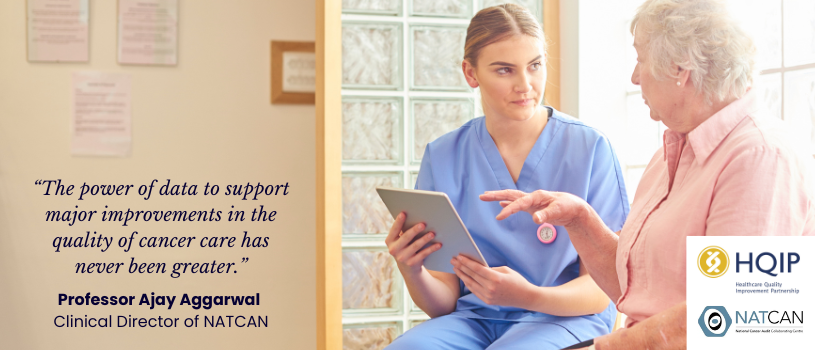
HQIP developed an innovative, umbrella approach to commissioning clinical audit so that one centre could host the ten NHS national cancer audits that are part of the National Clinical Audit and Patient Outcomes Programme (NCAPOP). By bringing these audits under one organisation, rather than commissioning individual projects, benefits and efficiencies can be maximised early. This includes sharing good practice, centrally developing online dashboards and minimising operating costs. Ultimately – and crucially – this supports improved patient care and outcomes. NATCAN has become a centre of clinical, data science, methodological and epidemiological expertise, providing gold standard annual data. The Centre focuses on three “Rs”, ensuring that all activities are clinically relevant, methodologically robust, and technically rigorous. Professor Ajay Aggarwal, Clinical Director of NATCAN explains: “The power of NHS data to support major improvements in the quality of cancer care has never been greater. We expect the findings from the NATCAN audits will be used by NHS Trusts to continue to drive standards of care and reduce inequalities.”

Find out more:

Benchmarking data available

18 Sep 2025

We’re pleased to share that following two datasets on paediatric care have been published on the National Clinical Audit Benchmarking (NCAB) website, HQIP’s online portal which provides access to national audit performance data:

  • National Paediatric Diabetes Audit (NPDA): This data was published on NCAB on 10 September 2025, and covers the period from 1/4/2023 to 31/3/2024 (NPDA report published in March 2025)
  • Paediatric Intensive Care Audit (PICANet): This data was published on NCAB on 12 September 2025, and covers the period from 1/1/2023 to 31/12/2023 (PICANet report published on 12 Dec 2024).

This data is accessible by going to the NCAB website.

HQIP-Commissioned Audit Sees 72.8% Increase in School Healthcare Plans for Young People with Epilepsy

17 Sep 2025

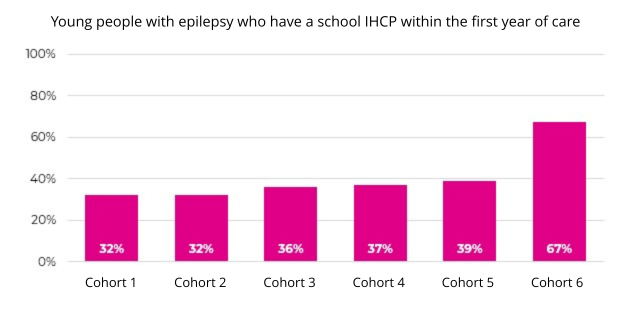
The proportion of children and young people with epilepsy who have a school Individual Healthcare Plan (IHCP) within the first year of care has jumped 72.8%, from 38.9% in the 2024 annual report to 67.2% in the latest Epilepsy12 audit 2025 report. This marked increase, after previously being broadly static for several years, highlights a major step forward in ensuring that children with epilepsy receive the support they need in school.

Epilepsy12, the national clinical audit of seizures and epilepsies in children and young people, is commissioned by HQIP as part of the National Clinical Audit and Patient Outcomes Programme (NCAPOP) and has tracked paediatric epilepsy care since 2009 across England and Wales. Delivered by the Royal College of Paediatrics and Child Health (RCPCH), the audit provides essential data to benchmark services against national standards, and drive improvements and reduce variation in care.

A key factor behind the increased proportion of children and young people with IHCPs has been the direct involvement of children, young people and families themselves. The Epilepsy12 Youth Advocates group, who are epilepsy experienced or interested young people and families volunteering to improve care for patients, has been instrumental in shaping what is measured, helping to define Epilepsy 12’s key performance indicators and highlighting the issues and potential solutions.

This brings patient-led priorities to the audit, ensuring that topics such as school care plans and the mental health of children and young people with epilepsies are central, alongside more traditional healthcare metrics. This shift in focus, and the resulting improvements at scale, is a major success for the young people driving and benefitting from the improvements.

The Importance of School Healthcare Plans

IHCPs have been a key focus for the Youth Advocates (YAs) and other stakeholders over the last few years. The YAs have consistently emphasised that a good, individualised plan in school can be transformative, especially in the first year after diagnosis. Having an IHCP is key to ensuring that children and young people with epilepsy receive appropriate support, safety, and full participation in education and school life. They are vital for epilepsy, as what is right for one child can be completely different from what is right for another.

The YAs emphasised the importance of IHCPs and how they can support not only the young person, but also their family, teachers and friends to feel more confident about epilepsy. They also advocated for a comprehensive epilepsy IHCP template for schools that included crucial information, including seizure details, aspirations, and mental health, but was also easy to use. An example template was developed and is available online.

“I was diagnosed with epilepsy in 2018. My parents and I met with the School Nurse and Headmaster to create a plan. Teachers were informed and updates were made as needed. It was a learning curve for everyone. The plan allowed me to attend day trips, complete two Duke of Edinburgh’s expeditions, and go on a 7-night trip to America. Without this support, travelling would have been much more difficult.” A young person with epilepsy

Looking forward: Opportunities for further improvements

Given that having an IHCP is a statutory requirement for a young person with epilepsy, Epilepsy12 is aiming for 100% adoption and identifying easier ways to enable the sharing of key information between families, health and education. As well as continuing to build upon existing successful work to improve this KPI, encouraging further data entry and service participation will also be important. There have been significant increases in the total cohort size of health service providers submitting data to the audit and of data completeness this year, something which is extremely important when drawing conclusions from the audit data; particularly trends over time and variation between subgroups.

150 NHS Health Boards and Trusts providing paediatric epilepsy care in England and Wales were registered into the Epilepsy12 audit in 2025, via a bespoke data platform launched in December 2023. This is an increase from the 138 Health Boards and Trusts registered to the platform used previously. Of the Health Boards and Trusts registered, 80% (120/150) submitted data in this latest round of reporting (cohort 6, covering children and young people with a first paediatric assessment undertaken between 1 December 2022 and 30 November 2023).

The cohort size also increased considerably, with 3,105 young people with newly-diagnosed epilepsy included in the 2025 analysis. This compares to the previous five cohorts, which all had around 2,000 young people. Furthermore, data completeness has improved from 86% in cohort 5 (2024 report) to 98.5% in cohort 6 (2025 report).

The increased cohort size and improved data completeness may be a reflection of the streamlined data entry process on the new Epilepsy12 data platform. Find out more about this and other highlights, including epilepsy specialist nurse provision improvements, in the 2025 Epilepsy12 report.

Going forward, as well as striving to further improve data entry and service participation, the focus of the audit will continue to be reviewed. Indeed, Epilepsy12 has often seen the ambition for a particular KPI advance over time, building upon initial progress by resetting aspirations and targets. This means that the current KPI focused upon young people with epilepsy having a school care plan may well evolve – for example to having a ‘comprehensive’ IHCP and then an ‘impactful’ plan.

Epilepsy12’s latest findings underscore the importance not only of robust data, but also the power of involving children and young people in shaping the care that directly impacts their lives. By embedding patient and family at the heart of its work, it has demonstrated how genuine collaboration and co-production can deliver real-world change.

These noteworthy improvements in paediatric epilepsy care reflect not only robust national audit and patient-led advocacy, but also the ongoing commitment of key stakeholders. Initiatives such as the NHS England Epilepsy Oversight Group, including the publication of the national bundle of care for children and young people with epilepsy, and targeted programmes like the Epilepsy Quality Improvement Programme (EQIP) have driven up performance and consistency.

Furthermore, the collaborative efforts of key stakeholder groups, including Young Epilepsy, Epilepsy Action and others, ensure that the needs of children, young people, and families remain central, embedding best practice and delivering meaningful change.

Having an effective individual school healthcare plan is a vital step towards safer, equitable and empowering support for young people with an epilepsy. Seeing such a dramatic improvement in schools shows what is possible when professionals, families and young people work together at many different levels.” Dr Colin Dunkley, Clinical Lead for Epilepsy12

Further information and resources

New resources published September 2025

11 Sep 2025

We are pleased to announce that the following new resources from HQIP-commissioned audits and programmes have been published. Focused on maternity and perinatal care, hip fracture, and cancer (seven reports), they include data, findings, infographics, recommendations and more, to support quality improvement:

Maternity and perinatal care

Hip fracture

Cancer

  • Primary breast cancer2025 report National Audit of Primary Breast Cancer (NAoPri/NATCAN) Based on care received by people diagnosed with primary breast cancer from 2020 to 2022 in England and Wales, this report found that, among those diagnosed with primary breast cancer (Stage 0 to 3C), three-year all-cause survival was 92%, while three-year breast cancer-specific survival was 97%.
  • Metastatic breast cancer 2025 report National Audit of Metastatic Breast Cancer (NAoMe/NATCAN) Based on care received by people diagnosed with metastatic breast cancer from 2020 to 2022 in England and Wales, this report found that the percentage of patients who survived for at least one year was 65%, and for three years was 44% (England and Wales combined, where metastatic disease was identified at the time of initial diagnosis).
  • Ovarian cancer 2025 report National Ovarian Cancer Audit (NOCA/NATCAN) This report is based on care received by women diagnosed with ovarian cancer between 1 January and 31 December 2022 in England, and 1 January 2022 and 31 December 2023 in Wales. It found that approximately seven out of ten patients in England, and three out of four in Wales, survived at least one year after diagnosis.
  • Pancreatic cancer 2025 report National Pancreatic Cancer Audit (NPaCA/NATCAN) This report is based on care received by people diagnosed with pancreatic cancer between 1 January 2021 to 31 December 2022 in England, and 1 January 2022 and 31 December 2023 in Wales. It found that the percentage of people who survived for 30 days was 78% (England) and 79% (Wales).
  • Non-Hodgkin lymphoma 2025 report National Non-Hodgkin Lymphoma Audit (NNHLA/NATCAN) This report found that the percentage of people who survived at one year was 81% (England) and 83% (Wales), and at two years was 74% in England (data not available for Wales).
  • Kidney cancer 2025 report National Kidney Cancer Audit (NKCA/NATCAN) This report is based on care received by people diagnosed with kidney cancer from 2018-2022 in England, and from 2022-2023 in Wales. It describes national trends in kidney cancer diagnoses and treatments, and contains five recommendations for improvement.
  • Oesophago-gastric cancer 2025 report National Oesophago-Gastric Cancer Audit (NOGCA/NATCAN) Based on care received by people diagnosed with oesophago-gastric between 1 January 2022 and 31 December 2023 in England and Wales. This report highlights both the strengths and the ongoing challenges facing oesophago-gastric cancer services in England and Wales.

All reports: All HQIP-commissioned reports can be accessed via our dedicated reports webpage. Stay up to date: Join our mailing list to receive notifications when new reports are published.

NEW case study on using audit to improve end of life care

4 Sep 2025

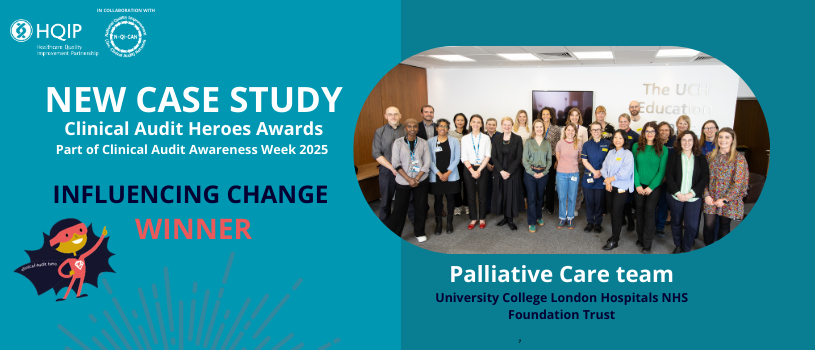
This case study by the 2025 Clinical Audit Hero Award Influencing Change winner, the Palliative Care Team at University College London Hospitals NHS Foundation Trust (UCLH), showcases how their project used audit data to improve end of life treatment planning, decision making and care, and bereavement support.

It highlights how audit-driven change can influence service delivery, and demonstrates the impact of collaborative working to improve access, experience and outcomes for patients requiring palliative care. Key achievements include:

  • Innovative use of VR to ease isolation and distress
  • Positive survey results from bereaved carers
  • A commendation of excellence from the National Audit of Care at the End of Life (NACEL).

Download the case study: Case Study – Influencing Change Winner Palliative team

This case study was developed as part of Clinical Audit Awareness Week 2025 (which took place 2–6 June 2025, #CAAW25). You can explore other available #CAAW25 resources by heading over to the #CAAW25 main webpage.

Latest news: August 2025 eBulletin

28 Aug 2025

The August edition of HQIP’s eBulletin is out now! It features the latest news and updates relating to clinical audit, outcome reviews and data-informed healthcare improvement, including:
  • What’s new? The publication of the End of life care – NACEL 2024 State of the Nations report (and NACEL’s new Data & Improvement tool and upcoming events); and benchmarking data from MBRRACE-UK
  • A chance to revisit: Healthcare Leader article on the NHS 10 Year Plan by HQIP’s Chair, Dame Celia Ingham Clark; An article on patient voice in clinical audit (NRAP); and the CAAW25 video/podcast on data-driven improvements in maternity care
  • In other news: NCMD updated leaflet for bereaved families; NCMD briefing on child deaths from falls; NHS’s Making Data Count 10-step webinar series; and a job opportunity at the National Hip Fracture Database (NHFD).
Read HQIP’s August eBulletin here.
Don’t forget to sign up: Keep up to date with our latest news, events and work programmes by subscribing to our mailing list today. You can also follow us on LinkedIn and X: @HQIP

MBRRACE-UK benchmarking dataset published

28 Aug 2025

Perinatal mortality data from the Maternal, Newborn and Infant Clinical Outcome Review Programme (MBRRACE-UK) report published on 8/5/2025, covering data from January to December 2023, has been published on HQIP’s National Clinical Audit Benchmarking (NCAB) website.

To explore the full dataset, please click here.

We must build on NHS data for 10 year vision to succeed

15 Aug 2025

HQIP’s Chair and former NHS England deputy Medical Director, Dame Celia Ingham Clark features in Healthcare Leader this month, sharing why we should let data light the way in healthcare reform…

“With the release of both the 10 Year Plan and the Patient Safety Review within days of each other, I – like everyone else in healthcare – have been absorbed in understanding what they mean, for providers and patients alike. While my initial response is one of cautious optimism, my overriding thought is that we must be guided by data. Or, as NHS England Chair Dr Penny Dash, author of the Patient Safety Review, said in The Sunday Times, prior to its release ‘we collect more data on quality of care than any other country….let’s use it’.

The importance of data is stressed throughout both these documents. In fact, there are some really interesting ideas in the ‘10 Year Plan’ in particular, not least of which is a focus on evidence-based quality and prevention. A strategy that is designed to keep people healthy, and reduce the chances of them needing admission to hospital, is really important. However, we now need more detail about delivery. The Plan is a blueprint, not a roadmap. What is clear to me though, is that the data we already have must be our starting point.

I can envisage getting to a position where we have neighbourhood-level electronic health records, from which data feeds seamlessly into national clinical audits and similar programmes. It is then analysed, and interpreted with appropriate specialist input, and sent back to the neighbourhood system to inform the care delivered. Under such a system, patients will be able to see and understand – in collaboration with clinicians – what will deliver the best outcome for them.

Indeed, it’s obvious from the recent strategies that outcome measures are going to be of utmost importance going forward (not that they weren’t already, but I’m seeing a renewed focus in the 10 Year Plan). This is a key area where we need to look to what we already have. The national clinical audit programme (or NCAPOP*) generates data spanning decades on a wide range of conditions from asthma to vascular care, supporting improved care and outcomes. One of many examples of this is the National Emergency Laparotomy Audit (NELA), whose data led to a significant reduction in mortality within a few years for patients having major abdominal surgery. Managed by HQIP on behalf of the NHS, this programme is evidence-based, clinically validated, and supports quality improvement through data-informed, actionable recommendations. Importantly, the data is also publicly available. Which brings me to two other important themes where I agree with the Plan; transparency and patient engagement.

In my eight years as a Trust CMO, I worked hard to ensure that patients were well-informed. I am a strong advocate of shared decision-making. These days, you can obtain information about some conditions, treatment options and even your clinician – but it’s not widespread. The National Joint Registry (NJR) is a great example where this data is available. We need to make it possible for patients to obtain this level of information about other specialties too – and this came across loud and clear in the 10 Year Plan. However, I would caution that we need to ensure that this data is available to everyone. The mooted neighbourhood and data systems need to pay particular attention to underserved communities, if we are to address healthcare inequities, something which is a major issue in the UK at the moment. Here again, we don’t need to start from scratch. For example, PICANet data recently showed that children from ethnic minority backgrounds and those living in areas with higher levels of poverty are more likely to die in intensive care. Audits from the national clinical audit programme have long-since shone a light on issues like this. Previously, for example, exposing the fact that black women were five times more likely to die in pregnancy or childbirth than white women (MBRRACE). This enabled care providers to focus on addressing that shocking statistic, and now we are starting to see that number reduce.

While I strongly advocate that clinicians engage with the data available to achieve change, they cannot do it alone. Policy makers need to streamline processes so that data can flow directly from the clinical record into a national system, whereby it can be analysed and produce results that are of value at both local and national levels. The “revamped, revitalised and reinforced” National Quality Board (NQB) has an opportunity to do just this. Its mooted leads, Professor Sir Mike Richards and Dr Penny Dash, are both experts in recognising the importance of data to drive quality improvement, but their challenge will be to work with organisations like HQIP to focus on the measures that will make a difference to patient outcomes. That means more real-time reporting, which we saw being accelerated during the COVID-19 pandemic (for example, with the National Child Mortality Database (NCMD), shared real-time data to inform paediatric care at that time). There are many other national audits that now follow this example, such as the National Cancer Audit Collaborating Centre (NATCAN), which shares quarterly data via an online dashboard.

Looking forward, this vision of a data-informed healthcare system should be supported by technologies such as AI. It could, for example, play an increasing role in data analysis which would, in turn, speed up sharing findings and recommendations. This is echoed in the 10 Year Plan. And, no less than the ‘Godfather of AI’, Geoffrey Hinton, agrees. At a public lecture at the University of Bristol on 2 June 2025, he was asked where he thought AI would deliver the greatest benefit. Without hesitation, he answered ‘healthcare’.”

*The National Clinical Audit and Patient Outcomes Programme (NCAPOP) is the largest programme of its kind in the UK; it is commissioned by HQIP on behalf of NHS England. It includes 44 national clinical audits and outcome review programmes, including the National Emergency Laparotomy Audit (NELA)PICANetMBRRACE, the National Child Mortality Database (NCMD), and the National Cancer Audit Collaborating Centre (NATCAN)

New resource published August 2025

14 Aug 2025

We are pleased to announce that the following new resource from HQIP-commissioned audits and programmes has been published. It includes an infographic, data and recommendations to support quality improvement:

End of life care – 2024 State of the Nations report

The National Audit of Care at the End of Life (NACEL)

This report found that 83% of deaths were expected by clinical staff during the final admission and, of these, 84% had an individualised plan of care addressing their needs at the end of life. It also found that 97% of hospital providers have access to specialist palliative care services. The report also contains five recommendations for improvement relating to: hospital improvement plans; access to specialist palliative care services; personalised care and support planning; equitable care; and training and support.


All reports: All HQIP-commissioned reports can be accessed via our dedicated reports webpage. Stay up to date: Join our mailing list to receive notifications when new reports are published.

Latest news: July 2025 eBulletin

31 Jul 2025

The July edition of HQIP’s eBulletin is out now! It features the most recent clinical audit updates and resources to support healthcare improvement, including:
  • Latest reports and data – A reminder about new findings on epilepsy, and child mortality; and more data on cancer and stroke care
  • Articles on the impact of clinical audit – Read about how audit drives improvements in neonatal care, addressing inequalities in children’s intensive care, and efforts to partner with patients to improve asthma & Chronic Obstructive Pulmonary Disease (COPD) care
  • Articles on the importance of clinical audit in healthcare policy – This includes HQIP’s Chair, Dame Celia Ingham Clark, offering her view of the ‘NHS 10 Year Plan’, as well as The Patient Safety Review, and The Leng Review
  • Other news – Celebrating clinical audit success at Sheffield Children’s Hospital, and a job opportunity at RCPsych.
Read the eBulletin here.
Don’t forget to sign up: Keep up to date with our latest news, events and work programmes by subscribing to our mailing list today. You can also follow us on LinkedIn and X: @HQIP

Patient voice in clinical audit: A powerful partnership improving asthma and COPD care

18 Jul 2025

With the NHS 10 Year Plan promising to “put power back in the hands of people and professionals to make the best choices about their own lives, treatment and care”, and highlighting the crucial role that clinical audit will play, the HQIP-commissioned National Respiratory Audit Programme (NRAP) is just one example of how clinical audit already involves patients meaningfully to improve care and outcomes.

Patient-engaged clinical audit to improve discharge outcomes

Having a little time at discharge to make sure everything you’re expecting has happened – and you’ve planned for anything you maybe aren’t expecting – can make the process of going home feel less daunting and can break the cycle of breathing problems before they get worse again.” Heather, patient

NRAP, delivered by the Royal College of Physicians (RCP), recently released Catching Our Breath, a report offering important insights into the current state of respiratory care across England and Wales – including highlighting a need for improved discharge planning.

Effective discharge planning is key to ensuring better health outcomes for patients with asthma and COPD. In 2023–24, only 47%* of people with asthma received all required asthma discharge bundle elements, while only 28%* of people with COPD received all elements of their discharge bundle. For children and young people (CYP), only 25%* with asthma received all three elements required for best practice CYP asthma discharge planning.

Patient panels, alongside Asthma and Lung UK and clinicians, considered how best to share and promote the report’s key messages to patients and the public, seeking to empower people to understand the healthcare that they should be receiving during treatment and, in particular, at discharge.

It’s vital to include the voice of people with lived experience throughout the production of resources from clinical audits. Everything we do as an audit is to improve patient care and outcomes, so we should always produce resources in collaboration with the people that they are intended for.” Ellie Rochell, NRAP Project Manager

One approach didn’t fit all

Co-designing resources with adults: Initial discovery sessions with both the adult and CYP groups gave participants the opportunity to consider how they would like to share the audit outputs with patients and the public – and highlighted that the groups had different concerns, priorities and requirements.

The adult panel really valued being able to see the data and understand what it meant in terms of their healthcare. Ensuring that the data was accessible to patients and the public was a priority for them. This meant much thought was given to the presentation of data, such as including infographics and fully explaining what each graph or figure showed.

They decided that a patient and public version of the original report, using less technical jargon and explaining the ‘why’ behind the recommendations, would be beneficial, and proposed the inclusion of a glossary to explain terminology and acronyms.

A first draft of this patient and public report was shared with the panel in an insight gathering session, as well as further rounds of feedback via email. The group had final sign off on the report, ensuring their changes and requirements had been addressed. This report is available and is now being used to support adults with asthma and COPD.

Co-designing resources with children and young people (CYP): In comparison, many in the CYP group found the data and figures quite daunting. Instead of sharing these figures with other children and young people, the group wanted to create a resource to empower people to understand what they should receive from hospital when being discharged after an asthma attack.

The CYP joined a design day which included the attendance of a graphic illustrator, funded by RCPCH, to capture their ideas as they were generated. This led to the creation of two resources:

I really appreciate how lung patients are now given the chance to share experiences. Years ago, this was not possible. The people living with these conditions are as much of an expert as the medical professionals.” Sue, patient

Clinical audit’s critical role in the 10 Year Plan

Our recent news article highlights how the new NHS 10 Year Plan acknowledges the important role that national clinical audit will play in its delivery. In challenging and rapidly changing times, involving patients from the very beginning of commissioning audits ultimately enables better quality services that are more responsive to the needs of patients, focusing on the areas that truly matter to them, their families and carers.

NRAP demonstrates how thoughtful, patient-informed clinical audit engages patients and leads to improved care outcomes – because only they truly know the impact that their illness has on them. For an audit to be its most effective, patient involvement in the dissemination of findings, and the development of resources, is crucial. This ensures that information is accessible, relevant and, above all, useful in delivering care.

Heather, a respiratory patient, sums things up perfectly by reminding us: “It’s understandable that inputting data will be pushed down the priority list when you are constantly stretched for time. But, as patients, we rely on this audit process to help make sure our conditions are managed consistently.”

More on patient engagement in clinical audit

Contact us at workwithus@hqip.org.uk.

*Refers to the percentage of people recorded as being in receipt of a discharge bundle. Additionally, in England there is best practice tariffs available for COPD and adult asthma discharge bundle completion.