
Patient voice in clinical audit: A powerful partnership improving asthma and COPD care

18 Jul 2025

With the NHS 10 Year Plan promising to “put power back in the hands of people and professionals to make the best choices about their own lives, treatment and care”, and highlighting the crucial role that clinical audit will play, the HQIP-commissioned National Respiratory Audit Programme (NRAP) is just one example of how clinical audit already involves patients meaningfully to improve care and outcomes.

Patient-engaged clinical audit to improve discharge outcomes

Having a little time at discharge to make sure everything you’re expecting has happened – and you’ve planned for anything you maybe aren’t expecting – can make the process of going home feel less daunting and can break the cycle of breathing problems before they get worse again.” Heather, patient

NRAP, delivered by the Royal College of Physicians (RCP), recently released Catching Our Breath, a report offering important insights into the current state of respiratory care across England and Wales – including highlighting a need for improved discharge planning.

Effective discharge planning is key to ensuring better health outcomes for patients with asthma and COPD. In 2023–24, only 47%* of people with asthma received all required asthma discharge bundle elements, while only 28%* of people with COPD received all elements of their discharge bundle. For children and young people (CYP), only 25%* with asthma received all three elements required for best practice CYP asthma discharge planning.

Patient panels, alongside Asthma and Lung UK and clinicians, considered how best to share and promote the report’s key messages to patients and the public, seeking to empower people to understand the healthcare that they should be receiving during treatment and, in particular, at discharge.

It’s vital to include the voice of people with lived experience throughout the production of resources from clinical audits. Everything we do as an audit is to improve patient care and outcomes, so we should always produce resources in collaboration with the people that they are intended for.” Ellie Rochell, NRAP Project Manager

One approach didn’t fit all

Co-designing resources with adults: Initial discovery sessions with both the adult and CYP groups gave participants the opportunity to consider how they would like to share the audit outputs with patients and the public – and highlighted that the groups had different concerns, priorities and requirements.

The adult panel really valued being able to see the data and understand what it meant in terms of their healthcare. Ensuring that the data was accessible to patients and the public was a priority for them. This meant much thought was given to the presentation of data, such as including infographics and fully explaining what each graph or figure showed.

They decided that a patient and public version of the original report, using less technical jargon and explaining the ‘why’ behind the recommendations, would be beneficial, and proposed the inclusion of a glossary to explain terminology and acronyms.

A first draft of this patient and public report was shared with the panel in an insight gathering session, as well as further rounds of feedback via email. The group had final sign off on the report, ensuring their changes and requirements had been addressed. This report is available and is now being used to support adults with asthma and COPD.

Co-designing resources with children and young people (CYP): In comparison, many in the CYP group found the data and figures quite daunting. Instead of sharing these figures with other children and young people, the group wanted to create a resource to empower people to understand what they should receive from hospital when being discharged after an asthma attack.

The CYP joined a design day which included the attendance of a graphic illustrator, funded by RCPCH, to capture their ideas as they were generated. This led to the creation of two resources:

I really appreciate how lung patients are now given the chance to share experiences. Years ago, this was not possible. The people living with these conditions are as much of an expert as the medical professionals.” Sue, patient

Clinical audit’s critical role in the 10 Year Plan

Our recent news article highlights how the new NHS 10 Year Plan acknowledges the important role that national clinical audit will play in its delivery. In challenging and rapidly changing times, involving patients from the very beginning of commissioning audits ultimately enables better quality services that are more responsive to the needs of patients, focusing on the areas that truly matter to them, their families and carers.

NRAP demonstrates how thoughtful, patient-informed clinical audit engages patients and leads to improved care outcomes – because only they truly know the impact that their illness has on them. For an audit to be its most effective, patient involvement in the dissemination of findings, and the development of resources, is crucial. This ensures that information is accessible, relevant and, above all, useful in delivering care.

Heather, a respiratory patient, sums things up perfectly by reminding us: “It’s understandable that inputting data will be pushed down the priority list when you are constantly stretched for time. But, as patients, we rely on this audit process to help make sure our conditions are managed consistently.”

More on patient engagement in clinical audit

Contact us at workwithus@hqip.org.uk.

*Refers to the percentage of people recorded as being in receipt of a discharge bundle. Additionally, in England there is best practice tariffs available for COPD and adult asthma discharge bundle completion.

The importance of data in the ‘Patient Safety Review’

9 Jul 2025

HQIP’s Chair and former NHS deputy Medical Director, Dame Celia Ingham Clark, agrees with NHS England’s Chair, Dr Penny Dash, when she says “we collect more data on quality of care than any other country…let’s use it, let’s get it out there”. Here Celia outlines why data – and clinical audit and outcomes data – will be crucial to the success of the ‘Review of patient safety across the health and care landscape’, published this week.

“Before seeing the ‘Patient Safety Review’, I read an article in The Sunday Times with Penny Dash where she explained more about its remit, setting the tone for its release a few days later. What immediately jumped out at me was her strong focus on the key role that data would play in her vision for improved patient safety.

This was evident when I saw the published version of the Review, which states: “The NHS is one of the most data-rich healthcare systems in the world and has historically been at the forefront of collecting and reviewing data for clinical audit purposes. There is considerable opportunity to build on this with more data sharing across organisations…enabling [them] to identify and focus on the most significant issues and challenges to improve care”. At HQIP, where we run the largest national clinical audit and outcomes review programme in the UK (NCAPOP) on behalf of the NHS, we have long-since advocated this sentiment.

We collect more data on quality of care than any other country. Let’s use it, let’s get it out there,” Dr Penny Dash, then NHS England Chair

The Review was by the commissioned by the Secretary of State for Health and Social Care, Wes Streeting, to examine the patient safety landscape and make recommendations to support improved quality of care. It is littered throughout with references to the value of data, and clinical audits (including those delivered by HQIP*), in achieving this; and rightly so.

The role of national clinical audit

National clinical audits provide independent, transparent evidence for improvements that will have maximum impact on patient care, including keeping them safe. They are trusted by healthcare providers and patients alike. The 44 audits and programmes in HQIP’s NCAPOP, identify where current practices are falling short, highlight what ‘good’ looks like, and make the case for changes that will improve and save patients’ lives. They often demonstrate that survival rates improve when certain interventions need to be delivered earlier in the care pathway.

Data and analytics should be playing a far more significant role in supporting the quality of health and social care,” Patient Safety Review, July 2025

However, data alone is not enough; it’s the interpretation of that data that matters. Or, as the Review puts it: “insufficient use is made of the NHS’s data resources to generate insights and support improvement”. At HQIP, we understand the need to translate data into quality services. We do not simply publish data; we help healthcare providers and leaders to understand what to do with it. It’s critical that we all work together to turn insights into meaningful action.

Putting patients at the centre of patient safety

What do we mean by ‘meaningful’ (forgive the duplication here, but it’s that important)? It’s a phrase that’s often bandied about, but it is critical in relation to patient care. To me, it means delivering safe care that meets the needs of patients. Nothing more, nothing less. If it isn’t what patients want and need, then it isn’t valuable. This, too, is reflected in the Review and indeed the ‘NHS 10 Year Health Plan for England’ published days before. When care falls short, patients deserve answers and action. Importantly, HQIP works with patients to co-design its audit programmes, and ensure that recommendations for change are clear, fair and focused on outcomes. So, I was pleased to read the Review’s emphasis on working with patients to improve safety, concluding with a call to “capture and learn from user or patient experience” and involve the “voice of the user”.

Transparency, transparency, transparency

Another theme that comes across loud and clear from the Review, and other recent announcements from the DHSC, is the need for transparency. Without it, we cannot build trust. It makes perfect sense. The more that we can all see what is happening, the more we can all work together to improve. Again, HQIP’s clinical audit programme is uniquely positioned to support transparency. Through the NCAPOP, clinical data is brought into the open. Every report, finding and recommendation is publicly available for all to see and use – from clinicians and healthcare leaders through to patients and their representative groups, everyone can access the programme’s data.

I will conclude by turning my attention to the Review’s recommendations for the “revamped, revitalised and reinforced” National Quality Board (NQB) which, it states, “should be responsible for developing a comprehensive strategy to improve quality of care”. It’s telling that the very first item in the first of these recommendations is a need to build on data and analysis that supports current quality of care. It states that the NQB should “make more effective use of existing NHS data resources (including large-scale audits or registries and routine data)”. The Review goes on to say that “data and analytics should be playing a far more significant role in supporting the quality of health and social care”. This goes without saying. However, I will say it nonetheless – I couldn’t agree more.

*Review of patient safety across the health and care landscape, July 2025: “Data on the quality of care is collected through a range of mechanisms, including national clinical audits commissioned by the Healthcare Quality Improvement Partnership (HQIP) and other registries and audits (such as those run by colleges, NHS England and others).”

More on patient safety from HQIP

Clinical audit is critical for NHS 10 Year Plan

4 Jul 2025

The NHS 10 Year Health Plan for England was published this week, promising extensive reform and focusing on three ‘shifts’: prevention, community care, and technology. It is an ambitious strategy that asks a great deal of the health service, and crucially it acknowledges the important role that national clinical audit will play in its delivery. The Plan makes a strong case for a renewed focus on outcome measures and quality improvement, recognising that the NHS must make full use of the clinical audit and registry programmes already in place.

As noted in the Plan, HQIP’s National Clinical Audit and Patient Outcomes Programme (NCAPOP)* will play a key role in ensuring that reform is grounded in evidence. The largest programme of its kind in the UK, it includes 44 national clinical audits and clinical outcome review programmes, covering a wide spectrum of conditions and services across the NHS. Managed independently, and trusted by patients and clinicians alike, these audits measure quality of care, providing a clear view of what is working well and where improvement is needed most. Data from this programme has been collected, analysed and published for decades, and supports clinical effectiveness, patient safety, equity in access, and outcomes for patients. Its impact is well evidenced, for example improving survival, identifying variation, supporting better use of NHS resources and informing clinical guidance (eg Epilepsy12 contributed to NICE guidance on the importance of timely specialist input for children with suspected epilepsy).

This NHS Plan emphasises transparency and accountability, including commitments to publish provider-level quality data, and expand the use of digital tools such as the NHS App. It outlines plans to enable patients to search for healthcare providers based on clinical outcomes, patient feedback and waiting times (pages 13-14). This is precisely the kind of data that HQIP already commissions. Our audits are structured, trusted, publicly available and co-designed with patients. Used by clinicians, regulators, commissioners and patient groups, they provide a robust foundation for the Plan’s ambitions. Their inclusion in this document reinforces this credibility, and underscores their value to the NHS in the future: “There are multiple audits and reviews of quality of care routinely carried out within the NHS in England…for example, 30 audits as part of the national clinical audit programme [and] 5 clinical outcome review programmes” (page 87).

Chris Gush, HQIP’s CEO, explains: “Audit data is one of the few constants across the system, cutting across organisational boundaries and clinical disciplines to track the impact of reforms.” In other words, clinical audit is uniquely placed to support improvements that will deliver maximum impact, and hold a mirror up to the system as it changes.

How will HQIP clinical audits support the 10 Year Plan?

By supporting “an NHS that is fit to face the future” (Prime Minister, Kier Starmer, 3rd July 2025) through the three ‘shifts’ set out in the Plan:

  1. From sickness to prevention

Audits can identify where avoidable harm occurs and where earlier intervention can reduce the need for crisis care. CVDPrevent, which focuses on the prevention of cardiovascular disease, has seen increases in interventions to reduce the risk of CVD eg 85% of people with, and 62% of high-risk patients without pre-existing, CVD are now prescribed lipid-lowering therapy. By highlighting both successes and areas needing improvement, it provides GPs, neighbourhood teams and commissioners with the information they need to act earlier, direct investment more intelligently, and design services around keeping people well. Equally important is the role that audits play in tackling health inequalities. Whether through neonatal mortality data revealing stark ethnic disparities, or stroke audits showing variation in access to post-acute rehabilitation, audit data makes inequality visible, measurable and actionable.

  1. From hospital to community

Audits follow the patient, not the building. By tracking care across the pathway, they generate evidence on where services could – and should – be delivered closer to home. For example, the National Respiratory Audit Programme (NRAP) has recently published a review of asthma and COPD care across both hospitals and the community recommending that patients should be offered alternatives to centre-based care where appropriate. These insights help local systems redesign care around the person, not the institution. Furthermore, patient voice is embedded in HQIP’s audit system, supporting the move towards personalised, community-based services that respond to what matters most to the individual.

  1. From analogue to digital

Audit data is already structured, standardised and linkable across settings. It works on the principle of ‘collect once, use multiple times’, and is well-placed to feed into the development of single patient records and real-time dashboards. HQIP’s audit data are already publicly available and they are linked to primary and secondary care data, hospital episodes, mortality statistics and disease-specific registries. This creates a unified view of care quality over time, which can be easily fed into platforms such as the NHS App and the broader ‘digital ecosystem’ that the Plan seeks to make more available to both patients and healthcare providers. For example, HQIP already publishes comparative provider-level outcomes for stroke, cancer, orthopaedics (we host the National Joint Registry) and many other specialties. These are exactly the kinds of metrics that will prove pivotal when delivering informed patient choice, to improve standards across the system.

So, it’s clear that the 10 Year Plan recognises the critical value of data in delivering reform, stating that ‘as healthcare becomes more data-driven, the NHS has a huge advantage’. Professor Danny Keenan, HQIP’s Medical Director and Associate Medical Director at Manchester University NHS Foundation Trust, agrees, providing a clinician’s point of view: “If we are to reduce variation, improve outcomes, and drive smarter investment in services, then the system needs high quality, trusted data.”

Given that the aim of the Plan is to “bring the state – and the people it serves – into a partnership” (Kier Starmer, 3rd July 2025), that partnership must be based on patient feedback. As such, the final word should go to an NHS patient, Phil, who volunteers with HQIP: “There is a moral obligation to use the data that is already available, for the benefit of patients”. We are heartened to know that the NHS is in agreement.

*Page 87 of the NHS 10 Year Plan: “There are multiple audits and reviews of quality of care routinely carried out within the NHS in England. These include, for example, 30 audits as part of the national clinical audit programme, 5 clinical outcome review programmes and the Getting it Right First Time programme.” Note that the National Clinical Audit and Patient Outcomes Programme (NCAPOP) includes ten audits that fall under one ‘umbrella’ cancer audit

Further information

Audit drives improvements in neonatal care

2 Jul 2025

Data from the National Neonatal Audit Programme (NNAP), commissioned by the Healthcare Quality Improvement Partnership (HQIP), shows a significant improvement in the adoption of a life-saving intervention for preterm babies. The audit has played a vital role in identifying neonatal care providers with lower-than-national-average rates of Deferred Cord Clamping (DCC), a practice which is known to reduce mortality.

In 2023, 68.3% of babies born at less than 34 weeks’ gestation in England, Wales, Scotland and the Isle of Man received DCC. In 2022, the proportion was 60.4%, indicating a striking 7.9% improvement in one year. This demonstrates the vital role that clinical audit plays in saving lives, given that evidence shows that DCC may reduce the chance of mortality by around 32%*.

Clinical Lead for the NNAP, Dr Sam Oddie explains: “Deferring cord clamping in preterm babies, as opposed to clamping the umbilical cord immediately after birth is highly recommended, because it has been shown to reduce mortality by approximately a third.”

The world stopped and nothing else mattered,” Nick and Gemma, parents of baby Allegra

Data from the NNAP shows that adoption of DCC in the UK has previously been very low, at less than 29% as recent as 2020. However, there has been a steady increase since, with the rate expected to be over 70% in 2024 (publication date October 2025). By identifying neonatal networks and units with lower than national average rates, the NNAP has played an important part in supporting this major change in clinical practice, assisting partner agencies and programmes to increase adoption of DCC. Importantly, it can also lead to even further improvements. Dr Oddie shares how: “While UK neonatal clinicians can – rightly – be proud of their evidence-informed change in practice, they should now reflect on occasions when DCC doesn’t seem appropriate. This will support the next stages in researching how it should be delivered, and help to achieve even better outcomes.”

Delivered by the Royal College of Paediatrics and Child Health (RCPCH), the NNAP assesses whether babies admitted to neonatal units receive consistent high-quality care, identifying variation and supporting improvement through evidence-informed change. In addition to neonatal care, the audit also reports on perinatal care, maternal breastmilk feeding, parental partnership, neonatal nurse staffing levels, and other important care processes. The NNAP’s data dashboard is a frequently updated resource for those involved in neonatal and perinatal care (details at the bottom of this article). It provides care providers with monthly-updated results, as well as benchmarking and data cleaning tools. As such, it gives an accurate and up-to-date picture of their performance, enabling early intervention where improvement initiatives are needed.

Evidence shows that DCC may reduce the chance of mortality by around 32%

The NNAP is one of more than 40 national clinical audits and programmes commissioned by the Healthcare Quality Improvement Partnership (HQIP) on behalf of the NHS and other bodies, as part of the National Clinical Audit and Patient Outcomes Programme (NCAPOP). This unique programme – the largest of its kind in the UK – measures and reports on a variety of clinical disciplines, from asthma to vascular care, and helps to drive local, regional and national improvements in healthcare.

Chris Gush, HQIP’s CEO, commented: “As demonstrated by the NNAP, audit data highlights the changes that will have the greatest impact on patient outcomes. It is critical in ‘lighting the way’ for system leaders and clinicians alike, to understand where to target resources, particularly in these changing times when pressures have never been greater.”

The NNAP’s impact does not stop at improving the adoption rates of DCC. Other reported improvements include a 9.4% increase (between 2022 and 2023) in the national adherence to screening for retinopathy of prematurity (ROP), with 78.4% of eligible babies being screened according to the guideline. There was also 4.1% increase over that same time period of babies born at less than 34 weeks being admitted with a temperature within the recommended range. In addition, their work also focuses on parent partnership in care – reporting that breastmilk feeding at two days of life increased to 62% in 2023, an increase of 13% from 2022.

The importance of these improvements cannot be underestimated. Driven by national clinical audit, they represent not just newborn babies – whose lives have been saved and improved as a result – but also their loved ones. As such, the final word must go to one such family. Nick and Gemma, the parents of baby Allegra, who further underline the importance of improved neonatal care, when they describe the “feeling of how the world stopped and nothing else mattered” when their daughter was born at 31 weeks’ gestation.

* Fogarty, M. et al. Delayed vs early umbilical cord clamping for preterm infants: a systematic review and meta-analysis. Am J Obstet Gynecol. 2018 Jan;218(1):1-18. doi: 10.1016/j.ajog.2017.10.231. Available at: https://pubmed.ncbi.nlm.nih.gov/29097178/

Links to further information on this article

Case studies on DCC

Further information on HQIP

Healthcare Quality Improvement Partnership (HQIP)

Every patient deserves safe, high quality care, and national clinical audits and similar programmes (such as the NCAPOP and the National Joint Registry, both run by HQIP) help to make that happen, by measuring the quality of care across hospitals and services. These programmes collect and analyse data to show what is working well in healthcare, and where improvements are needed. HQIP is an independent, not-for-profit long-term partner of the NHS that is led by the Academy of Medical Royal Colleges and the Royal College of Nursing. More data and quality improvement resources from HQIP.

Further information on NNAP

National Neonatal Audit Programme (NNAP)

The NNAP supports professionals, families and commissioners to improve care provided by neonatal services who look after babies born too early, with a low birth weight or who have a medical condition requiring specialist treatment. For more information on the impact of the NNAP for 2024.

Reports: The NNAP publishes an annual summary, and extended analysis, reports on the previous year’s data. The summary report summarises key messages and national recommendations, based on NNAP data relating to babies discharged from neonatal care in England, Wales, Scotland and Isle of Man for that year. The extended analysis report provides in-depth results and a summary of findings by audit measure, along with next steps and resources. You can find these reports here.

Dashboard: NNAP has two publicly available dashboards:

1) NNAP Online: Report Data, which can be used to:

  • view an overall annual summary report for a chosen neonatal unit or network
  • view and compare the results for specific NNAP audit measures for different units, unit designations or networks
  • view, via the outlier analysis section, whether a result for a unit or network is outside the expected range.

2) Public Access Dashboard, which provides results for each of the 10 NNAP performance metrics as annual rolling averages. Results can be displayed for neonatal units, Integrated Care Systems and Health Boards (Wales and Scotland), and by neonatal network. These results are updated monthly. There is also a Restricted Access Dashboard, for unit and network users to view their NNAP data (access to this resource is limited to participating neonatal units and networks).

Resources for parents & carers: The NNAP also publishes a parent and carer guide to the audit, Your baby’s care. The guide covers the NNAP measures most relevant to parents and carers, as chosen by parents and carers of preterm babies, supported by neonatologists. It includes images and quotes from parents and carers of preterm babies who received neonatal care. We encourage neonatologists and paediatricians to share it with parents. You can find this report here.

Blog: HQIP’s role in delivering NHS priorities

2 Jul 2025

From Data to Action

How HQIP, Clinical Audits, and Registries Can Support National NHS Priorities for 2025/26

As the NHS shares its operational planning guidance for 2025/26 this week, it’s vital to understand the role that clinical audits and registries can play in supporting the delivery of the priorities it outlines. By providing high-quality data, they are an essential tool for improving patient care, reducing inequalities, and enhancing productivity. HQIP’s CEO, Chris Gush, explains how the national programmes commissioned by HQIP, on behalf of the NHS, are critical to delivering NHS 2025/26 priorities. HQIP manages several national clinical audits (NCAs), clinical outcome review programmes (CORPs), and hosts the National Joint Registry (NJR). These initiatives, delivered by our partner organisations, generate essential data covering a spectrum of clinical disciplines ranging from asthma to vascular care. With key insights and clear recommendations for improvement, they enable healthcare providers to evaluate care quality, support continuous improvement, and inform strategies to achieve national NHS objectives. Importantly, they have the potential to save and improve lives, at the same time as reducing the burden on resources. Find below just some examples of the many ways these programmes contribute to the NHS’s 2025/26 priorities and operational planning guidance, illustrating their vast potential to support improvement in healthcare.
  1. Reducing Time for Elective Care and Cancer Treatment Standards

National Priority:
  • 65% of patients to receive elective treatment within 18 weeks by March 2026.
  • Improve cancer waiting time standards: 75% compliance with the 62-day target and 80% with the 28-day Faster Diagnosis Standard (FDS).
HQIP’s Role in Priority Delivery:
  • National Joint Registry (NJR): Tracks outcomes of hip, knee, shoulder, elbow, and ankle joint replacements, providing data on implant longevity, surgical performance, and patient outcomes. Insights can help reduce elective care delays by improving surgical pathway efficiency and resource allocation.
  • National Cancer Audit Collaborating Centre (NATCAN): This ground-breaking centre, the first of its kind, consolidates ten cancer audits including breast, ovarian, pancreatic, non-Hodgkin lymphoma, prostate, oesophago-gastric, bowel, lung, and kidney cancer. These audits provide up-to-date essential data on diagnosis, treatment pathways, and outcomes, enabling faster and more effective care delivery.
These programmes guide local and national strategies to optimise referral management, streamline diagnostics, and improve patient choice within elective and cancer care pathways.
  1. Improving A&E and Ambulance Response Times

National Priority:
  • Improve A&E waiting times (78% of patients admitted, discharged, or transferred within 4 hours).
  • Reduce Category 2 ambulance response times to 30 minutes on average.
HQIP’s Role in Priority Delivery:
  • National Respiratory Audit Programme (NRAP): Provides key data on the management of acute exacerbations of asthma and COPD in emergency settings. This audit supports improvements in A&E care for respiratory patients by identifying gaps in treatment protocols and patient flow management.
  • Sentinel Stroke National Audit Programme (SSNAP): Examines the quality of care delivered to stroke patients in the crucial hours following stroke onset and monitors long-term management and rehabilitation. It provides ambulance trusts with intelligence on response and conveyance times for stroke patients. The audit also supports quality improvement activities, helping patients to recover faster and with better results.
By identifying current best practice and areas for improvement in urgent and emergency care, these audits contribute to reducing handover delays, enhancing same-day emergency care, and improving operational efficiency.
  1. Enhancing Access to General Practice and Dental Care

National Priority:
  • Increase the number of urgent dental appointments and improve general practice access and patient experience.
HQIP’s Role in Priority Delivery:
  • National Diabetes Audit (NDA): Tracks the management of diabetes across primary and secondary care, identifying gaps in care and opportunities for better integration between general practice and specialist services.
  • National Audit of Cardiovascular Disease Prevention in Primary Care (CVDPrevent): Supports improvements in the prevention and management of cardiovascular disease (CVD) by providing data on care delivery in primary care settings. This audit highlights opportunities for better integration of preventive measures, particularly for at-risk populations, to reduce long-term complications and hospital admissions.
These audits enable Integrated Care Boards (ICBs) to develop targeted action plans to address variations in care delivery and access, ultimately improving patient outcomes and experience.
  1. Improving Mental Health and Learning Disability Care

National Priority:
  • Reduce average length of stay for adult acute mental health inpatients and expand access to CYP mental health services.
HQIP’s Role in Priority Delivery:
  • National Clinical Audit of Psychosis (NCAP): Focuses on measuring the quality of care provided by Early Intervention in Psychosis (EIP) teams, ensuring prompt, evidence-based assessment and treatment for first-episode psychosis. The audit aims to improve service access, optimise care pathways, and reduce inpatient stays.
  • National Audit of Eating Disorders (NAED): Focuses on improving the quality of care for patients with eating disorders, particularly children and young people (CYP). This audit examines early intervention strategies, care pathways, and treatment outcomes, supporting better access to timely, evidence-based mental health services.
  • Mental Health Clinical Outcome Review Programme (NCISH): Examines incidents of suicide among mental health service users. By identifying risk factors and systemic issues, this programme helps improve patient safety, ensuring patients receive timely, high-quality interventions and support.
  • National Child Mortality Database (NCMD) – Suicide in Children and Young People: This report investigates the factors and characteristics associated with child and adolescent suicides. It provides critical recommendations for improving mental health support services, early intervention, and prevention strategies for vulnerable young individuals. The findings guide service providers and policymakers in reducing risks and enhancing support systems for children and young people.
These projects help identify systemic barriers to timely mental health care, supporting reforms to reduce unnecessary inpatient stays and improve service access for children and young people.
  1. Addressing Inequalities and Shifting Towards Prevention

National Priority:
  • Reduce health inequalities through the Core20PLUS5 approach and enhance prevention strategies for conditions such as cardiovascular disease and diabetes.
HQIP’s Role in Priority Delivery:
  • National Vascular Registry (NVR): Evaluates the care and outcomes for patients undergoing major vascular procedures such as aneurysm repair and lower limb revascularisation. The NVR identifies variations in access and outcomes, supporting improvements in preventive care and reducing inequalities in vascular health.
  • National Paediatric Diabetes Audit (NPDA): Maintains a focus on identifying and addressing variations in paediatric diabetes care processes, treatment, and outcomes by socio-demographic groups. The audit highlights health inequalities through detailed reporting, breaking down outcomes by ethnic category and deprivation quintile. This work is part of the NPDA’s 2022-2027 Quality Improvement Strategy, which earned the Health Inequalities Hero Award in recognition of its efforts to reduce disparities in diabetes care.
  • Maternal, Newborn and Infant Clinical Outcome Review Programme (MBRRACE-UK): Identifies factors contributing to maternal and infant mortality, providing targeted recommendations to reduce inequalities in perinatal and maternal outcomes.
  • National Audit of Cardiovascular Disease Prevention in Primary Care (CVDPrevent): A national primary care audit that extracts routinely held GP data to support primary care in understanding how many people with cardiovascular disease (CVD), or conditions that lead to a higher risk of developing CVD, are potentially undiagnosed, undertreated, or overtreated. The audit prioritises working with system partners to drive CVD quality improvement at individual GP, Primary Care Network (PCN), and Integrated Care System (ICS) levels.
These projects support ICBs and providers in developing strategies to improve early intervention, disease management, and access to care in underserved communities. Blog – Yes we can: The importance of national clinical audit in addressing health inequalities. In this article, Professor Danny Keenan, Medical Director at HQIP, explains how clinical audits can support a better understanding of, and help to address, healthcare inequalities.
  1. Driving Digital Transformation

National Priority:
  • Shift from analogue to digital systems, with increased use of digital communications, electronic patient records (EPR), and integrated data platforms.
HQIP’s Role in Priority Delivery:
  • HQIP is actively collaborating with EPR providers, trust-based Business Intelligence Units (BIUs), and the clinical audit community to drive digital transformation. This involves integrating clinical audits and outcome review data into digital platforms to facilitate real-time access for clinicians and system leaders, enhancing data-driven decision-making and care improvement efforts.
  • National Joint Registry (NJR): Integrates with digital systems to provide up-to-date data on surgical outcomes, enhancing decision-making for elective care and resource planning.
These efforts support the adoption of digital tools that improve patient outcomes and operational efficiency, reducing administrative burden and enabling data-driven care.
  1. Reducing Costs, Improving Productivity, and Living Within Budget

National Priority:
  • Achieve a 1% reduction in the cost base and a 4% improvement in productivity, including a 30% reduction in agency expenditure.
HQIP’s Role in Priority Delivery:
  • Clinical audits help identify inefficiencies and areas for cost-saving, such as reducing unwarranted variation in clinical practice and optimising procurement processes.
  • The Falls and Fragility Fracture Audit Programme (FFFAP): Highlights preventive measures, such as improved fracture care and falls prevention strategies, which can reduce hospital admissions and associated costs.
By providing evidence on productivity and efficiency improvements, HQIP supports the NHS’s goal to live within budget while maintaining high-quality care.
  1. Ensuring Quality and Safety

National Priority:
  • Deliver key actions of the maternity and neonatal ‘Three Year Delivery Plan’ and maintain a strong focus on service quality and safety.
HQIP’s Role in Priority Delivery: These projects provide essential data to improve patient safety, reduce clinical risks, and ensure compliance with national standards for maternity and neonatal care. HQIP recognises that the path to reform, as outlined in the 2024 ‘Darzi Report,’ presents significant challenges. Achieving the NHS’s current priorities requires sustained effort and collaboration across the health and care system. However, by working together – using robust evidence to drive targeted improvements where they will have the greatest impact – we can share this responsibility and achieve meaningful progress. As demonstrated above, HQIP’s national clinical audits and outcome review programmes are instrumental to the delivery of the NHS’s 2025/26 priorities. By providing timely, comprehensive, and high-quality data on a national scale, these initiatives support Integrated Care Boards (ICBs), trusts, and providers in addressing key objectives. This includes improving patient care, reducing health inequalities, and driving efficiency and productivity. With a shared commitment to data-driven reform and continuous quality improvement, we can collectively deliver sustainable, high-quality healthcare that meets the evolving needs of patients and healthcare professionals alike.

Further information

Data, infographics and other outputs from HQIP-commissioned programmes: www.hqip.org.uk/resources/?fwp_resource_type=reports

The Big ‘C’ – Collaboration

3 Jun 2025

The power of an evidence-based, knowledge-sharing approach to cancer care – and how we can learn from this across healthcare

With more than 1,000 new cancer diagnoses, and almost half that number dying, every day in the UK1, the stakes have never been higher for those engaged in cancer care. But they are not alone. They have data. More importantly, they are supported by dedicated professionals across the healthcare system, all committed to harnessing that data to enhance care and, ultimately, improve outcomes. Professor Danny Keenan, Medical Director at the Healthcare Quality Improvement Partnership (HQIP), shares his experience of being a part of that system, sharing knowledge and working collaboratively to target resources, and save and improve lives. The National Cancer Audit Collaborating Centre (NATCAN) is a unique centre of excellence, commissioned by HQIP on behalf of NHS England and the Welsh government; the first of its kind in the UK. Delivered by the Clinical Effectiveness Unit (CEU) at the Royal College of Surgeons of England (RCSEng), it encompasses ten cancer audits including prostate, kidney and colon2. While a recent BBC article highlighted variations in care identified by NATCAN’s data for these cancers in particular, it is this level of detailed understanding that will be key to improving patient outcomes. These audits provide up-to-date essential data on diagnosis, treatment pathways, and outcomes, and, as such, have the potential to support more effective care delivery. Or, to quote Professor Ajay Aggarwal, Clinical Director at NATCAN: “We often hear people talking about what the next breakthrough is but, the fact remains, using what we have better could make a huge difference.” While it’s important to share issues such as variations in care, we need to acknowledge the unbelievable work and dedication that goes into collecting and analysing the data to produce these insights, as they point the way to improvement. But data alone cannot bring about meaningful change. For that, you need the combined efforts of multidisciplinary professionals, to scrutinise the data, and its resultant recommendations, from a myriad of perspectives.
We often hear people talking about what the next breakthrough is but, the fact remains, using what we have better could make a huge difference,” Professor Ajay Aggarwal, Clinical Director at NATCAN
The Executive Quality Group National Clinical Audit (EQG-NCA) is one such team (one of many, of course, dedicated to translating data into actionable improvement across healthcare). Reporting to the NHS England National Quality Board and the Welsh Government, this group exists to condense the national recommendations from the National Clinical Audit and Patient Outcomes Programme (NCAPOP), managed by HQIP, into clear actions improvement within the NHS. At a recent cancer-focused EQG-NCA meeting (involving HQIP, NATCAN, NHS England and others3), we discussed the first major output from the Centre, reviewing the full breadth of outcomes from all ten NATCAN audits. Chaired by the National Lead for Secondary Care, Stella Vig, I was struck by how vibrant it was. With such an important issue to address, it was intense, as you can imagine – but this was fuelled only by a shared determination to understand what is working well and what is not, in order to deliver maximum benefit for patients.
We’re in the middle of a real data revolution in the health service,” Professor Peter Johnson, National Clinical Director for Cancer at NHS England (2023)
The meeting began with presentations from HQIP, NATCAN and NHS England; the content of which immediately brought home to me the advantage of gathering such a diverse set of colleagues together. These presentations covered the first reports from the six newer NATCAN audits as well as annual reports from the remainder2 (see Resources – HQIP for these, and other, reports commissioned by HQIP). It was also a chance to share more about the benefits and logistics of having a single collaborative ‘umbrella’ centre to ‘house’ all the major cancer audits, as well as underline HQIP’s change in emphasis to fewer metrics and more focused recommendations. More specifically, we heard that the ten audits had reduced the total number of recommendations to just 48 – with Care Pathway and Treatment each accounting for 20%, and Staffing and Training representing 14%. This approach supports the translation of data into action. The complexity of NATCAN’s work is exemplified by the fact that they collate data from a wide range of sources including the National Cancer Registration and Analysis Service (NCRAS), the Cancer Outcomes and Service Dataset (COSD), Hospital Episode Statistics (HES), and the Office for National Statistics (ONS) as well as seven other national datasets. This alone demonstrated to me the expertise needed to create their outputs. Speaking for NATCAN, Professor Aggarwal, highlighted some key points:
  • For some cancers, such as ovarian and pancreatic, outcomes remain poor with much variation nationally
  • Variation in the management of older cancer patients in particular is a key theme across the audits.
We also heard concerns about getting robust data back to units in a timely manner. There was discussion around the delays in receiving some sources of non-NATCAN data. The NHS England Treatment Variation team gave an update on the role of the Cancer Networks in addressing this issue. These are an invaluable resource in managing this and many other aspects of cancer care. They also emphasised the need to work closely together, as epitomised by NATCAN.
“There is an extraordinary richness of NHS datasets [that] is largely untapped…in clinical care,” Lord Darzi, NHS England 2024 review
There were many positive messages coming out of the data too. We heard about a great example of a positive outlier, and discussed how to share the learning from that unit. Professor Aggarwal concluded by stressing that clinical communities, professional bodies and others from across cancer care now need to use NATCAN’s data to define a new ‘standard of care’ for some measures.

Recent reports from NATCAN

Details of outcomes from England and Wales from the National Cancer Audit Collaborating Centre (NATCAN) published in January 2025 include:
  • National Oesophago-Gastric Cancer Audit (NOGCA) report(care received between 1 Apr 2021 and 31 Mar 2023).
  • National Prostate Cancer Audit (NPCA) report (care received from 1 Jan 2019 to 31 Dec 2023)
  • National Bowel Cancer Audit (NBOCA) report (care received between 1 April 2022 and 31 March 2023).
More data: All cancer, and other, clinical audit and outcome review reports commissioned by HQIP can be found here.
Following on from the presentations, there was an incredibly stimulating discussion led by the Chair, Stella Vig, and the National Clinical Director for Cancer, Peter Johnson (NHS England), together with Ajay Aggarwal. This covered multiple themes including integrating recommendations for GIRFT and registries. Other topics covered were: the need to highlight the influence of factors such as age, frailty and ethnicity; the use of Artificial Intelligence (AI); updating datasets; and the role of consultant job planning in supporting audits. In summary, it was extremely inspiring to meet with a group of people with such diverse expertise, all of whom have the same aim: better outcomes for patients. For me, what was unique was the interplay and knowledge-sharing between clinicians, data analysts and healthcare civil servants and managers, all working together to better understand the data and recommendations, and identify actionable improvements. By virtue of the nature of the EQG-NCA, patients were not present, but they were very much front and centre of everyone’s minds throughout. Indeed, we concluded with a session concerning patient reported outcomes and experience, and how to better include these when setting up audits.
HQIP may be an obvious vehicle for a series of audit reviews, supporting an evidence-based, multi-disciplinary understanding of care
The aim of this article is to provide insight into what happens at a strategic level with the data that is produced from audits, with cancer care as an example. It is important to share that the evidence and outputs from national clinical audits, outcome reviews and registries play a critical role in understanding the changes needed to improve patient experience and outcomes. Through activities like the EQG-NCA meetings, you can see that this evidence also directly informs the actions needed to achieve that improvement. In other words, to quote Lord Darzi in his NHS England 2024 review, there is an “extraordinary richness of NHS datasets [that] is largely untapped…in clinical care” and, as such, the clinical audit community plays an important role in the NHS’s “roadmap to reform”. The EQG-NCA has already held similar meetings concerning maternity and neonatal care. However, there are many other areas that could benefit from such reviews and, in fact, this does not have to be achieved through the EQG-NCA. Indeed, if we all work together outside of – but complementing the work of – this group, we could include service users and a more diverse group of healthcare professionals. On further reflection, given the success of this cancer themed meeting, HQIP may be an obvious vehicle for a series of such audit reviews, supporting an evidence-based, multi-disciplinary understanding of care related to a range of areas. These could include clinical disciplines, ranging from COPD to diabetes, as well as hospital-specific themes such as intensive care and paediatrics. Perhaps the way forward is to gather together an association of the willing, but possibly not so easily heard, to involve a wider, more diverse group of colleagues who, I am sure, have great ideas but need a forum for their release? I hope you agree that building on the success of meetings such as this cancer review would be a very worthwhile and productive venture. I, for one, would embrace a platform where colleagues from across the healthcare system can work together to pool their collective knowledge – supported by clinical audit outputs – to contribute to a national approach to improved health outcomes for everyone through evidence-informed, patient-centred quality improvement (which just happens to be HQIP’s vision!). Watch this space…

Notes

1) Source: Cancer Research UK (2017-2019) – www.cancerresearchuk.org/health-professional/cancer-statistics-for-the-uk. 2) Audits included in the National Cancer Audit Collaborating Centre (NATCAN): Added in 2023 Pre-2023 3) Organisations represented at the February 2025 meeting of the Executive Quality Group National Clinical Audit (EQG-NCA):

The untapped potential in NHS EPRs got me thinking about the time we cut preventable VTE by 48%

13 May 2025

Turning clinical audit into action

By Clare Fountain

The Health Foundation recently released a timely piece on electronic patient records (EPRs) and NHS strategy. It makes a strong case for the potential of EPRs to deliver safer, more efficient care – if we can get the design, integration, and usage right. Yet as the report makes clear, potential doesn’t equal impact. We still face major gaps in how data is shared and used at the front line. Data needs to flow to those who need it, in real time, to support better decision making. This got me reflecting on a project I led over a decade ago, during a sabbatical from the NHS at Baylor Health System in Texas (now Baylor Scott & White) in 2009-11. It was a different context, but the principles – especially around standardisation, reliability, and frontline usability – feel more relevant than ever.

Real-time guidance, not retrospective learning

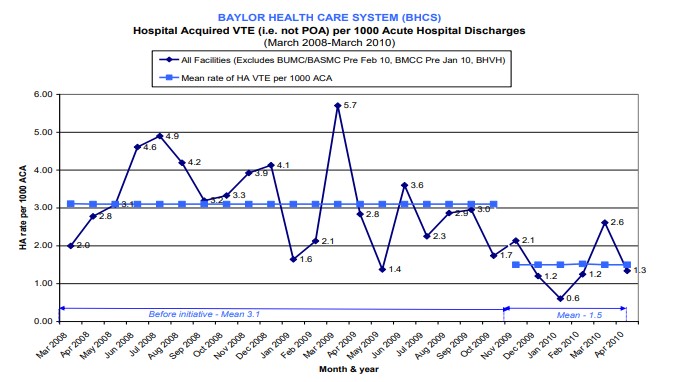
At Baylor, we set out to tackle the preventable harm caused by hospital-acquired venous thromboembolism (VTE). A familiar NHS initiative. Instead of relying on static protocols or disconnected audits, we embedded a standardised, evidence-based VTE order set directly into the EPR – as a decision support tool. I worked with clinicians to turn US VTE guidelines into an algorithm, coded into the EPR. It was tailored in real time to each patient, triggered by their risk factors at admission. The headlines:
  • The process was clinically-led, mandated by all 13 hospital Clinical Directors, and focused on process reliability, not just education.
  • We didn’t ask clinicians to remember the guidelines, we built them into the workflow – and so made it easier to do the right thing than not.
  • At the same time as standardising the default, clinicians could use their clinical experience to deviate, and document why.

The result? A 48% drop in hospital-acquired VTE

The impact of the initiative, documented in my MSc dissertation, was clear:
  • VTE prophylaxis prescribing became more consistent and appropriate (often chemical and physical prophylaxis combined)
  • Real-time data improved adherence and feedback loops
  • Hospital-acquired VTE fell by 48% in just six months
These results weren’t achieved through heroic effort or top-down compliance. They came from:
  • Standardising what we knew worked
  • Making it visible and useable at the point of care
  • Focusing on system reliability, not individual blame
It aligned well with improvement theories I’d studied, including Juran and Deming’s concepts of ‘designing in quality’ – standardise until you need to customise – and Nolan’s framework of reliability in healthcare systems. When we moved beyond hoping clinicians would remember the latest, changing guidance and started designing for consistent performance, things changed.

The opportunity for the NHS

We’re seeing promising signs of clinical decision support in UK EPR systems – particularly in primary care, where tools like EMIS and SystmOne routinely include alerts, risk scores, and prescribing prompts. But secondary care adoption is more uneven. While some trusts using systems like Cerner or EPIC are embedding real-time decision support, others are still grappling with fragmented workflows and inconsistent functionality. That’s a major opportunity: to standardise not just data collection, but decision support – and to design it into clinician workflows, just as we did at Baylor. To make real-time decision support work reliably at scale, we need agreed definitions of what ‘good care’ looks like in each clinical scenario. Ideally these should be evidence-based, with clinician and patient input, regularly updated, and already widely recognised. That’s where existing work done in support of national clinical audits could fit in. The NCAPOP programme, commissioned by HQIP, already provides a rich set of measures grounded in clinical and patient consensus, often aligned with NICE guidelines. These aren’t just useful for retrospective performance reports – they could also be used to power real-time prompts and care pathways within EPRs. Given that we already have these measures across a huge number of specialties, are we maximising their benefit? Could we move from collecting data retrospectively to using these same measures to support care as it happens? Decision support tools may improve consistency and outcome of direct care, as my project showed. And the digital data they generate in doing so is then ripe for secondary use, such as comparative national clinical audit, and also for real time outcomes monitoring. I’ve seen what’s possible when evidence is built into systems, not just policies. When standardisation reduces variation where we don’t need it, we free up doctors’ cognitive load to focus on clinical judgement for the complex and nuanced decisions where it matters most. In the NHS today, we are reaching 100% EHR coverage. But reading the Health Foundation report made me wonder:
  • How do we enable this kind of intelligent, real-time support at scale across a health system with multiple EPR providers, local variations, and varied digital maturity?
  • Does AI bring new opportunity for real-time clinical decision support using national clinical audit measures?
I hope before too many more years pass that we will see for every national clinical audit:
  • Data captured once, in real time at the point of care
  • Data collated nationally, for benchmarking and equity analysis
  • Data interrogated locally, for variation and improvement
  • Measures used to support evidence-based care now, with real-time decision support
This isn’t about replacing audit. It’s about realising the full value of the work already being done – turning measures into daily decision support, in addition to retrospective systemic learning.

A role for HQIP and our partners

HQIP has been at the forefront of clinical audit for over 15 years. From the outset, we have championed the use of digital, point-of-care data as the gold standard for audit. But we now need to go further. We are proactively engaging with EPR vendors to explore how audit measures could be integrated into their platforms. We want to work with clinical leaders, digital teams, and patient representatives to co-design decision support tools rooted in the very measures that national audits already use. If we succeed, we can reduce unwarranted variation, drive up the quality of care, and generate real-time data that serves both direct care and systemic learning. The Health Foundation’s call to action is clear. Real-time data is only valuable if it informs real-time decisions. We already have the measures. We are rapidly acquiring the infrastructure. The missing link is intelligent design and shared commitment. I have seen what is possible when evidence is embedded into systems, not policies. When we stop hoping clinicians will remember the latest guidance and start building reliability into the workflow, the results speak for themselves. The question is no longer whether we can do this. It is whether we are willing to.

More information

The value of audit in identifying health inequalities

6 Apr 2025

Multiple inequalities in diagnosis and treatment are identified by the National Prostate Cancer Audit (NPCA)

What has the NPCA found?

The NPCA’s most recent State of the Nation report, published in January 2025, included a section which focused on inequalities in prostate cancer diagnosis and treatment. More specifically socioeconomic, demographic and ethnic differences between people diagnosed with prostate cancer between 2020 and 2023 in England. What they found showed that the inequalities identified in previous studies persist. Here they explain more… Inequalities at diagnosis: 90% of men diagnosed with prostate cancer had their ethnicity recorded and of these 90% were white, 5% Black and 2.4% Asian. 84% of men diagnosed with prostate cancer were between 50 and 79 years old and 24% lived in the least deprived areas. When adjusting for the size of the male population, white, Black or Asian, the Black population has the largest number of new diagnoses compared to the white and Asian groups, with 17 new diagnoses per 1000 men in black men aged 70-74. 79% of diagnoses had a stage recorded and of those, Black ethnic groups had a higher proportion of new diagnoses per 1000 men at stage 1 than other ethnic groups. We found stage 4 cancer to be the most common diagnosis in white men aged 85 years and over, which highlights late diagnosis in older men. These findings are limited by the low data completeness (49%) of stage for white men aged 85 years and over. Inequalities in treatment: 68% of black men aged 60 to 69 years with high-risk/locally advanced cancer received radical treatment compared to 82% white men of the same age and disease stage. We found a difference in radical treatment between least and most deprived areas, from 83% to 75% for men aged 60 to 69 years. A final finding was that treatment declines significantly from the age of 75 and that younger patients are more likely to receive treatment. In men with prostate cancer that has already spread at diagnosis, Black men were 24% less likely than white men to receive chemotherapy or additional hormone treatments. The same difference (24%) was observed when comparing men living in the most deprived areas than in the least. The special report on inequalities highlights a need for specific interventions to improve prostate cancer care so that it is equitable across all patient groups.

How can these findings be used to improve standards of care?

Results from the NPCA, in both our annual State of the Nation Reports and in our research articles, serve to highlight unwarranted differences in diagnoses and treatment at the population level which can be used as real-world evidence if national prostate cancer care guidelines are revised. Subsequent changes in wording would raise awareness of potential variation and provide support for patients to access equitable care at every step of their journey. This would ultimately lead to improved outcomes for people diagnosed with prostate cancer, regardless of when or where they were diagnosed and treated. There are many factors which influence the differences in prostate cancer care which we have described, whether alone or in combination, some of which may relate to patient choice and preference. These are complex in nature and different approaches by multiple groups and decision makers will be required to ensure men diagnosed with prostate cancer are offered and receive optimal care, ultimately resulting in improved outcomes. The NPCA, being commissioned by the English NHS and the Welsh Government, work closely with clinical leads to provide evidence of where improvements are needed and our stakeholders include professional bodies across the care pathway and colleges with influence on national level policy making.

What is the National Prostate Cancer Audit?

The National Prostate Cancer Audit is part of the National Cancer Audit Collaborating Centre (NATCAN), commissioned by Healthcare Quality Improvement Partnership (HQIP), on behalf of NHS England and the Welsh Government, as part of the National Clinical Audit and Patient Outcomes Programme (NCAPOP).

What does the NPCA do?

The aims of the NPCA, and audits within NATCAN, are to provide cancer services in England and Wales with regular updates on their performance against national standards (when these exist) and other providers, through annual and quarterly reports. This means that we can also evidence whether different patterns of care are seen in different trusts or health boards. By shining a light on these differences, the audits enable NHS services to reflect on their provision and identify changes needed in order to provide equitable access to treatments for all patients, regardless of where they present. The NPCA, and audits within NATCAN, don’t ‘collect’ clinical data, we receive it from the National Disease Registration Service (NDRS) in NHSE and the Wales Cancer Network in Public Health Wales, with whom we work to improve data completeness. We have access to information on the diagnosis, treatments and outcomes of all patients newly diagnosed with prostate cancer in England and Wales as recorded by the providers themselves. This includes staging, how the patient presented, what their health is like generally, and what procedures they underwent, including surgery, radiotherapy or if they received systemic treatment such as chemotherapy or hormonal treatment.

What are the aims of the NPCA?

The NPCA redefined the scope of its work in 2023 and alongside that, identified key Quality Improvement goals in 2024 which ensure patient benefit continues to be at the heart of the work of the audit. Among these, reducing variation in prostate cancer management among NHS providers and improving experience of care among men with prostate cancer.

How does the NPCA achieve this?

The NPCA summarises the information received from routine data collections and produces an annual report (since 2014) which provides a national picture of the state of prostate cancer care in England and Wales. This means we have been able to monitor variation and changes in prostate cancer care for over a decade and make targeted suggestions to providers and commissioners on how to improve care. The audit feeds back information and recommendations to each provider so that they can truly reach the clinicians who can act on it, through the use of local action plans. Since 2024, we also produce quarterly reports, and since April 2025, a data dashboard updated quarterly is available collating data quality of key items and one performance indicator. Prior research undertaken by the audit reported on variation in care by ethnicity, age, socioeconomic status, and geographic location such as our report on treatment of men with high-risk or locally advanced prostate cancer. This identified differences in receipt of treatment for black and socio economically more deprived men. Short reports in 2020 and 2022 separately highlighted variation in diagnosis and care by ethnicity, age and socioeconomic status, so a comprehensive update on these findings was warranted to be able to identify the reasons behind the variation. A research study published in April 2025, looking at the geographic, socioeconomic and demographic inequalities in the incidence of prostate cancer which has spread at time of diagnosis identified unwarranted variation in England (2018-2022). Key findings include:
  • Regional annual rates of prostate cancer diagnoses where it has already spread (metastatic) were found to vary between 4 and 7 per 100 000 men
  • Higher rates of metastatic prostate cancer were seen in regions with lower rates of prostate cancer diagnosis overall
  • Higher rate of metastatic prostate cancer and a lower rate of prostate cancer overall was also seen among men living in more deprived neighbourhoods
In the future, the NPCA will aim to monitor the incidence of prostate cancer which has already spread at time of diagnosis considering these findings. This would provide an opportunity to assess improvements in timely diagnosis (and the ensuing ramifications for national policy about screening and early detection) more thoroughly than by just reporting the proportion of men diagnosed with prostate cancer who have metastatic disease. The programme of research of the NPCA is embedded in the audit activities and is key to the NPCA’s aim to get a better understanding determinants of variation and propose ways to ensure men diagnosed with prostate cancer at any stage benefit from equitable care.

What else is the NPCA doing?

The NPCA will be running a quality improvement initiative aiming to improve rates of treatment for men diagnosed with prostate cancer that has spread. We have already found that older men and Black men (when compared to white men) are less likely to receive treatment during earlier stages of the disease. We hope to understand the barriers to treatment which exist and by working with our partners at local and national levels, propose recommendations which will improve care, and ultimately outcomes, for men diagnosed with prostate cancer that has spread. Further information – links:
  • National Prostate Cancer Audit (NPCA)
  • The National Cancer Audit Collaborating Centre (NATCAN).
This article was shared as part of Clinical Audit Awareness Week 2025. Have your say on #CAAW25: Feedback form.

My data, my health

6 Mar 2025

The importance of data sharing from a patient perspective

At HQIP, we have long-since advocated the value of data and patient voice in delivering evidence-informed healthcare improvement. But don’t just take our word for it. Find out what patients think in this exclusive interview with two public members of HQIP’s Data Access Request Group (DARG), which considers requests to re-use the healthcare data commissioned by HQIP.

Healthcare data is viewed as a gift by those considering access to it”

As commissioner of the National Clinical Audit and Patient Outcome Programme (NCAPOP), HQIP is responsible for the largest clinical audit programme of its type in the UK. This work results in an enormous amount of invaluable data that is used by healthcare providers to deliver targeted improvements. However, we also have a duty to re-use this data to bring about even greater public benefit where relevant, and so we run a stringent process to consider access requests from service planning, research and other similar projects. Being responsible for such data is something we do not take lightly. As such, we ensure that that any access granted is only given after the greatest of scrutiny. Critically, this involves members of the public, who add a unique – and vital – perspective to the decision-making process.

Since the data collected – whether access for secondary use is granted or not – belongs to patients, we have invited two public members of DARG to share their thoughts on what it means to them to be involved in this important work…

Let’s start with healthcare improvement more generally. It can be difficult to see the changes that are taking place to bring about data-informed improvements on a day-to-day basis, but do you have any experiences of this?

WENDY: When I was in hospital recently, I presented with symptoms that were initially put down to anxiety by the clinicians I saw. But one doctor came and said that they’d read a journal paper recently about how females can experience my health condition in atypical ways, and how these symptoms can be under reported. With this research in mind, they observed me, and determined that my symptoms did relate to my health condition. They were then able to identify the care that I needed. This, to me, was a clear example of how data and research are having a direct impact on healthcare.

If done correctly, there is absolutely a case for using healthcare data more”

PHIL: Over my 40 years in healthcare, I have seen many examples of how good data collection and evaluation has made a difference – though it can require determination to move away from ‘we’ve always done it this way’. In dementia care, for example, we’ve seen the introduction of Dementia Care Coordinators, a very positive change which came about by evaluating the experiences of those living with dementia. More recently, I’ve personally been involved in conversations with my doctor about a change in the approach to my medication, based on the latest research. So, yes, I am able to see the impact that data is having on healthcare.

In your view, what are the pros and cons of using healthcare data to inform research and improve care?

PHIL: Firstly, we need to remind ourselves that healthcare data belongs to patients. Then, the truth is that collecting data comes at a cost. These two factors mean that there is a moral obligation to use data for the benefit of patients wherever possible. However, I agree that this needs to be done carefully and safely.

Data provides a sound rationale for why we offer care in the way we do”

WENDY: Using data to inform care is incredibly important and powerful, but it needs to be approached with care. If done correctly, there is absolutely a case for using healthcare data more. In my experience, healthcare data is viewed as a gift by those considering access to it. Though I would like to see more case studies being shared with the public, to help us all to understand the stringent processes that are followed before releasing data for research, and the positive impact it has on patient care.

Why did you want to become involved in HQIP’s DARG; why is it important to you?

WENDY: I joined HQIP’s Service User Network (SUN) first, and was then offered the opportunity to join a short project to determine the feasibility of involving patients in decisions around access to data. We spoke to experts in patient engagement as well as other groups actively working with patients, to find out what worked well for them for use as inspiration for HQIP. When they advertised for public members to join DARG, I thought “I would love to be involved in that”, as I have real passion for health and data, and wanted to bring a patient perspective to the access process. For me, a big factor in patients getting involved is that they want to make a difference.

PHIL: As a frontline healthcare worker, I was involved in using clinical audit in its early days, and could see that data needs to form the basis for every single decision made. I joined DARG because I believe that data provides a sound rationale for why we offer care in the way we do, but I wanted to make sure that it is used primarily for the benefit of patients.

There is a moral obligation to use data for the benefit of patients wherever possible”

What does your involvement in DARG include; what do you do in practice?

WENDY: Regular meetings are held to decide on the latest tranche of applications for data. We are sent information in advance, which we review independently, from the perspective of a patient. Then, we actively participate in the meetings – which are pragmatic, thorough and methodical – to make decisions about whether to release the data or not. We very much work together as a group, collaborating alongside experts from a range of fields, to shine a light on each request from every possible viewpoint. All in all, I am confident that the decisions taken are solid and well thought through.

What works well, and what are the benefits of being involved?

WENDY: We are able to offer a unique viewpoint, asking ‘what is the benefit to the patient?’, learning every time we look at a request. We feel that we have had an impact on the process as well as the resultant research and, ultimately, healthcare. It’s like looking through a window, and then being invited to a seat at the table.

PHIL: I agree. Our discussions enable a robust decision to be made. There is no deference to status and everyone is happy to challenge, and that is very important. Patient involvement within HQIP’s data access process isn’t tokenistic. Our voice is heard, and our view is respected and accepted.

Conversely, what are the challenges and learning points?

WENDY: In hindsight, it would have been beneficial to trial taking part in a meeting, before joining DARG. It can be a little daunting as a non-clinical person but I remind myself that, if I’m asking, others may also be thinking the same thing. It’s important not to doubt yourself, as it’s vital to have a patient perspective in the room to ensure that the healthcare data available delivers maximum benefit for patients.

At HQIP, we couldn’t agree more. We see it as part of our mission to ensure that the data we commission is not only protected, but also put to good use. We know that researchers face complex and sometimes time-consuming barriers to accessing NHS data. Our aim is to help remove those barriers while upholding our responsibilities of patient confidentiality, data security and public trust. That means enabling researchers to ask better questions, produce stronger evidence, and ultimately influence how care is planned and delivered.

Meet our patient interviewees…Phil has over 40 years experience as a Registered Nurse. His career began in a NHS Acute Trust, where he specialised in Intensive Care before moving into hospital general management, spending the last 20 years as a Senior Lecturer at a UK University teaching Undergraduate healthcare students. He joined HQIP’s Data Access Request Group (DARG) in 2024 as a patient representative, following a diagnosis of Dementia with Lewy Bodies, a type of dementia caused by abnormal protein deposits in the brain. These deposits cause chemical changes in the brain, leading to problems with thinking, movement, balance and more, and makes daily activities increasingly difficult over time. Phil is also involved with the work of Dementia UK and the Alzheimers Society in advocating for those living with Dementia.Wendy is a parent, working full time as a Data Manager for a large private healthcare company.  She has a number of complex heart conditions, including a mechanical heart valve, a pacemaker and Atrial Fibrillation. She also had a stroke three years ago, caused by Atrial Fibrillation. Wendy says her health has given her a deeper appreciation for life, and she is driven by a passion to make the most of every day.  She joined HQIP’s Data Access Request Group (DARG) in 2024, and loves being able to represent the public in key decisions about health data.  She also volunteers for the British Heart Foundation and the European Society of Cardiology.

This article was shared as part of Clinical Audit Awareness Week 2025. Have your say on #CAAW25: Feedback form.

How to access HQIP-commissioned dataIf you are a researcher working in health services, clinical science, policy analysis or population health, we invite you to explore what the NCAPOP programme can offer. It is a valuable tool for those committed to evidence-informed care, and we are dedicated to supporting you in accessing it. To ensure transparency and responsible data use, HQIP has put in place a clear and structured application process. This requires you to:

  • Review the full Access to NCAPOP Data overview

  • Read detailed Information for Applicants

  • Complete the Data Access Request Form

  • Outline the intended use and public benefit of your project

  • Provide evidence of appropriate governance and ethical approvals.
  • Applications are considered by HQIP’s Data Access Request Group. This multidisciplinary panel includes HQIP staff, information governance experts, clinical advisors and public members. The group assesses requests against legal, ethical and strategic criteria to ensure that patient data is used appropriately, lawfully and securely.We encourage early engagement with our team. If you are unsure whether NCAPOP data is suitable for your project, or you would like to discuss your proposal informally before applying, we welcome a conversation. Contact us: datasharing@hqip.org.uk.


    Blog: Procurement Act 2023 leaves no room to ignore patient voice

    2 Mar 2025

    Judith Hughes, Associate Director of Procurement (MCIPS)

    On 24 February 2025, the Procurement Act 2023 (PA23) goes live amid a wider backdrop of significant change and pressure in UK health and care. Public sector procurement enters a new era – and for the NHS, the patient voice can no longer be ignored. Patient involvement has been very prominent in recent months, with increased social value obligations, PA23 requirements and Lord Darzi’s report. And this is only set to continue with the development of the 10 Year Health Plan for England, which aims to reduce the burden on NHS Trusts.

    What’s changing – and the opportunities this brings

    A key PA23 requirement is preliminary market engagement, a mandate for improving transparency and encouraging meaningful supplier interaction. The aim is to improve transparency and help ensure that providers understand the details of the tender exercise. This brings greater opportunities for the NHS to incorporate much needed change into the procurement process. Ignoring this isn’t just bad practice, it’s a missed opportunity for efficiency, innovation, and cost savings. Meaningful patient involvement leads to:
    • Smarter procurement – Solutions that better meet patient needs, encouraging adherence to treatments or uptake of new technologies.
    • Greater innovation – Diverse input leads to better, more relevant products, but also innovation of the clinical pathway itself.
    • NHS burden reduction – Better pathways of care mean better patient outcomes. Fewer failed procurements; saving money and resources.
    Involving internal stakeholders and patients as part of that will now not only be valuable – it will also be essential to make the preliminary market engagement meaningful. From 24 February, PA23 will bring a fundamental shift to NHS procurement. Against a backdrop of budgetary strain and rising patient dissatisfaction, one thing is clear: the NHS can no longer afford to ignore the patient voice in procurement.

    Why is the patient voice so important?

    Let’s look at the evidence around patient and public involvement and the need to have it built into procurement activities. Lord Darzi’s report on the English NHS highlighted the lack of the patient voice:
    1. Patient engagement. The patient voice is not loud enough.
    The NHS should aspire to deliver high quality care for all, all of the time. That not only means care that is safe and effective but that treats people with dignity, compassion and respect, making their experiences as positive as they can be. Yet patient satisfaction with services has declined and the number of complaints has increased, while patients are less empowered to make choices about their care. A familiar theme in inquiries into care failings has been patients’ concerns not being heard or acted upon. The NHS is paying out record sums in compensation payments for care failures, which now amount to nearly £3 billion or 1.7 per cent of the entire NHS budget.
    The 10 Year Health Plan for England, currently being drafted, will focus on three shifts that the Government, health service, and experts agree need to happen to create a health service fit for the future. These are:
    • Moving care from hospitals to communities
    • Making better use of technology
    • Focusing on preventing sickness, not just treating it
    The patient voice is a key driver for this plan to work – and procurement professionals play a pivotal role in achieving these goals. Involving the patients early in the design of the tendering process gives the opportunity to:
    • Have real life experiences help shape the requirement
    • Identify health inequalities
    • Understand what it is that patients want and the impact on them
    • Create an all-encompassing, fit for purpose specification
    • Highlight to providers how important the patient voice is, ensuring they design solutions with patients in mind
    • Improve outcomes
    HQIP have been involving patients and carers in commissioning for many years with great success. This has enabled improvements in relevance, patient-centeredness and efficiency; maximising both value for money and social value through better patient outcomes.

    How can you embed the patient voice under PA23 ?

    I recently attended the HFMA/HCSA Procurement Forum, where the speakers honed in on the biggest issue facing NHS procurement professionals today – how to release cost savings for the NHS, whilst still delivering a high quality service. Embedding the patient voice in service design significantly reduces the NHS burden by streamlining processes, enhancing efficiency, and driving cost savings. Prioritising patient-centred care not only improves outcomes but also optimises resource allocation, making healthcare delivery more sustainable. It also meets the needs under PA23 for robust market engagement, making it clear to potential providers that the patient is at the heart of the requirement. There are two key stages where patient engagement will now need to be an essential part of procurement with the launch of Procurement Act 23: Pre-Procurement Preparation – This helps you to fully understand and engage with the market, develop your strategy and plan the procurement process effectively. Whilst this is not a new step in the process, it does allow for greater engagement with internal stakeholders and the patient to really set out the objectives and aims of the requirement. Internal stakeholders are the subject matter experts, but they don’t always engage with the patient to be able to incorporate that much needed voice! Preliminary Market Engagement – This sets out the needs and benefits of your requirements. Including the patient voice as part of this will be a powerful tool to achieving a successful outcome. Potential providers will be armed with the right information to help them in their bid submission and understand how important the patient needs are.

    Need to improve patient engagement ? Act now – or risk falling behind!

    The NHS is under immense pressure to deliver cost savings without compromising quality. Ignoring the patient voice isn’t just poor procurement—it’s a failure in service design.
    Is your organisation ready for PA23?
    If not, we can help. HQIP’s procurement specialists have proven expertise in embedding the patient voice, ensuring compliance, efficiency, and long-term value. Doing this sustainably and valuably throughout the commissioning process can be complicated and time-consuming; it’s a journey that needs careful consideration at each stage. If the patient voice isn’t yet integrated into your organisation’s procurement, our expert team can help you understand what to prioritise and how to gain the support of key stakeholders – ensuring readiness for the new market engagement requirements of Procurement Act 23. HQIP is a not-for-profit, with a vision of improved health outcomes for all and a belief that patient and public involvement is imperative to healthcare improvement. We have healthcare procurement specialists with proven expertise of incorporating patient voice, working alongside our Patient and Carer Engagement team. This tailored expertise enables us to support projects that require deep NHS system knowledge, providing opportunities for long-term value and sustainable improvements that the large generalist consultancies often miss. Talk to us about how we can help youworkwithus@hqip.org.uk Or learn more about developing a strategic approach to embedding patient voice in procurement in this recent blog.

    Blog: The uncomfortable truth – Why MCF4 falls short for NHS procurement

    14 Jan 2025

    Clare Fountain, Associate Director of Quality Improvement

    When it comes to procurement, it’s not just about how much you spend – it’s about how well you spend it. A tailored approach aligns every pound with quality outcomes, ensuring that each investment directly contributes to a better, more effective solution. In contrast, a generic approach spreads resources thinly; often compromising on fit, efficiency and impact.

    If you’re an NHS organisation considering the Crown Commercial Services Management Consultancy Framework 4 (MCF4) as a compliant route to market, you’re not alone. But will MCF4 be the right tool for your complex procurement needs? While MCF4 offers value in certain contexts, it often struggles to address the unique demands of healthcare procurement:
    • Favouring the same large organisations with their ‘off-the-shelf’ solutions: NHS projects frequently require specialist expertise, deep NHS system knowledge and tailored specifications, KPIs and benefits realisation. Solutions via MCF4, particularly by large consultancies, tend to be generic rather than carefully tailored to meet individual organisational needs. This means opportunities for long-term value and sustainable improvement are often missed.
    • Not tapping the most specialist expertise: Suppliers selected during the framework’s setup may not represent the most innovative or specialised in the market. MCF4’s design can unintentionally sideline many SMEs – organisations that often bring specific expertise, agility and a deep understanding of NHS systems. These qualities are not just beneficial, they’re essential for addressing the complex, multi-layered challenges facing healthcare services today.

    What’s the answer?

    In-house procurement teams can run bespoke invitations to tender (ITTs), but they risk reinventing the wheel or struggle with resourcing. In certain situations, employing a procurement specialist will pay dividends for NHS trusts by offering:
    • A transformational focus: Procurement isn’t just about sourcing or signing contracts. It should be a catalyst for long-term healthcare improvement with:
      • A deep understanding of the challenges to be addressed
      • Consideration of value along the whole pathway
      • Clear benefits realisation – contracting is not the end point!
    • Contracting the right solutions, not just the usual suspects: SMEs with expertise, innovation and deep NHS insight are sidelined by rigid framework structures, but procurement specialists like HQIP can do the leg work for you to find the best fit.
    • Effective pre-market engagement, including patient involvement: Patient voices are often added late in the process, or not at all, reducing alignment with real-world healthcare needs. NHS procurement teams are also not always equipped to do this effectively. Procurement specialists with patient engagement experience can support teams with a strategic approach to embedding this throughout the procurement process.
    • Higher value delivered: When done right, tailored procurement delivers better outcomes – outcomes that are sustainable, impactful and aligned with the needs of patients, clinicians and healthcare teams.

    Procurement + Patient Engagement + Quality Improvement = Better Value

    HQIP’s exemplary commissioning approach: Delivering better outcomes

    We go beyond transactional procurement by embedding quality improvement principles, patient involvement and social value into every stage of our commissioning work. With years of experience developing and refining our exemplary commissioning approach, we can help you navigate some common pitfalls. HQIP commissions the National Clinical Audit and Patient Outcomes Programme (NCAPOP), a nationally recognised quality improvement initiative funded by NHS England since 2009. Through rigorous, specification-driven commissioning, we measure the quality of care across a range of medical specialties, driving:
    • Clinical pathway improvement
    • Reduced variability in care standards
    • Improved patient outcomes

    Reasons to commission HQIP procurement

    Aligned with NHS values Quality and value for the NHS is at our core. As a not-for-profit organisation, we share NHS values, focusing on long-term outcomes over short-term returns.
    Flexible, tailored procurement Our approach is adaptive and context-specific, ensuring each procurement strategy is fit for purpose. We can provide capacity or manage procurements end-to-end, as well as mentoring and training your local procurement team.
    Pre-market engagement We can help you maximise the benefits. A unique strength of HQIP is how we embed the patient voice through every stage of the procurement. Doing this produces significant benefits by ensuring all commissioning considers exactly what end users want – delivering better value and outcomes.
    Social value-driven We are experienced in awarding suppliers based on multiple criteria that assess their capacity to impact long-term patient outcomes and social value, in addition to cost.
    Continuously improving HQIP leads best-practice in procurement by continuously refining commissioning and supportive practices for greater social benefit.
    When healthcare commissioning demands flexibility, deep NHS expertise and meaningful patient involvement, contact us at: workwithus@hqip.org.uk Our value-based Procurement+ service combines expertise in procurement, patient engagement and quality improvement to ensure you achieve better value and outcomes. Schedule a consultation with our team today.

    Blog: Increasing value by embedding the patient voice in procurement

    28 Oct 2024

    Clare Fountain, Associate Director of Quality Improvement

    With 25% of the NHS budget allocated to procurement, the need to identify and act upon every opportunity to drive greater value across the entire supply chain is clear. Integrating patient input into procurement can play a transformative role here, shifting the focus to how the product or service contributes to patient care. By embedding patient engagement into the procurement process, improvements can be made in relevance, patient-centeredness and efficiency, maximising both value for money and social value through better patient outcomes. It’s undoubtedly the right thing to do – but now it’s also becoming an essential thing to do. With Lord Darzi highlighting that the patient voice is not loud enough in NHS England, plus the launch of Change NHS, patient engagement is under the spotlight. The Social Value Act and the UK Government’s Social Value Model mandate the inclusion of social value criteria in supplier selection and the Procurement Act 2023 is set to raise expectations even further. Drawing on our years of specialist procurement experience, we outline key considerations for developing a strategic approach to integrating the patient voice in your organisation’s procurement. We also offer top tips for a structured, impactful and inclusive process.

    1. Ensure your purpose for engaging patients is clear – and supported

    For each procurement, consider how patient engagement could improve your decision-making. Use this understanding to identify a well-defined set of outcomes that you are looking to achieve. These outcomes should translate into specific patient engagement procurement goals and activities. Ensure you have the support of senior leaders and other key stakeholders by clearly communicating the value of patient engagement. For example, patient engagement can help to:
    • Increase your social value metrics
    • Form part of the Procurement Act preliminary market engagement, to help providers understand and prioritise key criteria, features and functionality of goods and services
    • Future proof, by building aspirational intent into your procurement
    • Improve both quality of care and patient adherence with treatment by better meeting patient needs
    • Reduce risk

    2. Engage early and throughout the procurement process

    For engagement to be meaningful it needs to form a fundamental part of the commissioning process, not just be a formality.  As with any other stakeholder engagement, start early and plan how you will engage throughout the procurement lifecycle. This might include:
    • Pre-market engagement to better understand needs and inform later procurement practices
    • Patients helping to set supplier selection criteria and/or questions in the Invitation to Tender process
    • Inviting patient participation in tender evaluations to influence bid scoring
    • Incorporating measures for patient engagement in the contracts and ensuring continuous involvement throughout the project lifecycle, to help maintain a focus on patient outcomes​
    • Patients co-designing contract management metrics, to monitor supplier progress and compliance
    • Ongoing engagement for continuous refinements in service delivery
    Embedding patient involvement at each stage of the process:

    3. Develop structured and inclusive engagement plans

    Structured, multi-dimensional planning up-front helps maximise the benefits of engagement, ensuring clarity of roles, streamlined communication and compliance with best practices. Getting this right from the outset can often prove challenging. Some key points to consider are: Your engagement model:
    • Consultation – gathering input from patients and the public on specific issues
    • Collaboration – involving patients directly in decision-making processes, from policy development to care pathway design
    • Advisory – panels for regular feedback and contribution to strategic planning
    Legal and confidentiality requirements:
    • Information Governance when collecting personal or sensitive data, e.g. consent, legitimate interest, privacy notices
    • Declarations of interest to protect both patients and the integrity of the process​
    Participation support
    • Valuing people’s time, including payment for involvement (using set criteria)
    • Using an experienced engagement facilitator – the benefits will easily outweigh the costs
    • Developing a code of conduct for both staff and participants
    • Safeguarding and emotional support
    Participation of participants:
    • Ensure engagement reaches a diverse range of patients, including marginalised and underserved communities (you could use the CORE20PLUS5 list as a guide) to gather perspectives from different demographics and lived experiences​​
    • Tailor engagement formats and methods (e.g. larger fonts, translations, different communication formats) to remove barriers to participation, ensuring diverse voices are heard
    • Create realistic timelines for engagement to allow meaningful contributions
    Communicate continuously and effectively: Use various methods, like focus groups, surveys and social media, to keep patients informed and engaged throughout the procurement process, tailoring communication to their needs​​. Consider setting up feedback loops so that participants know how their input has been used to shape decisions – this reinforces the value of their involvement​​.

    4. Ensure your team have the right skills – and your participants do too

    Effective patient engagement not only involves equipping your team to engage with patients successfully, but also ensuring participants have the skills and knowledge for meaningful participation.  You may wish to consider:
    • Training: Educate patients on procurement processes, bid evaluations and legal considerations
    • Resources: Use patient advisory councils, workshops and online platforms to provide necessary tools
    • Engagement toolkit: Create a toolkit with guidelines for evaluations and responsibilities
    • Education: Offer informational sessions and materials to clarify patients’ roles in healthcare

    5. Recognise the importance of continuous improvement

    Embedding patient engagement into procurement is a journey. If this is new to your organisation, we would recommend a) starting with involvement in part of a procurement process and b) selecting a procurement with clear benefit of patient involvement (a ‘quick win’).  We would not suggest adopting all aspects we have outlined at the same time. Ultimately patient engagement will become embedded in your ‘business as usual’, with engagement practices tweaked and improved over time. Measuring procurement outcomes (i.e. the benefits enabled) from the outset and ensuring ongoing engagement with wider stakeholders and participants means that you will be able to take a structured, data-informed approach to continuous improvement.

    At HQIP, we know that your procurement challenges are unique – that’s why our solutions are too.

    Our value-based Procurement+ service combines expertise in procurement, patient engagement and quality improvement to ensure you achieve better value and outcomes.

    Talk to us about how we can help you: workwithus@hqip.org.uk

    Blog: Insights from Lord Darzi’s independent investigation of the English NHS

    20 Sep 2024

    Re-establishing Quality as an organising principle of the NHS

    Chris Gush, Chief Executive Officer, HQIP

    Lord Darzi’s report candidly highlights key areas requiring urgent attention within the NHS. Those involved in, and connected to, healthcare delivery already know that the ‘system’ of care must function better for both patients and staff. We must improve access, elevate care quality, and boost outcomes for everyone. Shifting care closer to home, preventing illness, integrating services, and embracing technology are all critical—if expected—themes.

    We welcome the report’s emphasis on amplifying the patient voice and giving patients more control over their care, on boosting productivity through improved operational management, and on the crucial need to reduce health inequalities. However, it remains unclear how policy and funding will address these areas and how the strategic challenges that have hindered progress to date will be overcome. We aspire to be part of these solutions.

    We have selected three areas to comment on that align to our work:

    1. The importance of data-driven insights and identifying variances from evidence-based provision
    2. The emphasis on increasing patient and community engagement and patient empowerment
    3. Improving management within the NHS to enhance productivity and quality.

    Clinical Audit: The powerhouse behind data-informed quality improvement

    “The extraordinary richness of NHS datasets is largely untapped either in clinical care, service planning, or research” Paragraph 14

    “… the availability of data—and in itself demonstrates the need to invest in measurement and transparency across all areas of the NHS” Paragraph 29

    Clinical audit reports provide powerful, clinically curated, data-driven insights into the quality of care measured against evidence-based standards, with national benchmarking. A robust design and commissioning process, involving patient engagement, evidence-based guidance (e.g. NICE) and clinician collaboration drives this work.

    Numerous clinical audits are referenced in the Darzi report and can continue to play a leading role in tackling the challenges that Darzi highlights.

    • Adherence to evidence-based clinical guidelines: A stark finding of the report is the “insufficient adherence to clinical guidelines” across many clinical specialties.

    The key focus of clinical audit as a methodology is to provide data-driven insights of variance from evidence-based guidance, which enables sustained improvement in both patient outcomes and operational efficiency.

    • Addressing performance variability: Performance variability is a major issue. Darzi highlights troubling variations in elective care outcomes and persistent avoidable harm.

    Clinical audit, as a methodology, national or local, can support teams to implement a stronger process reliability approach identifying, unpicking and helping reduce unwarranted variation from the standard as well as tracking the effectiveness of improvement strategies through data dashboards.

    • The need for national audits in wider settings: As Darzi reminds us, performance standards are currently heavily focused on hospitals, with insufficient attention to primary care, community services and mental health.

    Collaborating with colleagues in primary care to expand clinical audit coverage to these areas would enable more comprehensive quality improvement. Data flow and sharing challenges in primary care are starting to be addressed by OPENSafely, as referenced by Darzi, laying the foundations.

    Bringing together robust audit measures across acute, ambulance, primary and social care could elevate quality monitoring still further, for the benefit of population health management, triangulation and national sharing of good practices.

    Amplifying the patient voice: A step towards equity

    In some respects, particularly in its decision-making and systems, the patient voice is simply not loud enough” Paragraph 4

    Darzi is correct in stating that the patient voice needs to be louder. Our patient engagement work shows that genuine co-production of services with patients is crucial for understanding what truly matters to them and for driving meaningful change. Partnerships with patient groups and charities ensure that marginalised voices are heard. However, some patient groups have repeatedly shared their experiences and are now fatigued by the process; they seek action rather than more consultation, as well as personal empowerment – particularly in critical moments like childbirth.

    At HQIP, we embed patient engagement in every step of our commissioning processes for clinical audit, ensuring diverse voices—especially from underrepresented groups—are heard loud and clear. By amplifying patient voices, we push for equitable care improvements. But is this enough? Can we do more?

    Lord Darzi emphasises that stronger patient engagement is central to creating truly patient-centred care and tackling health inequities. His report highlights the growing dissatisfaction, noting that “patient satisfaction with NHS services has steadily declined, with many feeling their concerns are not being heard.” In particular, the report draws attention to significant disparities in care, such as the threefold higher mortality rate among Black women during childbirth (MBRRACE audit). Addressing these inequities requires urgent action across all healthcare sectors, including cancer care, mental health, and children’s services. This focus on patient engagement aligns with the broader need to address social determinants of health, such as income and housing, which continue to drive disparities in healthcare outcomes.

    Quality as an “organising principle”: Systems of quality management

    “The problem is not too many managers but too few with the right skills and capabilities. International comparisons of management spend show that the NHS spends less than other systems” Paragraph 24

    Darzi’s 2008 report made the case that raising the quality of care should be the organising principle of the NHS. The 2024 investigation report provides an analysis of the NHS’s current state in England, and “there is much work to be done if quality of care is to become the organising principle of the NHS once more”. As expected, ‘productivity’ is a term abundant in the report (59 mentions in the main report), with the key link to Quality for Patients made clear “a productive NHS can mean high quality care for all”.

    Darzi’s report outlines deep challenges in leadership and operational processes, stressing that these are systemic, not individual failings. As Darzi outlines “managers are there to ensure efficient organisation and process so that clinicians can deliver high quality care to meet the needs of patients”.

    Many of the elements Darzi talks about hint at the benefits of organisational Quality Management Systems (QMS), a term that many will be familiar with from the NHS Impact framework but which are also not yet optimised.

    So, what might be the benefits?

    • Giving clinicians time back with ‘systems of work’ that function and streamline operations. QMS can help by providing a structured approach to improving processes, reducing waste and enhancing productivity. The QMS methods are not unknown, but not optimised.
    • Reducing unwarranted variation systemically, for example by embedding clinical audit standards in EPRs, providing real-time decision support bundles and/or order sets as well as real-time variance data. Darzi’s report acknowledges that the NHS is “in the foothills of digital transformation“, but if we could progress this, the productivity and quality gains could be exponential.
    • Effective process management: Ensuring that the NHS has experts in process design and control could further help streamline processes, reduce variability, and alleviate the workload on clinicians, enabling a more focused approach to patient care.
    • Culture of learning: A focus on system factors, rather than individual errors, fosters a culture of continuous learning and improvement enhancing patient outcomes, operational efficiency, and care consistency.

    While the Darzi report sets out significant challenges, it also points to opportunities for systemic improvement. By leveraging clinical audits as a core tool for quality improvement, the NHS can address some of the critical issues highlighted in the report. HQIP stands ready to support this effort. Data-driven insights and patient voices must guide the NHS as it rebuilds quality as its core organising principle.

    Talk to us about how we can help you: workwithus@hqip.org.uk

    For more details, you can view the full report here.

    Blog: What’s Next for NHS Procurement?

    10 Jul 2024

    Judith Hughes, Associate Director of Procurement (MCIPS), HQIP, shares her reflections from Procurement 4 Health 2024

    Attending the Procurement 4 Health (P4H) event in Birmingham this September was a reminder of just how crucial healthcare procurement is to the overall functioning of the NHS. What really stuck with me was a staggering statistic:
    25% of all NHS spending is on procurement, over £30 million annually
    It’s an eye-opener, especially when you consider the immense pressure on the NHS budget. That figure highlights why effective procurement isn’t just a financial concern – it’s about ensuring that every pound spent translates into better patient outcomes. Unsurprisingly one of the hot topics on everyone’s mind at the event was the delay in the implementation of the Procurement Act. How are you feeling about the Act? Optimistic? Or perhaps a little overwhelmed at everything that needs to be done? The potential for streamlined processes and improved supplier engagement is undeniable, and I’m eager to see how it will impact the way we work. However I do know that many of us are secretly pleased that the Act is delayed, as it gives us more time to digest and implement these changes into our organisations. The day kicked off in the Keynote Arena with a welcome from the Chair Tracy Cramond, Commercial Advisor to NHS Shared Business. Tracy emphasised the need for collaboration across the NHS, something that really shouldn’t be as difficult as we make it.
    This resonated deeply with me. Healthcare procurement is not a siloed activity. It requires partnerships, cross-departmental co-operation, and – frankly – a shared commitment to do what’s best for patients.
    This collaboration bleeds into supplier relationships and partnership working, and it’s a key focus for HQIP and our supplier base. We work closely together to deliver the best patient outcomes throughout the lifecycle of the contracts. The sector is clearly on a journey, but it has already come a long way in terms of innovation and best practice. Zones dedicated to digital transparency, infrastructure and sustainability were buzzing with ideas, with the NHS Commercial and Procurement Pavilion a particular hive of activity. There were an array of topical presentations in the different areas, but one thing I noted that was missing from the event was any kind of focus on the patient and the linkage between procurement and patient outcomes. I took the opportunity to attended the following presentations:
    1. How will the Procurement Act Support Better Engagement in the NHS Supply Chain? This was presented by Sarah Coldrake, Associate Director of Commercial Governance and Policy, NHS England (see, I knew the Procurement Act would get a mention…).
    2. Social Value in Action, presented by Michelle McCann, Chief Sustainability and Innovation Officer, NHS London Procurement Partnership. A thought-provoking presentation, with good points to note and learn from. Michelle made it clear that we must act now to integrate social and environmental value into our procurement decisions. As someone who believes that procurement has a direct impact on patient care, I found her points compelling.
    3. Provider Selection Regime: A Six Month Progress Review, presented by Lucy Probert, Senior Associate, Hill Dickinson. This was very interesting. The Provider Selection Regime (PSR) came into force in January 2024 and focuses on the procurement of healthcare services. The PSR applies to the procurement of goods or non-healthcare services and the uptake of the PSR seems to be slow.
    4. Making Sustainability Real in Procurement, presented by Neil Hind. Neil stated that “the climate emergency is a health emergency”, supporting his presentation with strong facts and figures. As a procurement professional, this resonated with me and was a timely reminder of the sheer volume of the challenges we face.
    I specifically wanted to touch base with the Health Care Supply Association (HCSA). I caught up with Alan Hoskins, who I’ve known for quite a number of years, and we had a chat about the HCSA conference, 13-14 November. HQIP are going to have a stand at this event to promote our procurement consultancy services that offer something quite unique. We combine our expertise in procurement, patient engagement and quality improvement to enable those we work with to achieve better value and outcomes. Alan also referred me to the HCSA Women’s Network, which I look forward to following up on. Whilst HQIP are not part of the NHS, we do provide pivotal healthcare insights and support through our work. I also caught up with Hannah Quinn-Hill, NHS Business Director from Michael Page, who HQIP have partnered with on a thought leadership event on 17 October. As guest speakers, we will be highlighting the importance of the patient voice in procurement. Registration for this free event is open to all NHS procurement leaders. Patient engagement in procurement is a topic that HQIP is passionate about and it has been reassuring to see patient voice referenced strongly in Lord Darzi’s recent report on the pathway to NHS reform. Our CEO, Chris Gush, shares his thoughts on this and other key themes from the report in his recent blog post. The day flew by and before I knew it, the conference was over. Having started the day looking forward to attending the event, it certainly did not disappoint. I met many great people who are as passionate as me about healthcare procurement and the changes that we can bring – through our combined expertise and insight – into the market.

    Talk to us about how we can help you: workwithus@hqip.org.uk

    Blog: Yes we can

    24 Jun 2024

    The importance of national clinical audit in addressing health inequalities

    Professor Danny Keenan, Medical Director, HQIP

    We all know instinctively that health inequalities are complex. Why a person who lives in an affluent area, or is white, is likely to have better health outcomes than their more deprived, or non-white, counterpart (for example) is difficult to unpick. But unpick it, we must. However, in doing this, we are not faced with a blank sheet of paper. We have data, which can support a better understanding of the issues and help us to tailor solutions. And that’s where national clinical audit comes in. For HQIP, as commissioner of the National Clinical Audit and Patient Outcomes Programme (NCAPOP) on behalf of NHS England, we understand the potential value of this vast font of knowledge (the NCAPOP is the largest of its type in the UK) in addressing health inequalities. In November 2023, we published a report on Improving Health Inequality Data in the NCAPOP, to explore the barriers to health inequality data being routinely reported within the programme. Written by our then-Medical Director’s Fellow, Dr Alice Bradley, this report found significant variations in the reporting, analysis, and use of health inequality data among different audits. Now that a little time has passed since this report was published, I want to reflect again on its findings, to ensure that the important messages within are kept to the fore and, more importantly, that the recommendations are implemented.
    This is a call to arms. We must utilise our collective initiative and resources to collect the data needed to enable insights in relation to ethnicity and deprivation
    The report drew from two previous studies where we, with previous Fellows, looked at the outputs from a random group of NCAPOP audit reports, to identify which, if any, analyses were being performed in relation to the influence of ethnicity and deprivation on patient outcomes. Clearly, we were hoping to gain insights into any differing outcomes relating to these factors. However, we found there to be less focus on their influence than we had hoped. There was much good practice to support insights into the influence of gender and age – but much less in relation to deprivation, and even less, to ethnicity. Accordingly, we surveyed our audit providers to explore why this might be. From formal and informal discussions, we understood that they had much interest in understanding inequalities in relation to ethnicity and deprivation, but barriers persisted nonetheless. Alice piloted, and then undertook, a definitive survey to explore what these barriers might be. There was very good compliance in the survey from the audit providers, which supported a variety of findings. As might be expected, some issues are more easily solved than others. Therefore, it’s easier to consider them in terms of those that can be more easily overcome, alongside those that are more complex. Issues that can be more easily overcome can be summarised as follows:
    1. When using routine data sources:
      • Poor or incomplete coding
      • Difficulties with categorisation
      • Miscoding, with different codes used for the same patient on different occasions.
    2. When using bespoke data:
      • Time pressure on clinical staff
      • Engagement challenges with patients
      • Consent issues.
    The more complex areas can be grouped as follows:
    1. Small numbers problem: At the analysis stage, this makes data analysis statistically inaccurate. Furthermore, there are concerns that small numbers at reporting stage may make data identifiable. There is currently a lack of guidance on how to aggregate small numbers.
    2. Population data: There is a lack of population statistics to allow comparisons to be made at the analysis stage.
    3. Costs: It was clear that detailed analysis along the lines of ethnicity and deprivation would increase the costs, increasing the resources required for clinical audits.
    Several of these areas can be addressed together with our audit providers. This would include changing the specifications for new and renewed programmes within the NCAPOP, so that the recording of ethnicity and deprivation is paramount. However, as is clear from the findings, many of the themes will require multiple agencies working together to bring about change. This would involve a fundamental shift for all. However, this has been achieved previously and, if we work together, I believe we can do it again – when we were faced with the COVID-19 pandemic, everyone came together and made quick and significant strides to tackle difficult problems. The same approach is possible for health inequalities. While there are significant local projects that are making in-roads, this issue is worthy of a major push to update coding so that all involved, especially patients, will benefit from the targeted improvements that will arise from much more detailed information.
    Data providers had much interest in understanding inequalities in relation to ethnicity and deprivation, but barriers persisted nonetheless
    A digital solution is the obvious approach to take. We must not rely on frontline staff working harder. The systems we use routinely must be used to solve this problem. With the significant roll-out of electronic records, there must be a way of incorporating information about ethnicity linked to NHS number, and about deprivation linked to postcode? And if this could be extended to linking between primary and secondary care, there would be even greater benefits. NHS Digital, now incorporated into NHS England, has already improved coding. This was a very important step that enables us to pick out, not just the ‘big picture’ differences in care and outcomes between different ethnic and socio-economic groups, but also the more nuanced differences. If we work together with agencies such as NHS England, the Welsh Government, the Model Health System, the UK Health Security Agency and the Office for Health Improvement and Disparities, we can move on to develop strategies to address more complex issues, such as the small numbers problem associated with health inequality data outlined above.
    When faced with the COVID-19 pandemic, everyone came together to tackle difficult problems. The same approach is possible for health inequalities
    I want to end on a note of caution. Whatever strategies are developed, we must recognise that there will always be a population that is transitory or who want to remain private, for whatever reason. While difficult to include in national data collection, it is imperative that they are accommodated by whatever system we introduce to improve health inequalities. In summary, while there’s no denying that health inequalities are complex, appropriate data collection can help us to understand these complexities. As such, this blog is a call to arms. We must utilise our collective initiative and resources to gather the data needed to enable these insights to take place, particularly in relation to ethnicity and deprivation. Then we will be able to ‘blow the lid off’ health inequalities, and peer inside to understand why differences exist. More importantly, we can make changes to health and care – as well as other – services to transform and save many, many lives. I, for one, am ready for this challenge – and I know that the whole healthcare sector is too. Yes we can. This blog was released as part of Clinical Audit Awareness Week 2024; for more information, go to: www.hqip.org.uk/clinical-audit-awareness-week.

    Further information