
Avoiding ‘lost in translation’

4 May 2024

Using national healthcare data to support meaningful change

Jill Stoddart, Director of Operations (National Clinical Audit and Patient Outcome Programme), HQIP What keeps you awake at night? When I worked in clinical practice, questioning whether I’d provided the very best care for patients kept me awake. Now I commission national clinical audits and other patient outcome programmes, this is still a primary concern – but the focus is on whether the data we collect supports the best care for patients. How can we ensure that evidence derived at a national level is well received and implemented at Trust level? And, critically, are we really making a difference to patient care? I understand the pressure and challenges that Trusts face with increasing demand, financial constraints, bed shortages, recruitment freezes and preparing for winter pressures – all in addition to national and regional scrutiny. Against this backdrop, it can be extremely difficult to make sense, and practical use, of the vast array of national healthcare data available. Between April 2022 and March 2023, the National Clinical Audit and Patient Outcome Programme (NCAPOP), commissioned by HQIP, published 64 reports and 368 recommendations alone. Factor this up across the national clinical effectiveness landscape – including National Institute for Health and Care Excellence (NICE) guidance, Getting It Right First Time (GIRFT) reports, Healthcare Safety Investigation Branch (HSIB) investigations and multiple other national enquiries – and we can safely say that Trusts are awash with reports and recommendations.

Widely disseminate information about both negative and positive outliers – share the learning!
This is why, in 2023, HQIP reshaped its outputs. We undertook discussions with policy makers and healthcare providers, which identified a need to reduce the burden and increase the timeliness of data, culminating in:
  • Shorter user-friendly ‘state of the nation’ reports
  • Quality Improvement (QI) resources, replacing local recommendations in reports
  • A focus on approximately ten metrics, and
  • Near real-time dynamic reporting, refreshed at least quarterly.
However, while these changes were welcomed by healthcare providers, we know that information provision alone does not change behaviour. It takes much more than knowledge to leverage change. The starting point for transformation at a Trust level is to continually question the quality of care provided. Questions are vital, they do not mean resistance and should be actively encouraged. These questions can take many forms, and can help to clarify understanding. Questions that healthcare organisations can ask themselves about their performance* were highlighted in the 2023 edition of CORNERSTONE by Mirek Skrypak (pages 22-23) and are worth reiterating here, since they are the starting point for a Trust:
  1. Do we know how good we are?
  2. Do we know where we stand relative to the best?
  3. Do we know where, and understand why, variation exists in our organisation?
  4. Over time, where are the gaps in our practice that indicate a need for change?
  5. In our efforts to improve, what’s working?
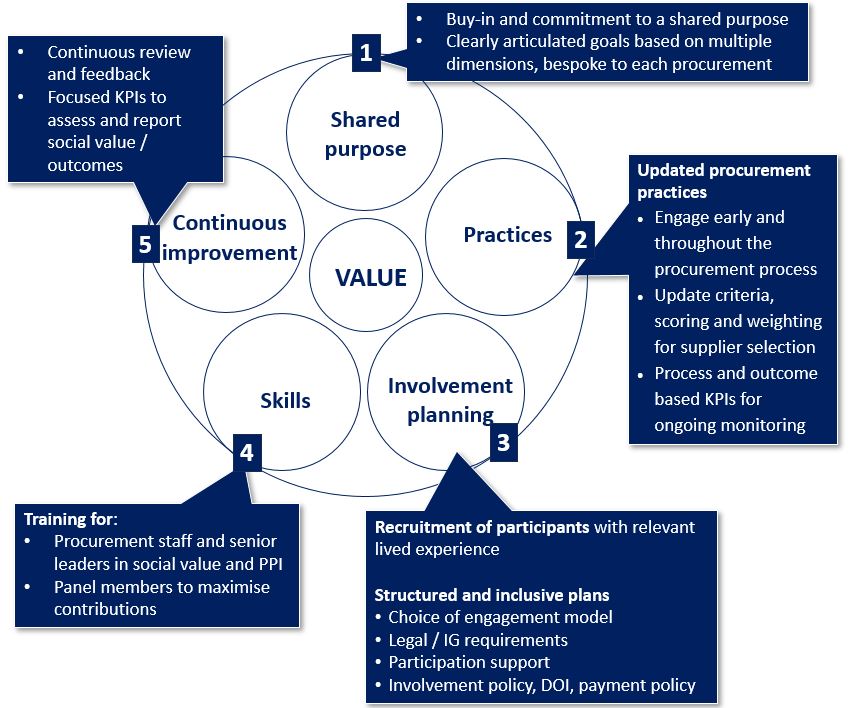
Alongside asking key questions about clinical effectiveness performance, all Trusts need to also invest time in building an open and transparent data and quality improvement culture. NHS England’s approach to improvement is outlined in their NHS IMPACT (Improving Patient Care Together) programme. It includes five components which form the ‘DNA’ of all evidence-based improvement methods, and which underpin a systematic approach to continuous improvement:
  • Building a shared purpose and vision
  • Investing in people and culture
  • Developing leadership behaviours
  • Building improvement capability and capacity, and
  • Embedding improvement into management systems and processes.
NHS England also makes a wide variety of useful improvement resources available to health and other care providers. These include good practice pathways and guidance documents as well as cross-cutting workstreams such as GIRFT, intensive support and national clinical audit.
The starting point for innovation and change at a Trust level is to continually question the quality of care provide
So, what difference can clinical audit make? The audit cycle includes taking action to bring clinical practice in line with evidence based standards, to improve the quality of care and health outcomes. Healthcare providers need to consider the link between the evidence base, national policy, national clinical audit and local implementation. This can take many forms, but here are some top tips that are useful when considering how best to use data intelligently and achieve change at a local level:
  1. Share information widely across the Trust, understand variation, make data available and transparent but don’t stop there – discuss it and agree the changes required. Widely disseminate information about both negative and positive outliers – share the learning!
  2. Report by exception to the relevant assurance committees and Board – ensure regular Board airtime is given to discussing the data, its meaning and the required QI actions.
  3. Remove Trust level obstacles – bureaucracy stifles innovation.
  4. Remember the 80:20 rule (Pareto Principle) – 80% of outcomes (or outputs) result from 20% of causes (or inputs) for any given event.
  5. Always set deadlines and agree who is responsible for delivering actions, following up on progress. Set regular small milestones – these are much more likely to be successfully implemented.
  6. Action plans need to be robust and identify system actions which remove the reliance on individuals. Where possible, use standardised and permanent (physical or digital) designs to eliminate human error, sometimes referred to as ‘forcing actions’ (as cited in the Perinatal Mortality Review Tool (PMRT)’s infographic relating to their 2022 annual report).
  7. Be aware of national clinical audit publication schedules – and make plans to receive reports and data as they are published.
  8. Know your Trust plan and timetable for the national clinical audit programme.
  9. Monitor your own internal Trust data and take actions to unpick and explore early, using NHS England Making Data Count resources.
  10. Make an explicit Trust link between data and Quality Improvement (QI) and avoid silo working.
All seemingly obvious and sensible. But, in fact, it’s easy to get this wrong. The Kirkup report on maternity services at the East Kent University NHS FT was published in October 2022. It highlighted several important points when it comes to understanding variation, and presenting and interpreting data, stating “The unit-level information that is available tends to be presented in the form of ‘league tables’… These serve to conceal the variation between different units, with no indication of whether one or more units are outliers”. To address this, Kirkup noted two requirements: 1. From Section 6.9: The first [requirement] is the generation of measures that are:
  • meaningful – that is, related clearly to outcomes
  • risk adjustable
  • available – they are available from data already routinely collected
  • timely.
2. From Section 6.10: The second requirement is that the measures:
  • are analysed and presented in a way that shows both random variation and trends
  • use sound, statistically based approaches to detecting the signal among the noise
  • are presented graphically to show variation, significant trends and outliers in the form of statistical process control charts and funnel
  • plots are extended to clinically relevant outcome measures.
These, and many other messages in the Kirkup report, can be extrapolated and applied across Trusts and other healthcare providers. Data are everywhere, often difficult to interpret, can be complex and, at times, additional information is required to get a clear picture of what is happening. As such, it can be difficult for Trusts to understand where they need to improve. The following tools offer a suggested approach: Questions for Trusts to ask themselves about how they use data Trusts can either internally review these questions to judge where they might sit, or it may be helpful to ‘buddy’ with a peer Trust for independently reviewed opinions, such that a relevant professional team, external to the Trust / Board, provide ‘fresh eyes’ and an independent perspective. Translating national data into effective change at a local level isn’t easy. It may be littered with potential pitfalls and difficulties, but it is, of course, vitally important. So, I will leave you with just one takeaway thought, a lightbulb moment (neatly inspired by the inventor of the lightbulb, Thomas Edison): “I have not failed 700 times. I have succeeded in proving that those 700 ways will not work. When I have eliminated the ways that will not work, I will find the way that will work”. Here’s to continuing to work together, and supporting each other, to find the ‘right way’ to use national clinical data to support meaningful change at a local level. Further information and resources This article was originally featured in HQIP’s quality improvement magazine, CORNERSTONE – to see more articles on topics such as healthcare inequalities and sustainability in healthcare, go to: www.hqip.org.uk/wp-content/uploads/2023/11/HQIP_Cornerstone_2024.pdf.

How do I compare thee?

4 Apr 2024

Professor Danny Keenan, HQIP Medical Director and Associate Medical Director to the Manchester University NHS Foundation Trust.

Benchmarking in healthcare is far more than mere comparison. It is a powerful tool that can support healthcare providers to identify opportunities for improvement and improve patient care. But, in a minefield of data and information, what are the key resources and developments in relation to benchmarking in healthcare, and what steps are HQIP taking to support effective measurement of performance? Our Medical Director, Professor Danny Keenan, provides a helpful overview…

Your first port-of-call should be audit and similar programme reports and outputs. Be familiar with what is available in your field, and understand how often – and when – data is shared. For HQIP commissioned audits and programmes, the reports and other outputs can be found on the HQIP website, while our publication schedule (which is updated monthly) is here. Importantly, our outputs were changed after the COVID-19 pandemic, following a series of webinars with the national audit providers to explore if the programme was ‘digital ready’. As a result, changes – such as shorter reports, less metrics and a move towards near real-time dynamic reporting – were introduced to reduce the burden on Trusts and healthcare service providers. It is also worth noting that, in addition to these commissioned summary reports, many clinical audit and outcome review programmes have websites where further background data can still be accessed.

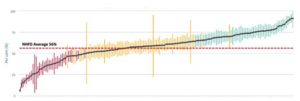
A benchmarking chart based on data from the National Hip Fracture Database (NHFD) showing ‘prompt surgery’ (surgery by the day following presentation with hip fracture) with confidence intervals. Each hospital is denoted on the x axis (not shown here):

Another starting point is the National Clinical Audit Benchmarking website (NCAB), which provides a visual snapshot of individual Trust audit data set against individual national benchmarks. There is no barrier to use, such as login or an NHS email address, so it’s easy to use and available to all – from healthcare professionals through to policy makers and patients. Created by HQIP in collaboration with the Care Quality Commission (CQC), this resource contains datasets on a variety of clinical disciplines, with additional data being added on an on-going basis (to receive notifications of new datasets as they are added, subscribe to HQIP’s mailing list). It provides a snapshot view of each healthcare provider, stating whether, for example, they are above, in line or below expectations for each measure. NCAB also enables Trusts to determine if there are any metrics for which they are a (positive or negative) outlier. This is important for highlighting when patient outcomes fall significantly outside of the norm of what is expected. In light of its significance and in response to the COVID-19 pandemic, HQIP has undertaken extensive consultation with stakeholders, including patients, to revise its guidance relating to outliers. The result is a ‘softer approach’ which retains the principles of benchmarking, and includes:

  • The introduction of a ‘nonparticipation category’ so that Trusts that should be contributing data towards national audits but are not, will be regarded as an outlier.
  • Changes to the notification of significant outliers. For key predetermined audit metrics, such as mortality, ‘alert’ level results will be notified directly to the CQC and NHS England. Other less significant metrics with alert outlier results would be available for review when annual reports are published.

In addition to these resources, HQIP is involved in a number of developments to support Trusts and other health and care providers to measure performance, starting with talking to clinicians and analysts to identify better ways of visualising HQIP and NHS outputs (to ensure maximum impact). Work in this area includes making more timely data available on NCAB, and looking at how we could standardise coding systems that are already in use. We are also talking to patient and service user groups as well as the independent sector, to include the latter in the National Clinical Audit programme. The Paterson review made it clear that all patients’ data should be included, no matter where their operation has taken place or how their care is commissioned. This will ensure that patient care is equally assured, and that their data is available for quality improvement initiatives irrespective of geography. Of course, performance measurement and benchmarking are of utmost importance to the NHS too. In 2023, I chaired a series of ‘National Clinical Audit for Improvement Implementation Group’ webinars run by NHS England. These explored the development of clinical effectiveness across the service and, in particular, looked at ways to support clinical audit colleagues who are very much on the frontline of this work, with initiatives such as NHS IMPACT, the Futures NHS platform and the Model Health System. To further support the sharing of innovation, they also coordinate the NHS Benchmarking Network, which helps members to improve patient outcomes, raise health standards and deliver quality health and care services through data excellence, benchmarking and the sharing of innovation.

The Paterson review made it clear that all patients’ data should be included, no matter where their operation has taken place or how their care is commissioned

One area that everyone is interested in (quite rightly), is how to address health inequalities; and audit data and performance measurement is proving to be a powerful tool for this, shining a light on where inequalities exist. The COVID-19 pandemic highlighted inequalities in health outcomes due to ethnicity and deprivation. As a result, HQIP is investigating how the National Clinical Audit programme can track patients’ outcomes better using markers such as ethnicity and deprivation. In particular, we sponsor a National Medical Director’s Faculty of Medical Leadership and Management (FMLM) Fellow each year, and they have led a series of reviews on this topic. The 2023 review, due for publication in late 2023, is a survey concerning the obstructions encountered in relation to health inequalities, and includes a number of strong recommendations concerning basic issues such as coding, use of postcode and how to manage small numbers in the audit programme (all of which could make a big difference). We are now working with the Health Inequalities team at NHS England, regarding the plans for implementation of these important recommendations.

Audit data and performance measurement is proving to be a powerful tool for… shining a light on where inequalities exist

All the tools and resources I have mentioned so far are available to support benchmarking here and now (and I do hope you will take a look at them, if you are not already doing so). But I will end on more of a nod to the future. Firstly, we must improve how we celebrate excellence. Currently HQIP works with audit providers to produce “scenarios” concerning units that appear at the ‘excellent end’ of benchmarking charts. But, we need to raise excellence across the board. One of the downsides of benchmarking is that units sitting in the middle of the chart can become complacent, whereas we all need to keep moving towards the excellent end. HQIP will work with audit providers on ways of celebrating excellence better, so as to promote a ‘move to the right’. Secondly, to support strategic- and forward-thinking around audit data and performance review in healthcare, HQIP runs a Methodology Advisory Group (MAG), comprised of a broad spectrum of stakeholders including policy makers, healthcare professionals, and patients. In 2023, we hosted a MAG webinar dedicated to Artificial Intelligence (AI) and machine learning. We reviewed the use of these technologies in relation to National Clinical Audit, and discussed what work was already taking place and how we could foster best practice in this area. As a result, we are now exploring how best to share current and proposed best practice using AI. Furthermore, we have also committed to investigate the use of ChatGPT-4, or alternatives, to explore current anonymous datasets to search for disease and outcomes linkages. I’m sure that you, as do I, await news on how these developments can support us in measuring performance and improving outcomes for patients with eager anticipation. Watch this space… 

Further information and resources

This article was originally featured in HQIP’s quality improvement magazine, CORNERSTONE – to see more articles on topics such as healthcare inequalities and sustainability in healthcare, go to: www.hqip.org.uk/wp-content/uploads/2023/11/HQIP_Cornerstone_2024.pdf.

Article: Patient and Public Engagement in practice

3 Mar 2024

A win-win for healthcare providers and patients alike

There are many well-documented reasons as to why it’s important to work with the people and communities we serve, not least improved health outcomes. But these benefits apply to both care-givers and -receivers alike. Kim Rezel, Head of Patient and Carer Engagement at HQIP, talks to both the staff and volunteers from two past winners of the Patient and Public Involvement category of the Clinical Audit Heroes Awards (Epilepsy12 and Side-by-Side – see more about these projects at the bottom of this article) about their experiences of effective patient engagement, in the hope that others may be inspired to think about how they could include patients and carers in their projects…

The healthcare professional perspective… The patient perspective…
Q: What motivated you to set up a patient group to support your audit?

Epilepsy12: We weren’t getting through to patients’ “real voices”; there was a distance. We were beginning to get some sense of people’s views through the patient experience measures that we’d built into the audit, but there was a strong sense that they wanted more direct “contactability” with our service. At the same time, we realised the irony that our patients had limited involvement in the design and running of the audit, and so we needed an approach that would address that.

Q: Do you have any hints or tips on how to get started?

Side-by-Side: Ask people to be involved and provide a genuine offer of real involvement; don’t just pay lip service to patient engagement. Side-by-Side was created from when we held a traditional research conference in 2014, in which we invited a group of patients to provide feedback. It wasn’t positive. We apologised and asked them to help us to make it “better” next time. This was the start of building relationships and working together to put patients at the heart of what we do.

Q: How does it work, in practice?

Side-by-Side: We have a group of patients and service users who work alongside us. They meet regularly (every 6 to 8 weeks) and we present involvement opportunities to them, while they hold us accountable to all the things we said we were going to do. We are very fortunate to be in a position where we have a participation team to support liaison such as sending email updates etc. It can take some time to set up in the first instance, but it’s so worth it – and now we’ve got to a point where the group is happy to be contacted via a quick text or WhatsApp message. We genuinely see them as part of the team; they have this wealth of experience, skills and ideas that we feel really privileged to utilise in what we do.

Q: What do you see as the main benefits of setting up a patient group?

Epilepsy12: The quality of the feedback we get has exceeded my expectations. For example, at first, when we sent the group a patient-facing report to review, I was expecting something fairly light touch, but actually the feedback was much more profound than that. Because it comes from a patient, the information comes with experience and passion. It made me realise that there isn’t anything the group can’t do. Now there isn’t a part of the process that they’re not involved with; they’re involved in the full methodology, from design to delivery.Side-by-Side: This has completely transformed the way I work, even to the point where our patients contributed to my appraisal. Working with patients means you can come out with something entirely different, but also better and more fit-for-purpose and with greater longevity.

Q: And what about the challenges?

Epilepsy12: If you’re not careful, you can be pulled in different directions. We needed to ensure that everyone involved was aware of each other’s visions and perspectives. So, we focused on getting a ‘balance of autonomy’ among the different groups. But it’s a delicate balance; a dance between autonomy and empowerment. When you start to empower others, you are admitting that you might move the power base elsewhere – and there’s a vulnerability to that. You’ve got to accept that you are not always in control of where you’re going.

Q: How do you ensure appropriate representation in the project?

Side-by-Side: Over the last year, we have expanded the group by involving people from across Solent NHS services. We did this by reaching out to different charities and communities. As a group, we continuously review and work together to improve the diversity of Side-by-Side.

Q: What are your main learning points now that the project has been running for some time?

Epilepsy12: We’ve had a growing perspective of how to engage and embed young people directly in the audit. Initially, we had quite a narrow view of what an audit was, thinking it was about young people. But now we think of it as being with young people. In fact, we don’t really think of it as an audit anymore; it’s more of an improvement project with young people that uses audit methodology.

Side-by-Side: We have come a long way but we have made mistakes along the way (I actually wrote a blog about when it goes wrong). The thing I love most about our group is that we have an open and honest relationship, where they can feed back to us ‘in the moment’ and we learn how to improve. We’re still learning but I do think that having a relationship where people can give constructive feedback is really, really important.

Q: What are your visions for the future of your patient engagement work?

Epilepsy12: I’d like to see participation on every level. We have really strong involvement in the team and at national level, but I’d like to see participation move to more of a network model so that we can link to professional networks. There are different layers of influence, and it would be good to see our young patients involved in all those layers. For example, embedded in local teams, Integrated Care Systems (ICS), and at a regional level. Then, these networks could link up with young people with other health problems. However, while it’s not entirely within our gift to solve, we can build patient networks in the same way that we can build professional networks. Another aspiration with the audit is to build patient-facing elements into the data streams. To that end, we’re trying to get automated data flow for whole populations, to support research as well as clinical care. We’d also like to see more joined-up data – so it feels like it’s the patients’ data, not the hospital or the professionals’ data. Ideally, we’d even see ‘live involvement’ from the person with epilepsy in the audit e.g. with them filling in their forms, not just clinicians doing it for them.

Q: Why did you become involved?

Side-by-Side: Having the opportunity to add a community perspective into projects within Solent NHS Trust, to provide a patient voice, is really important. We have something extremely valuable to add into discussions around our care.

Epilepsy12: We wanted to make sure that young people and their families were heard, since discussion and patient engagement means better care. In a nutshell, we wanted to create a gold standard in epileptic care.

Q: How did you become involved?

Epilepsy12: Initially, I became associated with different epilepsy charities, completing feedback forms etc. Then, I became involved in this programme’s Board, speaking at a conference and working with a group of others to help launch the Epilepsy Passport. But then we became keen to be more involved, to put our views into practice. Following a conference in 2019, we realised that we wanted to reach out to clinicians to look for the best ways to speak out about epilepsy care, which we did. Consequently, several clinics from across the UK got in touch and said “yes, please come and visit us”. Unfortunately, because of the COVID-19 pandemic, we weren’t able to go out and speak to people in person; however, we still made contact, but using online methods instead.

Q: What happened next; what did your involvement look like, in practical terms?

Epilepsy12: I went to an initial meeting, and something really clicked. The group started creating videos and analysing different sorts of leaflets, sending them to the doctors to say, “look, this is what young people really want”. More and more clinics wanted to come and speak to us, and we ended up embarking on a sort of ‘youth advocate road trip’. We worked out how we could make a difference going forward. Since then, we’ve been able to think about good practices, such as making a welcoming environment and having good conversation starters.

Side-by-Side: We are involved in a lot of different ways, for example in the recruitment of staff. I helped to interview for a research nurse; I was sent all the relevant application forms and was able to adapt the interview questions. During the interviews, I was given the opportunity to ask a set of questions, and then I was involved in the discussion afterwards. We are also regularly involved in co-producing training on research, improvement and working alongside people. I have been involved in the content and planning from the outset, and in the delivery on the day. It was clear that the attendees genuinely valued our input too. A lot of opportunities can be fulfilled online, which really helps.

Q: What do you enjoy about participating in a project like this?

Side-by-Side: It’s a great opportunity to be part of a panel of people who are all very lovely and positive; all with different backgrounds and different skill sets, which is what makes it so interesting. We have the ability to get involved in lots of different sorts of activities, which is great. It’s really enjoyable and rewarding to see the difference our contribution makes.

Q: Are there other benefits to being involved, particularly those you hadn’t envisaged at first?

Epilepsy12: We have managed to find our own unique way of engaging with doctors. Our discussions are interactive, and we get to hear their views. By being part of this work, I’ve been exposed to so much and learnt a huge amount about the epilepsy world.

Side-by-Side: The more I’ve become involved, the more I have gained confidence, and that seems to stand for the group as a whole. We understand more and more the important part we can play, and we’re always made to feel such an integral part of the team. There’s no divide between volunteers and paid members of staff, and that’s why I think it works really well. There’s a great level of mutual respect.

Q: What have been the most challenging aspects of being involved?

Epilepsy12: Epilepsy care can be a very difficult subject for young people to talk about when they are going through it. It can make you feel very vulnerable, and you need to be sure that the group is a safe space. I needed to be happy that I would be able to talk about my experiences honestly, as well as try to change policy and improve epilepsy care. In truth, it can also be quite challenging to get through to clinicians sometimes – you need to work out the best way of communicating, whether it’s sending emails, communicating by post or using social media.

Q: Are you paid for your involvement?

Side-by-Side: Payment was never an expectation when I became involved, but actually it does serve to reinforce the value that we bring, recognising that we are giving not just our experience, but also our time. It does make a difference and reinforces the notion that I’m worth something because I work really hard at this. Receiving payment for my contribution enhances my self-worth and, for some people, payment is what makes involvement possible.

Q: In hindsight, what would you change?

Side-by-Side: Definitely get patients involved from the start of any project, and don’t make it a retrospective activity. We can provide valuable input right from the start. A lot of people think, well, that’s a lovely idea, but I wouldn’t know where to begin. But you can start small – maybe just through an informal conversation – and work from there, so it isn’t insurmountably difficult or time consuming.

Q: How do you see this work developing in the future?

Epilepsy12: We’re already starting to see the sorts of changes we want to see – for example, having families and youth advocates lead the work. From a young person’s perspective, we have this group where young people are sharing their views and actually having a say; and I think that will continue. However, we do want our partnerships to grow, joining up with key allies – and that will be the next phase for us.

We hope that others from the health and care sector are able to take inspiration – as well as practical tips – from these exemplar projects. While we recognise that effective patient engagement is not an easy task, particularly in the current climate, these interviews demonstrate the impact it can have on patients’ care (and, in turn, their lives). It’s also true that there’s no magic wand for embarking on patient engagement activities; however, these projects show that small steps can turn into bigger ones, so it’s often a case of getting started, and listening and learning as you go along. Dr Colin Dunkley, Clinical Lead at Epilepsy12, offers a word of caution: “It’s easy to involve people, but it’s also easy to involve them badly. When people share their experiences, they’re giving something of themselves – so that does need careful management to make sure it isn’t tokenistic, non-inclusive or exploitive.” But he clearly thinks that it’s worth the effort: “Engaging with patients properly can take you to unexpected places, but you’ll realise that that’s where you should have been going anyway – so you’ve just got to jump. Otherwise, you might end up in the wrong place.”

With that in mind, you may find it useful to look at case studies of exemplar projects from HQIP’s Richard Driscoll Memorial Awards, which celebrate excellence in patient engagement in the National Clinical Audit and Patient Outcomes Programme (NCAPOP). Finally, as this is about patients after all, we would like to give the final word to a young patient, Owen Thurston (a Youth Advocate from Epilepsy12): “It’s really essential to keep the patient at the centre of healthcare at all times. If we do that, then the sky’s the limit for patient voice!”

About the interviewees

More about the winning projects from the Patient and Public Involvement category of the Clinical Audit Heroes Awards featured in this article:

Epilepsy12 is an audit delivered by the Royal College of Paediatrics and Child Health (RCPCH) that is supported by a group of epilepsy experienced or interested children, young people, families, and an epilepsy specialist nurse. They volunteer to shape the Epilepsy12 clinical audit and lead improvement activities with patients, families, and epilepsy services. They bring their voices, experiences, hopes and wishes to life, together, through youth-led project work and advocacy.

Interviewees:

  • Dr Colin Dunkley, Clinical Lead
  • Owen Thurston, Youth Advocate
Side-by-Side is a partnership between the Solent Academy of Research and Improvement team and a dedicated group of patient and public involvement representatives who support the integration of clinical audit, service evaluation, quality improvement, research and library teams within the Solent NHS Trust. Support comes in many forms, such as co-designing and codelivering training workshops, supporting improvement projects, reviewing reports, sitting in interview and award panels, and organising an annual conference.

Interviewees:

  • Sian Lloyd Jones, Side-by-Side member
  • Juliet Mosney, Side-by-Side member
  • Sarah Rowcliffe, Side-by-Side member
  • Colin Barnes, Head of Improvement
  • Carl Adams, Head of People Participation
  • Natalie Royston, People Participation Facilitator

This article was originally featured in HQIP’s quality improvement magazine, CORNERSTONE – to see more articles on topics such as healthcare inequalities and sustainability in healthcare, go to: www.hqip.org.uk/wp-content/uploads/2023/11/HQIP_Cornerstone_2024.pdf.

Get involved

Join HQIP’s Service User Network. It is now easier than ever – and without the need for a fixed commitment. We are seeking those with lived experience as patients or carers to sign up to receive regular newsletters about involvement opportunities as well as updates on local and national engagement activity. Opportunities include inputting into the development of an HQIP commissioned programme and new project proposals, patient advocate positions on national audits, and providing feedback to resources, among others. Read more about HQIP’s SUN here and complete and complete this form to get involved.

About patient engagement at HQIP

The Healthcare Quality Improvement Partnership (HQIP) is committed to involving, engaging and informing patients and their representative organisations throughout our work. We ensure that patients and carers are reflected in all aspects, from commissioning programmes through to resource development. Find out more: www.hqip.org.uk/involving-patients.

Blog: In for the long haul

29 Feb 2024

Taking an effective and sustainable approach to clinical audit

Vicky Patel, Chair, National Quality Improvement (incl. Clinical Audit) Network (N-QI-CAN)

“Any commissioner or provider of health and care has a duty to review and monitor the quality of the services delivered, making improvements, where appropriate, that are sustainable. The clinical audit community fully supports this responsibility, and there are a number of exemplar projects that have made a difference to patient care and outcomes that take sustainability into consideration. However, this comes with challenges, and these need addressing if we are to enable teams to strengthen and future-proof our systems. Here, we outline some considerations and approaches that could support you in overcoming these challenges… Firstly, there’s the sheer volume of clinical audits that health and care organisations are eligible to participate in, in order to review, monitor and improve health and care. This highlights resource issues that, if not understood and addressed, can impact on the ability to be both effective and sustainable. Then, even once resources are in place, there are a number of other considerations to take into account… Clinical audit topic selection is based upon the health and care priorities for our nations at a national level, and for our local communities at a local level. Patients and service users should be involved to bring a ‘lived experience voice’ to the topics for inclusion but, most importantly, they should inform the metrics for measurement. They can provide the ‘what matters to me’ that we need to embed into our decision-making, to improve and further strengthen health and care. But, once we know what the clinical audit programme should include, how do we ensure that it delivers on what it sets out to achieve effectively? Principles of Best Practice For many years the clinical audit community has promoted Preparation and Planning as the most important stage to take time to get right. The other stages will be more easily achieved if we have planned and prepared for the right data being collected in the right way at the right time – and then validated, triangulated and translated for the right audience(s), to inform timely decision making. For example, we need to ensure that the workforce has the capability and capacity to implement an improvement plan and evidence the impact. We also need to plan for measuring over time, to ensure the improvements implemented have sustained impact. The National Quality Improvement (incl. Clinical Audit) Network (N-QI-CAN) encourages health and care staff to not see each clinical audit as an additional workload or task, but to find ways to embed the activity as business as usual. Make a pledge to undertake a Quality Improvement (QI) project after reviewing the processes for participating in each clinical audit in your programme. This supports a focus on reducing the data burden and releasing resources for taking action for improvement as well as evidencing the impact on improving patient and service user outcomes. Also, don’t forget to share your learning with each other, celebrating success. With most organisations experiencing a high number of projects on their programme, this could all feel like an overwhelming task, but take it one step at a time. Focus first on the highest priority section of your programme. Follow the ‘Do One Thing’ approach, start with Just One Clinical Audit and consider the following top tips:
  • When planning, don’t start at the beginning. Identify where the vision is going to take you and where the journey will end. If this is a national audit, agree where the priority fits within the local picture. Clarify the drivers both nationally and locally. Buy-in at all levels is key.  Link the clinical audit topic to the wider QI plans and work streams within your own organisation and across the system. If the QI function is not part of your team, protect some time with those colleagues and align the clinical audit to patient pathways and other QI workstreams, to ensure the wider improvement plan includes the clinical audit and a move towards continuous measurement. Additionally, ensure that any further QI as a direct result of the clinical audit measurement, is taken forward collaboratively with all relevant stakeholders.
  • Build your team and supporters. Identify and engage an individual who will be the ‘Clinical Champion’ for the clinical audit. In addition, identify and include leadership roles for those who will be the decision makers. They need to sponsor the project, committing to actively reviewing the outcomes and resourcing actions needed to improve. There will also be further individuals who will need to undertake QI projects as part of training programmes, curriculums, revalidation, appraisals and Personal Development Plans.  Implement local processes to involve and engage them in improvement work that matters, and which is a priority for the organisation and local system.
  • Embed data identification, collection, validation and submission into everyday practice. Implement processes to ensure that all eligible audit or QI cases are identified for inclusion, to ensure a valid review of the selected population. Build in a validation process to confirm that the data for submission is accurate. Confirm which roles will take responsibility, and ensure deadlines are made known and committed to. Then, map the dataset and work with your Informatics team to automate the extraction of metrics from existing systems, working to add further fields to collect data where they don’t currently exist. Consider building forms and reports within Electronic Patient Records (EPRs) to prospectively collect the data that can be extracted electronically, where these don’t already exist. Leave any metrics remaining that may have to be collected prospectively at the point of contact or retrospectively from case notes. For organisations not yet on EPRs, consider designing an electronic form to collect the data and use software with queries set up to analyse the data automatically. Confirm the skills required to collect and interpret the information. You will need to establish the project team based upon capability as well as capacity.
  • Plan and agree both the timeline and process for review of data and actions for improvement, moving to a proactive rather than reactive approach. Forward plan the clinical audit timeline of data submission as well as publication releases of data and reports. Agree in advance the forums where the data will be reviewed and discussed with the right level of roles to inform decision making for QI plans. Plan in wider triangulation with data and information, to understand the context and further inform actions required to improve. Make contact with relevant partner organisations within the local system and agree how to take forward a QI plan across the system that improves both health and care along the Patient and Service User pathway. This should support effective and efficient access of data and reports, to inform decision making and enable timely action on improvements.
  • Evidence the impact. Identify at the start what measurement needs to be built in, to evidence the impact of any changes made. For a number of national clinical audits that continuously collect and present data over time, this is already incorporated into the design of the audit – but there may still be measures you want monitoring in more real time locally. For local audits and those that are not continuously measuring and monitoring, consider what available metrics you can access to evidence the impact. Where these are not already available, take action to build this in. Ensure that there is a focus on timely identification of unwarranted variations, continuous decision-making and an improvement journey; not just on one point in time.
Clinical audit agreement processes So, to bring this full circle, we should go back to the beginning and urge you to consider these two questions when potential audit topics are identified:
  • Why this topic?
  • Why now?
Determine the real driver behind the selection, and who is driving it. Is there an urgency to measure and improve now? Make informed decisions on a truly prioritised clinical audit programme. Place additional emphasis on sustainability in terms of cost, efficiency and environment, while still achieving the best possible outcomes, keeping patients safe and providing the best experience for each individual patient at the time of need. Consider utilising Clinical Audit as a tool for measuring the impact of adopting technologies that can release efficiencies in the system while improving health outcomes and experience for patients and service users. This model of thinking and action-taking aligns with the NHS IMPACT strategy. It links clinical audit with wider Quality Improvement while automating data where possible, to free up resources to influence improvements that are sustainable across the pathway. In summary, a clinical audit should be sufficiently resourced to ensure both efficiency (in relation to undertaking the project) and effectiveness (in relation to delivering on its purpose). In other words, for sustained improvements to be achieved, clinical audit resources must be available throughout all stages. Furthermore, taking the time to effectively plan and prepare each clinical audit to measure health and care that address all the domains of quality – effectiveness, safety, experience (responsive and person-centred), well led, sustainably resourced and equitable – alongside data-driven discussions and decision-making on improvement plans, will contribute to future-proofing our healthcare system. To conclude, it is imperative that we work collaboratively across our systems to implement sustainable improvements, measuring over time to evidence the impact of any change in practice or service. If we focus on ensuring sustainability, any changes made will be embedded in practice and support the achievement of all domains of quality, both now and into the future. ————— National Quality Improvement (Incl. Clinical Audit) Network (N-QI-CAN) N-QI-CAN is a professional network of colleagues undertaking clinical audit and other healthcare improvement work across England, which was founded in 2000 (originally as the National Audit Governance Group). They have over 1000 active members from more than 500 organisations that provide care to patients in the NHS and hospices, which are organised across twelve regional networks. To find out more, visit the N-QI-CAN website.”

More like this

This article is one of a number of articles written for CORNERSTONE, HQIP’s free publication, designed to support Quality Improvement. This article was featured in the 2024 edition, which features other articles on patient engagement, benchmarking, and the using health data to influence change (among other topics). For more information, go to www.hqip.org.uk/magazine.

20 years of the National Joint Registry

3 Feb 2024

How the NJR benefits hospitals. 

The National Joint Registry (NJR), which is hosted by HQIP, was founded in 2002 and started collecting data to monitor the performance of hip and knee replacement surgery in England and Wales in 2003. Since then, they have expanded their scope of both joints and territories covered. Elaine Young, Chris Boulton and Deirdra Taylor from NJR’s Management Team, explain more about the Registry’s interactive reporting tools and the benefits they offer to hospitals…

The NJR has invested in the development of a wide range of interactive reporting tools over the years for both hospitals and surgeons. Most of these can now be accessed through our dynamic software reporting platform NJR Connect – Data Services, which includes Annual Clinical Reports on joint-related procedure performance outcomes.

Supporting best practice

We support local clinical governance through the provision of hospital- and surgeon-level reports, providing an independent assessment of the safety and effectiveness of local practice compared to national benchmarks. We alert hospital Medical Directors of any adverse patterns in patient outcomes attributable to their hospital and provide data and analysis to support local investigation of root causes for raised alerts. In 2022, we launched the NJR implant scanning app to support medical device implant checking during an operation, to help prevent the occurrence of ‘never events’ where incompatible implants are inadvertently used in patients. Every six months, a comprehensive analysis is undertaken of the performance of all surgical units undertaking joint replacement in the NJR’s operational areas. Each hospital, regardless of their performance, receives a comprehensive in-depth analysis of their practice, including a list of all revisions and deaths. This regular reporting mechanism enables hospitals to reflect on best practice and address any issues relating to worsening outcomes.

Regular reporting mechanism enables hospitals to reflect on best practice and address any issues relating to worsening outcomes

NJR annual clinical reports (hospital-level reports)

Annual Clinical Reports are provided for all hospitals submitting data to the registry, enabling a detailed analysis of activity and outcomes across joint replacement services. This also provides Medical Directors with a summary of the performance outcomes for each surgeon operating in their units. This is supplemented by analyses that provide indications for revision across their hospital so that trends can be identified, in addition to a summary of how individual surgeons are contributing to a hospital’s overall outcomes. This data is supplemented by customisable reporting tools within our NJR Connect platform, as well as a detailed appendix of individual patient outcomes, which means that data can be analysed locally. In summary, key benefits include:

  • The ability to monitor and identify ‘never events’ such as use of the wrong implant, or wrong body side (and increasingly prevent them from happening with use of the NJR scanning interface).
  • Poorly performing units and surgeons are identified and supported to improve.
  • Poorly performing implants are identified and this information is escalated to regulators.

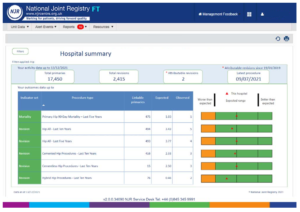
Example extract from NJR Management Feedback reporting function in NJR Connect – Data Services

Price benchmarking

With a view to improving the cost effectiveness of joint replacement surgery, the NJR’s implant price benchmarking service gives hospitals the information they need to benchmark the price they pay for hip, knee, ankle, elbow and shoulder implants against the ‘best’ national prices achieved across all hospital implant procurement services. This service enables hospitals to drill down into their pricing data, including the additional capability to give surgeons individual reports relating to their own implant use. The NJR’s enhanced implant price-benchmarking service, EMBED, supports hospitals to understand, in greater detail, their use of joint replacement implants in terms of cost, evidence and trends in comparison to the national picture. This service provides clinicians, management, procurement and finance teams with an objective set of data and analysis to inform their decision-making. With a focus on cost and value alongside procedure outcomes, it also underpins the Getting It Right First Time (GIRFT) and NHS England’s Model Health System initiatives.

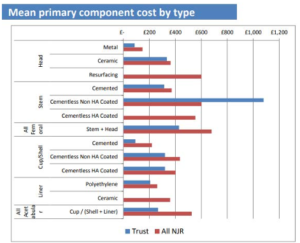
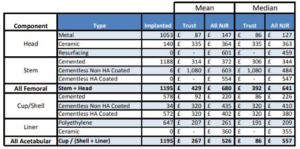
A sample of the EMBED price bench-marking report

Shared decision-making in a clinical setting

Patient information and knowledge is vital for hospitals to ensure understanding, confidence, manage expectations and contribute to shared decision-making. We publish hospital-level information about patient outcomes following joint replacement surgery that enables patients to understand what to expect from their treatment and to inform their decision about where to be treated: The National Joint Registry – Surgeon and Hospital Profile (njrcentre.org.uk).

We also produce guidance from NJR’s Annual Report to provide patients with digestible data on the type and quality of joint replacement surgery undertaken, to increase patient awareness and patient choice: The National Joint Registry reports (njrcentre.org.uk).

The NJR patient support tool

Additionally, the NJR Patient Decision Support Tool is a freely available online tool that was developed using NJR data on hip and knee surgery, to help those considering joint replacement surgery to better understand the risks and benefits of having a hospital procedure. The patient enters simple details such as age, sex, height, weight, general health and how their joint disease affects them. The tool then uses NJR data from similar patient experiences to calculate how much better the patient will be likely to feel after surgery. The tool also calculates the risk of death after surgery, as well as the likelihood of repeat surgery being needed. Patients with a better understanding of their surgical procedure, their own risk level, and what will be happening to them are likely to be better prepared for their hospital procedure and to thereafter have better outcomes. The Patient Decision Support Tool is an example of how both patients and surgeons can make informed decisions jointly in their hospital consultation time, as an important part of patient-centred medicine. Developed as part of NJR’s supported research programme, it has been accessed by many tens of thousands of patients across over 110 countries to better understand their risks and benefits before surgery. With this brief overview, we hope we have given a flavour of some of the benefits that the NJR delivers to hospitals. By recording, monitoring, analysing and reporting on performance outcomes in joint replacement surgery, we are committed to supporting a continuous drive to improve service quality and enable research analysis – and, ultimately, improve patient outcomes.

About the National Joint Registry

Described as a global exemplar of an implantable medical device registry, the National Joint Registry (NJR), which covers England, Wales, Northern Ireland, the Isle of Man and Guernsey continues to be the largest orthopaedic registry in the world, with an international reputation and over 3.7 million procedure records submitted. They collect information on hip, knee, ankle, elbow and shoulder joint replacement surgery and monitor the performance of joint replacement implants.

More information: www.njrcentre.org.uk

This article was originally featured in HQIP’s quality improvement magazine, CORNERSTONE – to see more articles on topics such as healthcare inequalities and sustainability in healthcare, go to: www.hqip.org.uk/wp-content/uploads/2023/11/HQIP_Cornerstone_2024.pdf.

An ′umbrella approach′ to audit: sharing, efficiencies and results

24 Jan 2024

The National Cancer Audit Collaborating Centre (NATCAN) – one year on.

Caroline Rogers, Associate Director, Quality and Development (NCAPOP), HQIP and Dr Julie Nossiter, Director of Operations, NATCAN

In 2023, Professor Peter Johnson, National Clinical Director for Cancer at NHS England acknowledged the transformative power of healthcare data, saying: “We’re in the middle of a real data revolution in the health service”. It goes without saying that the clinical audit community plays a pivotal role in that ‘data revolution’. However, to best realise the potential of data in healthcare, it too is going through a transformation. We look at the National Cancer Audit Collaborating Centre (NATCAN), which takes a truly collaborative approach to clinical audit.

Healthcare improvement strategies will be the guiding light for each audit, providing targeted, measurable goals for cancer outcomes and patient experience

NATCAN was set up to make the most effective use of the cancer data available, in order to bring about improvements in the care provided to patients. The Centre, which celebrated its one-year anniversary in October 2023, heralds a new approach to commissioning national clinical audits; one with collaboration at its heart. The Royal College of Surgeons of England (RCS) – in partnership with the London School of Hygiene and Tropical Medicine – was contracted to run the Centre by the Healthcare Quality Improvement Partnership (HQIP) on behalf of NHS England and the Welsh Government.

Experts in relevant clinical disciplines, methodology, statistics, organisation, data, epidemiology and logistics have been brought together, with the aim of largescale healthcare assessment and improvement. More specifically, NHS England and the Welsh Government are providing £5.4 million over an initial three-year period for the Centre to manage new clinical audits covering all NHS hospitals in England and Wales that care for patients with:

  • Ovarian cancer
  • Pancreatic cancer
  • Non-Hodgkin lymphoma
  • Kidney cancer
  • Primary breast cancer
  • Metastatic breast cancer.

In addition, the following established audits, already hosted by the RCS, were also incorporated into the Centre:

  • Oesophago-gastric cancer
  • Bowel cancer
  • Prostate cancer
  • Lung cancer.

Within NATCAN, each clinical discipline has its own audit. The Centre focuses on ‘the three Rs’ of clinical audit best practice, ensuring that all its activities are:

  • clinically Relevant (asking the right questions, as a result of close collaboration between clinical and academic experts)
  • methodologically Robust (using the best epidemiological and statistical approaches to carry out fair comparisons between hospitals),
  • and  technically Rigorous (making sure data science is put to the best use, in order to drive quality improvement).

What are the aims of the new Centre?

The aim of NATCAN is to strengthen NHS cancer services and, ultimately, improve patient outcomes. People who have experienced, or are experiencing, cancer are important in this endeavour; and patients and patient charities are involved in all aspects of the Centre and its work. Each audit has its own Patient and Public Involvement (PPI), enabling patients to have a strong voice within the clinical committee. Everyone involved in cancer treatment knows it is complex. There may be multiple treatment options, including combinations of treatments, for different types of cancer. A patient’s treatment plan needs to take into account the stage of their cancer and how they respond to treatment. A key aim for each audit is to ensure that the information produced for cancer services recognises these differences, and supports hospitals to focus on specific parts of the care pathway. The Centre uses and links together the existing national datasets that are already routinely collected, reducing the burden and costs on the system as a whole. Organising clinical audits in this way creates a critical mass and capacity of experts, meaning that best practice can be shared.

So, what has been happening so far?

As of late 2023, each audit is drawing up its healthcare improvement strategy, which contains explicit quality improvement goals. These will be the guiding light for each audit – a set of targeted, measurable goals for cancer outcomes and patient experience. Meanwhile, staff and experts have been appointed, and applications made for the data required. As you would expect, the Centre will operate with the highest level of expertise in information governance and the rules surrounding the use of patients’ data; and robust processes are being put in place to support this.

When will we see the data?

The existing audits (lung, prostate, bowel and oesophago-gastric cancers) will continue to report data, while the new audits will produce analysed benchmarked results for each Trust and Health Board in 2024, to be released quarterly thereafter. From September 2024, summary annual ‘State of the Nation’ reports will be produced by each audit, containing key findings and national recommendations for improvements in cancer care. Alongside the data releases, the audits are each developing improvement tools that services can use to improve the care they provide.

Organising clinical audits in this way creates a critical mass and capacity of experts

As with any transformative change, taking a new approach in setting up this national centre of excellence has not been without challenges. But with benefits as significant as greater knowledge and best practice sharing, as well as efficiencies and economies of scale – and, of course, improved outcomes for patients – at stake, the team has worked hard to overcome them. We now look forward to strengthening NHS cancer services, using joined-up thinking and data to provide a wider understanding of cancer treatments and patient outcomes across the country.

This article was originally featured in HQIP’s quality improvement magazine, CORNERSTONE – to see more articles on topics such as healthcare inequalities and sustainability in healthcare, go to: www.hqip.org.uk/wp-content/uploads/2023/11/HQIP_Cornerstone_2024.pdf.

About NATCAN

The National Cancer Audit Collaborating Centre (NATCAN) was established as a new national centre of excellence in October 2022. It is a partnership between the Royal College of Surgeons of England and the London School of Hygiene and Tropical Medicine, and was commissioned for an initial three-year period by the Healthcare Quality Improvement Partnership (HQIP), on behalf of NHS England and the Welsh Government. NATCAN brings national cancer audits together in one place, enabling the sharing of best practice and clinical excellence as part of the overall strategy of improving healthcare.

Find out more: www.natcan.org.uk.

Further information and resources

The role of Artificial Intelligence in healthcare: potential use in national clinical audit

21 Nov 2023

Dr Claudia Snudden, Clinical Fellow and Drew Smith, Associate Director at HQIP. 

In the ever-evolving realm of technological advancements, Artificial Intelligence (AI) stands out as a beacon of transformative change. From smart home systems to predictive algorithms in finance, AI is reaching into more and more corners of our modern existence. The face of this revolution is generative AI, that is: learning models that can generate text, images, and other content based on the data they were trained on. Perhaps the most well known generative AI tool is OpenAI’s ChatGPT, but others such as Bing and Bard work on the same principle. This rapid assimilation of data and generation of information is not just transforming industries on a macro scale; it’s redefining tasks as granular as administrative chores and as expansive as biomedical research.

For those of us at The Healthcare Quality Improvement Partnership (HQIP) and our audit providers, the rise of AI offers both challenges and opportunities. We stand at the cusp of a new era where we must consider the nuances of integrating this technology into our daily workflows. How can we harness it for efficiency, while also navigating its complexities to ensure we remain compliant, especially concerning data protection? In this exploration, we’ll delve into two ways that generative AI can add value to national clinical audits: data analysis and content generation.

Your virtual data analyst

The processing and interpretation of data can often be a bottleneck for many organisations, especially in the realm of healthcare where accuracy is paramount. Generative AI can alleviate some of these challenges. For programmers and analysts, AI can act like an on-demand mentor, providing insights on programming languages like Python, Java, or R, offering solutions to coding conundrums, and even guiding on the nitty-gritty of debugging. It can also advise on data cleaning techniques, suggest appropriate statistical tests, and recommend variables or relationships worthy of investigation.

By feeding or uploading aggregate non-personalised data to the model, you can receive not just analyses but also guidance on presentation. Should you opt for a bar chart or a scatter plot? Which patterns should be highlighted for your target audience? Even more excitingly, as the functionality of AI tools grows these visualisations can be crafted in real-time, serving as a dynamic aid in data interpretation and communication.

Content creation and synthesis

In an age of information overload, the ability to effectively communicate findings is as critical as the discoveries themselves. Beyond numbers and codes, generative AI boasts impressive capabilities in the domain of text. The myriad of possibilities here are genuinely extensive: from distilling the core findings of a lengthy research paper into a concise summary, to translating content across languages, or to converting raw bullet points into coherent prose.

And it’s not just about simplification; it’s about tailoring. An audit report, for instance, could be transformed into an accessible blog post or an informative pamphlet, depending on the target audience. Stuck with where to start when writing a report? Upload your outline to a generative AI tool and let it kick off the creative process for you.

Walking with caution: the limitations

As with any technological advancement, generative AI isn’t without its limitations. A primary concern resides in the realm of data protection and privacy. It’s vital to approach online tools as if you’re releasing information into the public domain. Personalised or even pseudonymised details should never be entered into such a tool. Similarly, one should refrain from uploading unpublished content such as national clinical audit report drafts.

Moreover, whilst the reservoirs of knowledge that AI tools are built on are vast they are not infinite, nor are they always up-to-date. Tools may sometimes stumble with deeply technical jargon or misinterpret the context behind a query.

With all this in mind our most important caveat is that artificial intelligence is… well… artificial. As exciting, insightful, and revolutionary as AI can be, it doesn’t (yet) replace the 2 million years of human evolution that’s gone into us. Generative AI tools are known to ‘hallucinate’, that is: to create incorrect information and present it as fact. Even, in some cases, fabricating its own citations. AI hallucinations can be difficult to spot and arise from a model being trained on a limited, out-of-date, or low-quality data set. Or they can occur because the tool doesn’t possess the contextual understanding of the prompt.

It follows therefore that as users the onus is on us to cross-check citations provided by generative AI, and sense-check the information it produces. As Gartner points out: “Generative AI creates artifacts that can be inaccurate or biased, making human validation essential and potentially limiting the time it saves workers.”

Looking forward

The incorporation of generative AI within both the infrastructure at HQIP and our audit providers promises a slew of benefits. From data analysts to communication specialists, the potential for AI models to elevate our workflows, bolster efficiency, and sharpen our outputs is undeniable. As we look ahead, there’s also the exhilarating prospect of using tools to develop bespoke AI analytical models tailored for audit data extraction and analysis across clinical audit themes. This endeavour, though filled with promise, will require concerted effort, continual learning, and strategic investments.

Current models, whilst impressive, largely result in users being able to perform existing tasks more quickly. But in the next few years we anticipate that continued growth in investment and computational power will see a blossoming of AI capabilities and an increasing democratisation in the use of tools.

The advent of generative AI offers a glimpse into a future brimming with possibilities. As we embark on this journey, let’s tread with curiosity, caution, and the unwavering aim to better our practices for the greater good. The future of HQIP, in many ways, is intertwined with the possibilities this technology brings, and it’s a future we eagerly anticipate.

Safety in numbers

17 Jan 2023

Tina Strack, Associate Director for Quality and Development (NCAPOP), HQIP

  • There is much collaboration between the programme and a number of maternity safety initiatives. For example, the Clinical Negligence Scheme for Trusts (CNST) maternity incentive scheme, which allows trusts to recoup some of their annual CNST fees if they can demonstrate that they meet the required safety standard. This includes a requirement to notify all eligible perinatal deaths to the programme within seven working days, and ensure that all required information is completed within one month of death.
  • Cardiac disease remains the leading cause of women’s deaths during and after pregnancy and the programme has made many recommendations around cardiac care. Working with the Resuscitation Council, the Obstetric Anaesthetists Association developed an Obstetric Cardiac Arrest Quick Reference Guide which addresses several recommendations from the programme’s findings regarding modifications required for the resuscitation of pregnant women as well as causes of cardiac arrest.
  • The 2020 report, Saving Lives, Improving Mothers’ Care, highlighted a statistically significant increase of Sudden Unexpected Deaths in Epilepsy (SUDEP) in pregnant and recently pregnant women, and reviewed these cases in detail. The report made several recommendations for how care for women with epilepsy could be improved, including a call for them to receive risk minimisation advice as well as support to ensure that medications are optimised to control seizure frequency. This work was noted as an important case study in the government policy paper Data Saves Lives. In addition, the pro gramme has been working with the charity SUDEP Action to present findings from Saving Lives, Improving Mothers’ Care to several groups, including the All Party Parliamentary Group on Epilepsy.
  • The programme’s 2015 report Just Say Sepsis! highlighted issues relating to the prompt identification and treatment of sepsis. This work led to the publication of Improving outcomes for patients with sepsis: A cross-system action plan and the follow-up 2017 Second Sepsis Action Plan by NHS England.
  • Based on recommendations from its Know the Score 2019 report, further research was undertaken to incorporate the use of artificial intelligence to standardise CT pulmonary angiogram (CTPA) reporting. Their study was well received and published as a peer-reviewed article in European Radiology, which prompted some acute trusts to consider utilising this software.
  • At the request of the Medical Director of NHS England and NHS Improvement, the authors of the programme’s Delay in Transit 2020 report were invited to the National Quality Board to discuss findings and consider how improvements could be made. The development of pathways for acute bowel obstruction, working alongside other Royal Colleges, is also being considered.

This article was originally featured in HQIP’s quality improvement magazine, CORNERSTONE volume 1

Cornerstone article patient safety

The invisible power of health data

17 Jan 2023

Yvonne Silove, Associate Director (NCAPOP), HQIP

My friend’s elderly father has had a tough time recently, with a run of serious health problems that landed him in hospital on and o for most of the year. We’ve had many telephone conversations during this time, but there is a limit to how often you can ask ‘how are you feeling?’ when things are taking so long to improve.

So, on one recent call, we talked instead about his data and how it impacts the quality of patient care. Did he know, I wondered, that he now featured in a whole smorgasbord of national data collection programmes and audits that aim to improve healthcare? “I had no idea,” he said, and I could detect a sense of pride. “What do you mean?” So I told him…

When you fell at home and broke your hip, your data went to the National Hip Fracture Database and helped the hospital to understand whether: you were admitted to the recommended ward; saw the specialist for older people; had the right operation at the right time; and whether steps were taken to consider medication to protect you from future fractures.

  • When they operated on your hip, you had a replacement joint fitted, so that data was also sent to the National Joint Registry. The serial numbers of your new hip were checked by the Registry to make sure they were the right ones for you, and the unique codes were stored safely, so that if any problem is identified with a component in the future, the hospital can be told and you can be reached. Your information will also be used by the hospital and the Care Quality Commission (CQC) to check that the hip replacement service at your hospital is performing safely and well.
  • After your hip operation, you needed an emergency laparotomy to fix a sudden blockage in your bowel caused by radiotherapy you’d had for bowel cancer some years ago. You quickly became quite unwell and the bowel surgeons were called to your ward. They used a special ‘calculator’ built into the National Emergency Laparotomy Audit to measure whether your life was at risk and to help them decide how quickly to operate. By using the audit as they planned your care, they could check and record that you went to theatre quickly enough and the right seniority of surgeon and anaesthetist were booked for your operation. The calculator also helped them to confirm that you needed a bed in the High Dependency Unit afterwards. Combined with data from similar patients, the audit plays an important role in helping hospitals, commissioners and regulators review and sustain good survival rates from this serious operation.
  • And before all this, when you had your original cancer treatment, your data was again used to check and report on the quality of care you, and patients like you, received. This contributed to greater under standing of healthcare services for your type of cancer as part of the National Disease Registration Service and it was also included in the National Bowel Cancer Audit.

He was amazed. It hadn’t occurred to him that his data could be so useful. As a scientist himself, he loved that he was providing evidence that helped both him and other patients in the future. I mentioned how interested people are these days in where their data is held and how it is used, and how people generally find it easier to understand how their personal details and health information are shared so they can receive treatment. They tend to be less aware of these other types of important uses, although most people seem delighted when they realise that their data can be so powerful.

By way of example, we talked about his new hip again. I explained that the National Joint Registry also uses his identifiable information so that if, for example, he has a complication with his new hip treated in another hospital, then his Registry record can be updated through a process of ‘data linkage’ using data submitted from other hospitals and from national datasets such as the national register of deaths. For now, the audits and registries use things like his name, date of birth and NHS number to link up the records coming from different places (though his personal details are removed before the data is analysed and reports are written).

He then asked if people wonder whether they gave consent for their data to be shared and used, and if not, was it still included? Answering that question is fairly complicated. Where possible, people are asked for their consent, but taking consent for so many, sometimes quite ill patients, often can’t be achieved in practice without disrupting their medical care. So, there are provisions in law to allow that ‘duty of confidentiality’ that all patients are owed, to be legally set aside (in fact, HQIP made a film about how that works!). Sensing some confusion, I ploughed on, trying to explain as clearly as I could…

Data that identifies us that is used for our own, individual health care can be used without asking for our consent because it is recognised that is what patients reasonably expect would happen. But when data is used in national projects to help measure and improve the services that treat us, then either people must be asked for their consent or there must be a specific legal provision that means the requirement to ask for consent will not apply.

However, there is a way for people to register to exclude themselves from one of these legal provisions, and so prevent their data being used for planning and research without their consent. This is known as the national data opt out. But this can be problematic, because the ‘line’ is sometimes really hard to draw. By preventing data being used for research and planning, it is possible that the mechanisms to safeguard the person’s own, safe care or the safe care of others could be compromised. This is why HQIP, our audits and the National Joint Registry made the case that national data opt-out out should not apply to our national audits and registries in cases where this might happen.

I paused, trying to think how to relate this back to my friend and his own experience. “If your team couldn’t use your data to learn that the number of deaths in the emergency bowel surgery service was creeping up, or to calculate whether theatres were sta ed correctly and ITU beds were available, then how could they take the steps they needed to make sure the next patient’s care was delivered safely? After all, given your penchant for popping up in so many of the audits, that next patient might be you!” He laughed, and then sighed: “Right, well you’ve lost me now with all this consent, setting aside and opting out. I think I’m just going to focus on how my data can help save my life and that of other patients in the future. I guess I hadn’t thought about the sorts of things that might not happen if my data couldn’t be used. I know some people are really worried about their data, but I’m also worried about being treated by a service that doesn’t have all the data it needs to keep doing a great job.” I agreed: ‘‘Data saves lives – and the government thinks so too, as that’s what they have named their new 2022 health and social care data policy.”

”I’m so glad,” he said. “Over all these months of the NHS looking after me, I’ve been helping them too – and I didn’t even realise!”

Further information and resources

This article was originally featured in HQIP’s quality improvement magazine, CORNERSTONE volume 1

Cornerstone article_the power of data

National Clinical Audit: Change, improvement and impact

17 Jan 2023

Q: First, for those who are less familiar, please explain the National Clinical Audit and Patient Outcomes Programme (NCAPOP)? 

A: The NCAPOP comprises of circa 40 audits and programmes on a range of clinical disciplines that collate healthcare data and other evidence, and are commissioned by the Healthcare Quality Improvement Partnership  (HQIP) on behalf of NHS England, the Welsh Government and, in some cases, other devolved authorities. These programmes align closely with the aspirations of the NHS Long Term Plan. 

Q: What are the benefits of the NCAPOP to patients and the healthcare service? 

A: The programme will only flourish if it continues to show that, by its presence, outcomes for patients continue to improve. To do that, it needs to continue to provide the knowledge-base that our patients and others, such as clinicians, service providers and commissioners, need in order to effect meaningful change. We keep a record of improvements, as do the audit providers. The impact of these benefits can be viewed on four levels: National; system; local; and public.  

Q: Can you be more specific about, for example, the national improvements that have been realised as a result of programme? 

A: Sure; here are some examples:  

  • Interventional: 1. An increase in the numbers of breast cancer patients with positive oestrogen receptors having surgery which implies increased surgery in the elderly; 2. Decreasing mortality after bowel cancer surgery with an increasing use of robotic techniques; and 3. In response to NICE guidance, 96% of patients with prostate cancer received specialist radiotherapy while increased numbers received specialist chemotherapy. 
  • Patient outcomes: 1. Maternal deaths have dropped due to hypertensive pregnancy disorders; 2. The wait for stroke patients to see a consultant has dropped by 4.5 hours; and 3. There has been an improvement in the attainment of the three key standards for inflammatory arthritis. 
  • Use of Data: 1. Hip fracture services have developed SPC charts showing units their performance both at high and low levels; 2. COVID-centred data has been used by PICANet to characterise the disease in children; and 3. We have seen an increased uptake of the audit and data acquisition in psychosis. 
  • Process improvements: 1. A doubling of access to palliative care at the end of life; 2. Transition for those with epilepsy improved with involvement of adult neurologists; and 3. 91% of patients rated their prostatic cancer treatment as 8/10. 

Q: What changes are taking place in the NCAPOP? 

A: During the early days of the pandemic, we undertook a critical review of the programme and considered if it was still fit for purpose, asking if it was ready to move into the truly digital era? In consultation with our audits and data providers, we concluded that some things needed to change, to make it more effective at supporting improvement in patient outcomes. These were: 

  • Reducing burden: 1. Reducing the number of metrics down to ten and, if there is a requirement for more than this, requiring justification; and 2. Ensuring that routine data is used if at all possible (currently 67% of input is routine). This requires linkage with NHS Digital to ensure the smooth flow of such data and linking with electronic patient records in the future.  
  • Outputs: 1. Changes to slim down annual reports so that they are much more succinct, more easily readable, and focused on a major finding from the latest review (with complementary websites used to display more in-depth findings and data); and 2. Increasing impact by using infographics and getting outputs out via as many different partners as possible. 
  • Timeliness: A further output from the review was the need to get data back to the service as quickly as possible. This was hotly debated, as faster data is likely less assured. But we have reached a solution, with getting prompt data out (which may be subject to subsequent adjustments), while still having the assurance of annual data. Specifically, we are specifying that, whilst there should be an annual report focusing on the main message of the year, quarterly online data outputs should also be made available. 
  • Patient outcomes: There are very important outcomes currently included such as mortality, post-operative sepsis and readmission, but there are omissions and we intend to help audit providers to bridge this gap as we re-commission audits within the NCAPOP. In addition, we need to include many more patient reported outcomes in the programme. 

Q: Which developments in the healthcare system will the changes to NCAPOP address?  

A: We have made these changes to respond to a wide number of developments across the system in recent years, including: The merger of NHS England and NHS Improvement; NHS Digital and X moving into NHS England; the move of Public Health England to the UK Health Security Agency; the transfer of the National Disease Registration Service from PHE (as was) to NHSD (as was); and the transfer of the National Cardiac Audit Programme, including TAVI, run by NICOR, from Barts, to be managed by Arden & Gem CSU. However, above all, the changes to NCAPOP come in response to the COVID-19 pandemic.  

Q: Why was the COVID-19 a key factor in changing the NCAPOP? 

A: It was inevitable that the effect of the pandemic and, in particular, what we learned about the use of data, would escalate change. For example, it proved the necessity for more immediate data (as was necessary with the National Child Mortality Database (NCMD), which moved to live surveillance during the COVID-19 pandemic). We are now able to determine how, with strategic thinking, we can reap important benefits for our patients by the wise use of such data. These lessons have led to this wholescale reorganisation. 

Q: Why are the changes to the NCAPOP important?  

A: Change is only useful if it leads to improvement and, for us, that means better outcomes for patients. We monitor outcomes and, to be honest, these improvements are often now minimal, as big gains as a result of national clinical audit have often been realised. There is one key exception to this: Health inequalities and, more specifically, the influence of ethnicity and deprivation on healthcare outcomes. That is something that we, in national clinical audit, believe we can have a positive impact on, working with data providers to highlight differences exposed by the pandemic and enabling us to tailor services to address them.

This article was originally featured in HQIP’s quality improvement magazine, CORNERSTONE volume 1.

Congratulations on your engagement!

17 Jan 2023

Kim Rezel, Head of Patient and Carer Engagement, HQIP 

Has the way we engage with patients, carers, people and communities changed? Well, the first thing to say is that I hope so! There are some great examples of best practice across health and social and community care, but they’re not widespread. So, how can we learn from these exemplars and what are the reasons and benefits behind engaging with patients, carers, people and communities?  

When I first started working in the area of ‘service user involvement’ it was in social care, and the focus was on service users advocating to be involved in their own long-term treatment plans, and having a role in improving the services they use. On moving into healthcare – and specifically quality improvement (QI) – I realise that the same role can apply to patients and carers. However, we can go even further; helping patient advocates by giving them the knowledge, data and resources to improve their own care, and champion improvements, both locally and nationally. 

We can ask the question ’what are the areas of concern for you?’ and incorporate their responses into national clinical audits, so that the results support patient champions on the ground. Their involvement ensures that the services provided are meaningful to those who use them, and it enriches the work we do. And this is mutually beneficial. Adrian Hardy, a member of HQIP’s Service User Network (SUN) comments: “Being involved in improving the quality of our care and services makes me feel like I’m making a difference for not only myself but for other patients and carers. I believe that my experience brings a relevance to what could otherwise be considered as meaningless numbers. It can also ensure that recommended actions have a real impact on patient care and outcomes.” 

In fact, there are a number of well-documented reasons as to why it’s important to work with the people and communities that we serve. The NHS England statutory guidance Working in partnership with people and communities builds on HQIP’s guide to patient and public involvement in quality improvement regarding the benefits of involvement, namely: 

  • Improved health outcomes – Ensuring that the care provided meets people’s needs can improve both experience and outcomes. We all have knowledge and skills to contribute to our own health and wellbeing, and working in partnership with service users contributes to shared aims that meet the needs of the communities we serve. This is particularly relevant in reducing health inequalities. 
  • Value for money – Engaging people to design the care and services they use will more effectively meet their needs, and is therefore a better use of NHS resources. This improves health outcomes, reducing the need for additional care or treatment because needs weren’t met the first time around. 
  • Better decision-making – When insight from local people is used alongside financial and clinical information to inform the case for change, it adds practical ‘weight and context’ to data and fills gaps through local intelligence and knowledge. 
  • Improved quality and safety – Community engagement results in services that are designed and delivered more appropriately, and personalised to meet needs of local people (you can’t make the right changes without their insights). It also improves safety by giving people a voice to raise problems which can be addressed early and consistently. 
  • Accountability and transparency – Organisations should be able to explain how decisions are made and how people’s views have been taken on board. Getting patients involved in governance helps to make the service providers accountable to communities. 
  • Participating for health – Involving patients can reduce isolation, increase confidence, and improve wellbeing. Involvement in your own care can be the start of wider involvement at service or organisational level, and can even lead to employment in services. Being part of a community and in control is good for our health. 

All of these benefits encourage patients to speak up and legitimises their views, but we must then ensure that their voices are heard and actions followed. If that isn’t enough reasons, we also have a legal duty to engage with patients, people and communities.  In fact, failure to do so risks legal challenge and substantial costs, not to mention damaging relationships between providers and the communities they serve. The following table is reproduced from NHS England’s Working in partnership with people and communities guidance and is a useful reminder of our duty of care in relation to public involvement: 

Table

So, that’s the ‘why’, but what about the ‘what’? Let’s bring our attention back to those examples of best practice we referred to at the beginning. For some fantastic case studies, take a look at the Patient Experience Network National Awards or the NHS England resources. Here are a few choice examples that relate to recent trends in healthcare… 

Firstly, healthcare inequalities. We are more aware than ever that people experience health care differently, so more effort is being made to ensure that people from marginalised communities are involved to support better understanding of how all people experience care. 

SPOTLIGHT: Healthcare inequalities – The Health and Wellbeing day for the Black community in Lambeth offered residents the chance to receive COVID-19 and flu vaccinations, key health checks, and important advice and support – all at an event aimed at bringing people together. Music, food stalls and family activities kept things fun and feedback from the event in October 2021 was so positive that the organisers hope to do it regularly. 

Next, there’s digital inclusion. While there have been some real benefits to moving online and being able to receive healthcare services without leaving our homes, we need to ensure that those who are digitally excluded are taken into consideration. 

SPOTLIGHT: Digital inclusion – Through the Picture This project, the Mental Health Foundation created fun ways to teach basic IT skills to people through art and drawing. Focusing on training people over 65, the project teaches them how to send an e-mail, how to connect with family and friends remotely and attend events, how to use Facebook and other social media channels, and how to order shopping online. These skills enhanced social interactions for participants, and supported mental wellbeing. 

Then, there is a growing trend around reward and recognition. Much involvement work offers out-of-pocket expenses only (which is the least that should be done when working with volunteers). However, there is a trend towards changing how we pay people for their time eg many organisations have offered varied honorariums for certain types of work. Guidance from the National institute for Health and Care Research (NIHR) from 2021 should be considered in the project design. 

HQIP’s programmes have seen some fantastic examples of involving patients and carers. The National Asthma and COPD Audit Programme (NACAP, now NRAP), is an example that has demonstrated a genuine collaborative approach to working with charities, forums and patient panels. NACAP asked their patients and carers about what matters to them, and produced the following resources to empower patients of all ages to know what to expect from their care (which, in turn, improves the quality of the care they receive): 

Finally, I want to finish with a few words from a patient (this is all about patients and carers, after all!). This quote, from a patient representative in the NACAP award entry, sums up perfectly why we should put patients and carers at the heart of healthcare design, and reminds us that their health is the very reason for the service in the first place: “The surgery is my first port of call when my asthma is playing up, and I need to be sure that the doctors and nurses are going to be able to give me the best care possible. I want to get the most I can out of life despite having a lung condition, and I know that if the GPs are up to speed with new interventions and treatments, I have a better chance of doing so”.  

How to engage patients and carers 

How do we go about effectively involving patient, carers and communities in the healthcare services they receive? In HQIP’s guide Developing a patient and public involvement panel in quality improvement, we outline some simple steps to engage communities (and this can be used as the basis for an action plan): 

Leadership buy-in 

  • Make sure you have all your ‘ducks in a row’ before taking a proposal/business plan to senior teams. 
  • Consider what you want to involve people in. 
  • Draft out the process of how the involvement will work. 
  • Consider what it will cost. 
  • Talk to patients and other key stakeholders, and ask what they might want from this involvement. 

Recruitment 

  • Where will you find people to involve? 
  • What communication channels already exist that you can use initially? 
  • Where can you share information (posters/bulletins/leaflets/events) that will enable you to reach out to wider communities?  
  • Again, talk to people; what will people want and gain from being involved, and ask community leaders to support recruitment. 

Training – it’s very important to measure the impact of patient and carer involvement to demonstrate success and identify lessons learned for: 

  • the project 
  • the team 
  • the people involved, and 
  • for the long term (can the project be repeated or extended to other areas of work?). 

Patient and Carer Engagement at the Healthcare Quality Improvement Partnership – HQIP is committed to involving, engaging and informing patients and their representative organisations throughout our work. We ensure that patients and carers are reflected in all aspects, from commissioning programmes through to resource development: Find out more about how HQIP engages patients.

This article was originally featured in HQIP’s quality improvement magazine, CORNERSTONE volume 1.

Mind the (health) gap 

17 Jan 2023

Dr Josie O’Heney, 2021/22 National Medical Director’s Clinical Fellow, HQIP 

As a clinician, the human response is to focus on the problems right in front of you – the patient that has just arrived, the lack of beds or staff to care for people, the crisis in the moment et cetera… However, it is also important for healthcare providers to be aware of data. Unless you understand where there are problems, you can’t work towards solving them. Data informs us about the strategic changes that we need to make to improve care pathways and, importantly, reduce inequalities.  

Findings from MBRRACE-UK (Mothers and Babies: Reducing Risk through Audits and Confidential Enquiries across the UK) reports show stark differences in mortality rates amongst women from black-ethnic backgrounds compared to white women. While there has been greater investment in both research and policy changes (with the hope of improving outcomes for disadvantaged groups), we are still a long way from ‘levelling up’. However, without the data to highlight the problem, it is highly unlikely that we would have even started. 

The reports mentioned above were produced as part of the National Clinical Audit and Patient Outcomes Programme (NCAPOP), which is commissioned by HQIP – and this is one of the tools that has been instrumental in identifying health inequalities. The National Child and Mortality Database (NCMD) is another, with its data also highlighting stark inequalities. For example, over a fifth of all child deaths might be avoided if children living in the most deprived areas had the same mortality risk as those living in the least deprived.

To tackle this issue, NHS England has developed the Core20PLUS5 approach to health inequalities, which focuses on areas where stark inequalities in outcomes have been identified (in maternity, continuity of care for black, Asian and minority ethnic communities and those from the most deprived groups has been prioritised). The PLUS in Core20PLUS5 relates to identifying who in your local population is experiencing poorer than average health access, experience and/or outcomes, and targeting intervention to address it. While most healthcare professionals will have a broad understanding of this issue, it is important to scrutinise local data to really understand it. For example, is a particular population group missing appointments? Then they need to work out why, and target interventions accordingly. In other words, to reduce inequalities we need to start thinking smarter.   

The Health Inequalities workspace on the FutureNHS platform is another useful tool. It has excellent resources, including recorded webinars that explain the priority areas in addition to examples of good practice. The Health Inequalities Improvement Dashboard is also helpful, and can support the creation of actionable insights for reducing health inequalities. It enables you to review your data by region and by Integrated Care System (ICS), broken down by ethnicity, age and deprivation – helping you to identify where inequalities exist.  

We have always known that inequalities exist, and COVID-19 has shone an even more intense light on them (for example, black and South Asian people were “hit hardest” by the pandemic). So, think of this article as a call to arms for all healthcare colleagues… Think about your clinical area and where the inequalities may lie. Look at your local data, and ensure you are breaking down by ethnicity, deprivation and other protected characteristics. Above all, where inequalities exist, think about why, and what each and every one of us can do to instigate change for the better. 

In 2022, HQIP hosted a series of four online workshops with audit and clinical outcome review programme providers and other guests including patients, NHS England, the Care Quality Commission (CQC), NICE and NHS Digital. We explored collaboratively how we can use our audits and programmes – specifically the National Clinical Audit and Patient Outcomes Programme (NCAPOP) – to identify, measure and address health inequalities. We heard evidence of inequalities revealed by the NCPAOP, for example: 

  • A lower proportion of people of Asian and black ethnicity, as well as those living with deprivation, with type 1 diabetes are prescribed insulin pumps (recommended).  
  • Hypertension prevalence was 3.4 percentage points higher in the most deprived group of the population, compared with the least deprived.  
  • Effective treatment for hypertension was lower in black (63.9%) and mixed-race people (63.6%), compared with Asian (71.7%) and white people (68.2%). 

This webinar series identified seven themes: 

  1. There is plenty of opportunity for impact  – The evidence tells us that there is room for improvement in reducing health inequalities. Data from the NCPAOP can help to identify this, and distinguish between healthcare services. 
  2. There is widespread support for the work – The NHS Long Term Plan commits to tackling health inequalities, and all the NCAPOP projects were in support. 
  3. Addressing health inequalities is a broad challenge – System-wide developments are required, from data collection and coding, through to analysis and reporting. 
  4. We need to tackle the challenge of missing data – Chasing missing data is time-consuming and difficult. 
  5. Data quality could be improved – We need to be consistent about what the NCAPOP is collecting and how it is presented, and we need up-to-date information and census data. 
  6. Obtaining and using routine data presents challenges – Data and analysis are costly and requires skilled people, so consideration needs to be given to how we might unblock barriers. 
  7. We need to support the use of outputs by healthcare services – The data presented needs to be reliable and relevant for local populations, while healthcare services need the capacity to act on the data received. 

HEALTH INEQUALITIES: Spotlight on the Early Years. This report from HQIP aims to identify cross-cutting lessons relating to early years healthcare with a focus on health inequalities and variation in care, by reviewing a selection of audit reports from the National Clinical Audit and Patient Outcomes Programme (NCAPOP). Read in full: www.hqip.org.uk/resource/spotlight-on-the-early-years.

This article was originally featured in HQIP’s quality improvement magazine, CORNERSTONE volume 1

When is data the ‘right data’?

17 Jan 2023

Using the right data to support robust healthcare services.

Mirek Skrypak, previously Associate Director for Quality and Development, HQIP

“As I was gearing myself up to write this article about using data to develop robust healthcare services, I took receipt of a rather unusual delivery: A golden microphone with Bluetooth and a voice synthesiser. It proved momentarily inspirational, though how is that relevant, you might ask? Well, it prompted me to think about change and, in particular, how using the right data can support the right change.

On seeing my delivery (which was a present for someone else, by the way), I was struck by how much microphones have changed. I researched early microphones. Although it still performs the same essential function as the original from 1878, my new microphone differs significantly. This golden one with buttons, Bluetooth and charging cable etc shows many visible signs of change, most of which are in response to modern-day needs. Which led me to think about change in healthcare services.

The NHS is about 70 years younger than the microphone. Just like the microphone, you could say that it still performs the same function (to improve outcomes for those needing medical care). It also needs to change in order to respond to current need (not least in response to an increasingly ageing population). But how do we ensure that any change implemented is relevant, targeted where it’s needed most, and meaningful to service users? In response, I will share some learning that I think is invaluable in relation to data-informed service design within healthcare…

First, practice won’t change if you don’t have the right data. Whatever tools or techniques you use – whether process improvement, error reduction, waste trimming, agile scrum meetings etc – all of it needs to be done within context. In addition, you need to be curious; you need to ask questions and have ideas. Assuming you have all that, knowing what and how to measure is crucial. Simple right? Well, no! There are a number of variables, models, systems, frameworks and contexts etc that you also need to think about. However, I suggest that there is one other consideration that that is more important than all others: There should be no data without stories and no stories without data. The percentages or figures in charts, tables, recommendations and p values etc are all people. Think about it in terms of this fictional example… Let’s say that there is a national target of 80% for a particular process measure which evidence suggests will improve outcomes. There are circa 170 NHS sites, and let’s assume that 75% are achieving this 80% target for a particular clinical area and pathway. Then, let’s say that, in this pathway, there are 100,000 people who receive this care per year. That means 60,000 patients will achieve the target. But, what about the other 40,000? Suddenly this is not so positive. I know which side – or cohort – I would like to be on as a patient.

So how can we improve these numbers? Here at HQIP, we help service providers to find the right data, to take an effective approach to measuring, and to use that knowledge to build consensus for change. We strongly advocate the synchronisation of Quality Improvement (QI) with national clinical audit and confidential enquiries to enable improvement in outcomes at a national level. Find below what I hope is a useful summary of the key questions that need to be addressed by healthcare leaders and their teams when doing this…

As a manager or clinician:

  • Have you collected the data in the right way to be able to identify trends?
  • Do you have the right roles reviewing the data? Who owns it?
  • Do you know your audience? What is it they need to know?
  • Are you at risk of decision makers reacting unnecessarily?
  • How are you presenting your data? Have you presented the data to show a true picture over time?
  • Is there variation, and is this normal or the result of an exceptional circumstance?
  • Do you need to consider if it’s actually the system that needs reviewing, or does the target need to change?
  • Do you need to measure for a longer duration?

As a team or service:

  • Do we know how good we are?
  • Do we know where we stand relative to the best?
  • Over time, where are the gaps in our practice that indicate a need for change ie improvement?
  • In our efforts to improve, what’s working (and what isn’t)?
  • Do we know/understand where variation exists in our organisation?
  • Why are we measuring all this and what difference is this actually going to make to the quality of services?

That’s a lot of food for thought. And I don’t suggest, for one moment, that it’s an easy task. But it is necessary. While I’m not sure that we need a golden, ‘Bluetooth-enabled’ (or the equivalent) healthcare service, we do need to instigate change. I’m convinced – and I wish I had my gold microphone to hand to make this point – that the right data is the way forward in ensuring that those changes are relevant, meaningful and, above all, deliver maximum impact. However, I’m going to give a final word of caution to the renowned statistician David Spiegelhalter, who says: “Signals always come with noise: It is trying to separate out the two that makes the subject interesting.”

This article is one of a number of articles written for CORNERSTONE, HQIP’s free publication, designed to support Quality Improvement. It was featured in the 2023 edition, which features other articles on patient engagement, patient safety, and the importance of health data (among other topics). For more information, go to Healthcare improvement magazine – HQIP.

Cornerstone article on data

BLOG Taking the long view: Future-proofing healthcare

15 Dec 2022

Sustainable Respiratory Care Audit Team.
Alice Fitzpatrick, Marsden Rd. Health Centre,
Sustainable Respiratory Care Audit Team.

In June 2022, the Sustainable Respiratory Care project I work with was named winner of the Future-proofing Healthcare category of the 2022 Clinical Audit Heroes awards, as part of HQIP’s Clinical Audit Awareness Week. Of course we were delighted that our work was recognised in this way, but perhaps what was more important was that we would get to raise the profile of the need for sustainable healthcare projects (and share details of our work, into the bargain). Many months have passed since we collected our award but the value of our work continues, and so I am sharing some key highlights in the hope that other professionals will be inspired to ‘take the long view’ and support sustainability in healthcare…

Savings of £8.2 million annually and 58 kilotonnes of carbon dioxide equivalent emissions could be made

In summary, the Sustainable Respiratory Care Audit project provides a structure for the audit of patients’ technique, preferences and knowledge about inhalers as well as the need for clinical review. Selecting appropriate inhaler devices and improving user technique are interventions which can reduce the carbon footprint of healthcare, while improving the quality of care. To improve the control of respiratory conditions and reduce both exacerbations and medicines wastage, it is important to review patients’ inhalers and technique and consider switching a patient’s inhalers where appropriate. It can also provide financial savings.

Commonly used inhalers include Metered Dose Inhalers (MDIs), which contain hydrofluoroalkane (HFA), and Dry Powder Inhalers (DPI) which do not contain HFA. DPIs have a much lower carbon footprint than MDIs; the carbon footprints of MDIs are 10-37 times higher than those of DPIs. While not all patients have sufficient lung function to use a DPI effectively, many patients will receive more effective dosing of inhaled medications using a DPI than using an MDI and prefer not to carry a spacer (MDIs should always be used with a spacer). However researchers have calculated (based on 2017 data) that savings of £8.2 million annually and 58 kilotonnes of carbon dioxide equivalent emissions could be made by replacing just one in ten MDIs in England with the cheapest equivalent DPIs.

More specifically, the audit had a number of key aims. Firstly, to assess whether inhaler technique has been checked regularly and effectively in patients with respiratory disease (as per BTS Asthma Bundle and NICE COPD guidance). Then, it was designed to allow patients to express attitudes and preferences towards inhalers in line with the approach outlined by NICE in their Asthma patient decision aid and the NICE Shared decision-making guidance. Finally, it established a baseline from which to improve the quality and environmental sustainability of respiratory care in the NHS.

So, what did we do in practice? An audit proforma, in the form of a survey that could be carried out with a patient within 10 minutes, was designed by the project team. A data collection spreadsheet was also designed. The proforma was reviewed by respiratory nurses and senior respiratory physicians, piloted on the respiratory ward at Newcastle hospitals, and improved based on patient and health professional feedback. Edits were made – for example, to the information about how to implement the audit, providing exact wording for questions and detailing the need to check with nursing staff about a patient’s cognition and any reasons not to invite a patient to take part before approaching a patient.

The creation of a network of clinicians across the country enabled the collection of national results to which local results could be compared

Next, clinicians from multiple hospitals were recruited using emails sent to professional networks, and introduced to the audit via an introductory webinar. They were provided with the audit proforma and given time and a further webinar in which to propose and discuss any revisions. As a result, minor revisions were made to the wording of questions about patient preferences and inhaler disposal. Clinicians then applied for Caldicott approval and implemented the audit locally.

We are particularly proud of the level of engagement achieved around this project. The creation of a network of clinicians across the country enabled not only collaborative development of an audit proforma, but also the collection of national results to which local results could be compared. The engagement of local teams (which were required to include one senior respiratory clinician and one junior clinician) meant that local solutions to challenges and opportunities for improvement could be identified. Furthermore, the audit engaged patients to give their preferences about their respiratory care and describe their knowledge, to demonstrate how they use their inhaler (thereby auditing patients’ practices, not simply proxies of practice or documentation of others’ practice). This provided information that could inform not only service-wide improvement, but also improvements for individual patients where the need for review or education was identified.

At the time of writing this article, this project is still very much on-going. However, we are already starting to gather some key insights. For example, clinicians found that reviewing patients’ prescriptions highlighted discrepancies between the inhalers that patients were taking and the inhalers prescribed. Importantly, we were able to engage pharmacists in remedying this issue for individual patients, and in considering how to improve practice going forward. The results of the audit will be published once available from all groups, to engage stakeholders in healthcare providers as well as national bodies influencing NHS care. In the meantime, we hope that you agree with the Clinical Audit Heroes award judges that our project demonstrates how incorporating a sustainability perspective in audit can identify opportunities to improve care for individual patients and reduce environmental impacts of healthcare.

Further information: Sustainable Respiratory Care

This project was a collaboration between Dr Sarah Walpole (Newcastle NHS Trust), Dr Lewis Standing (Newcastle NHS Trust), Dr Maria van Hove (University of Exeter), Dr Joseph McElvaney (previously Newcastle NHS Trust, now Greater Glasgow and Clyde) and Dr Anya Gopfert (Northumbria NHS Trust).

BMJ Blog: Collecting data is just the start – Josie O’Heney

2 Jul 2022

“…one day we won’t be reporting that the colour of your skin impacts your risk of dying at what should be one of the happiest times of your life.”

Clinical fellow Dr Josie O’Heney explores health inequalities in maternity in her blog: collecting data is just the start. The blog, written for the BMJ Leader series, is one of five penned by clinical fellows  on secondments at NHS England and NHS Improvement and Healthcare Quality Improvement Partnership (HQIP).

Each one explores the ‘5’ focus areas of the CORE20PLUS5 approach, the links between health inequalities and the invaluable contribution of leadership to narrowing the life expectancy inequality gap.

Read the full blog on the BMJ website.