

This programme is designed to audit the care that patients with fragility fractures and inpatient falls receive in hospital and to facilitate quality improvement initiatives. It delivers this through three audits:
- The National Hip Fracture Database (NHFD): Collects data on all patients over 60 years admitted to hospital with hip, femoral and pelvic fractures (injuries that are associated with high mortality, significant loss of independence, and major healthcare demand).
- The Fracture Liaison Service Database (FLS-DB): Captures data of patients aged 50 or over who experience a fragility fracture, to support early identification, secondary fracture prevention, and improved long‑term outcomes.
- The National Audit of Inpatient Falls (NAIF): Provides the first comprehensive data sets on the quality of falls prevention practice in acute, community and mental health and specialist Trusts. Includes head injuries as well as other injuries that can profoundly affect recovery and patient confidence.
FFFAP is informed by a Patient and Carer Panel, ensuring that the patient voice guides all quality improvement work. Their lived experience helps shape priorities, highlight gaps, and keep the focus on delivering safer care.
To overcome the enormous variability in fragility fracture care, the Welsh government has set out a top-down mandate to deliver the Falls and Fragility Fracture Audit Programme (FFFAP) recommendations.” Dr Inder Singh, the Welsh government’s national clinical lead for falls and frailty
Supporting improvement
The FFFAP supports improvement in clinical care across a number of ways:
- Regular webinars across each audit to support shared learning as well as engagement sessions and “check-in” service improvement sessions.
- Improvement case studies from sites for each audit.
- Improvement workbooks which sites can download and use to work through service improvement.
They also run a routine outlier identification programme, which has been successful in reducing patient mortality across sites that are identified as outliers and allows sites to monitor their own data and success.
Additional data sources
In addition to HQIP-published reports below, FFFAP data is publicly available via its website, at site, region and country level to provide real-time information and interventions.
Latest reports
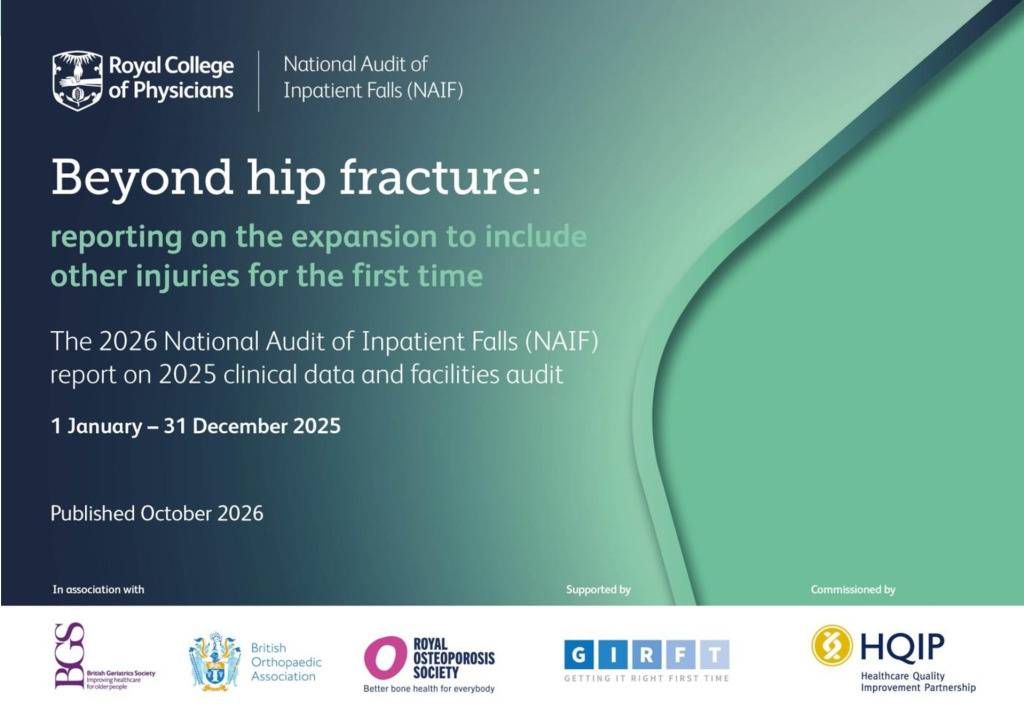
Beyond hip fracture
- Falls and Fragility Fracture Audit (FFFAP), incl National Hip Fracture Database (NHFD)
This latest report from the National Audit of Inpatient Falls (NAIF) is the first to include inpatient fall-related...
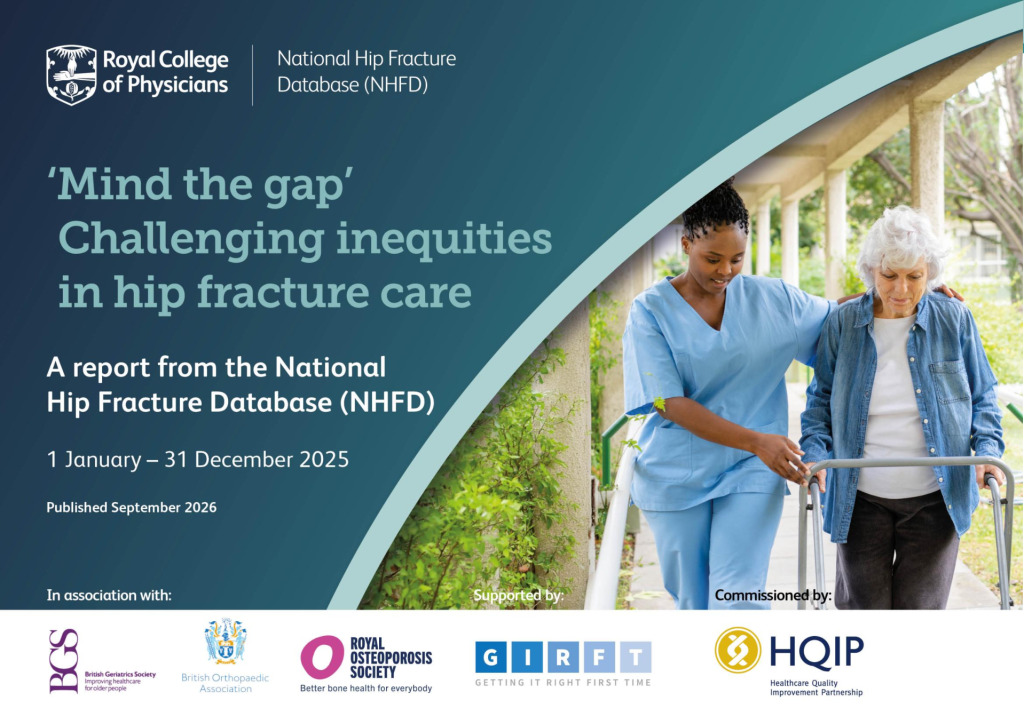
Challenging inequities in hip fracture care
- Falls and Fragility Fracture Audit (FFFAP), incl National Hip Fracture Database (NHFD)
Mind the Gap, the latest report from the National Hip Fracture Database (NHFD), part of the Falls and...
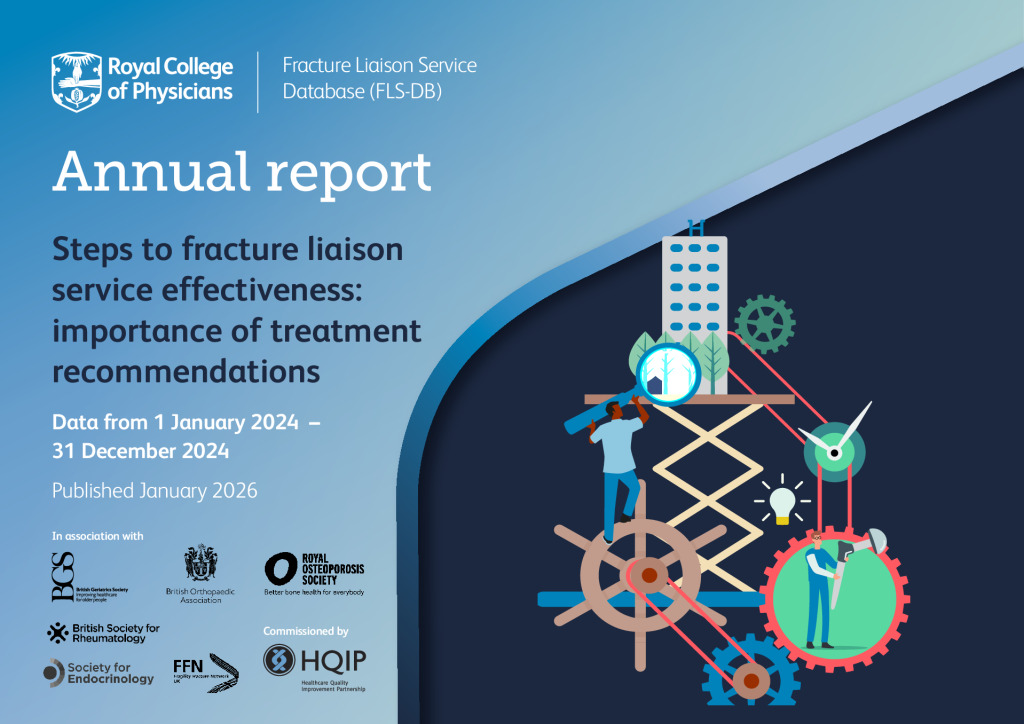
Annual report: Steps to fracture liaison service effectiveness
- Falls and Fragility Fracture Audit (FFFAP), incl National Hip Fracture Database (NHFD)
The Fracture Liaison Service Database (FLS-DB), part of the Falls and Fragility Fracture Audit, has...
Inpatient falls – Stepping towards improvement
- Falls and Fragility Fracture Audit (FFFAP), incl National Hip Fracture Database (NHFD)
The National Audit of Inpatient Falls (NAIF), part of the Falls and Fragility Fractures Audit...
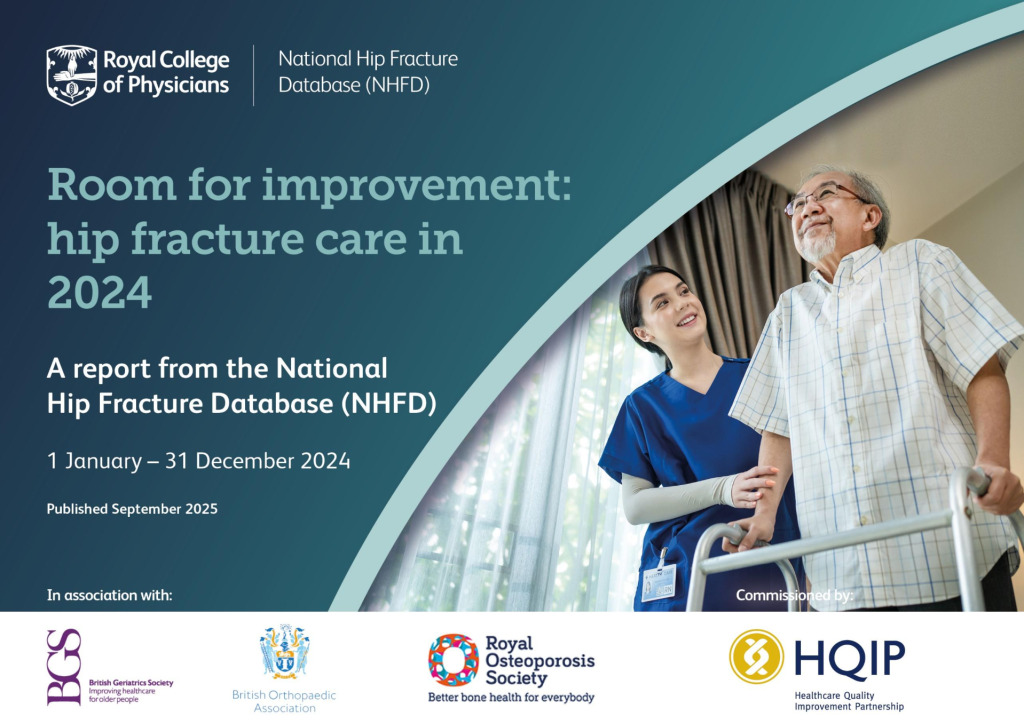
Hip fracture care in 2024
- Falls and Fragility Fracture Audit (FFFAP), incl National Hip Fracture Database (NHFD)
Room for Improvement from the National Hip Fracture Database (NHFD), which is part of the...
Related news

NHFD report finds hip fracture care shaped by where you live
A patient’s chances of surviving a hip fracture can depend more on the hospital where...
CAAW26 Use of National Clinical Audit winners announced
Find out who won the Use of National Clinical Audit commendation in the Excellence in Clinical Audit Awards 2026, part of Clinical Audit Awareness Week.
CAAW26 Evidence into Practice award winners announced
Find out who won the Evidence into Practice category of the Excellence in Clinical Audit Awards 2026, part of Clinical Audit Awareness Week.

HQIP programme mentioned in King’s Birthday Honours acceptance
We are pleased to share that Dr Inderpal Singh, representative for the Welsh Government for...
Benchmarking data – Fracture Liaison Service Database
Data relating to The Fracture Liaison Service Database has been published on HQIP's benchmarking site, NCAB.

The Falls and Fragility Fracture Audit Programme – RDMA 2022 case study
The Richard Driscoll Memorial Award (RDMA) 2022 asked HQIP commissioned programmes to describe how patients...