Clinical Audit Awareness Week: Online launch event

27 Mar 2024

A big thank you to all who joined our online launch event on March 27th to kick off #CAAW24 and learn about the Clinical Audit Heroes Awards!

Missed the event? No worries! Find the recording here.  Want to dive deeper into the presentation slides? They’re available here.

Visit our dedicated Clinical Audit Awareness Week webpage for more information as we gear up for an incredible Clinical Audit Awareness Week!

Clinical Audit Heroes Awards NOW OPEN!

26 Mar 2024

We are delighted to announce that the Clinical Audit Heroes Awards are NOW OPEN for nominations (and will close on Sunday 5 May). There are five categories, and submitting an entry is simple and easy… We are looking for projects that demonstrate excellence in clinical audit and/or quality improvement, helping to deliver real and impactful improvements in health and care. The awards are open to projects, individuals or teams involved in any type of healthcare setting in the UK, whether at a local, system or national level. More information, including criteria and a short online nomination form for each category, can be found using the following links: The award winners will be announced at the following Lunch & Learn events, so keep the relevant date(s) free if planning an entry…

Lunch & Learn events

Links to join a series of online Lunch & Learn events, which will take place during Clinical Audit Awareness Week 2024, are now available. These events will be run daily between 24th and 28th June from 12.30-1.30pm, and the links can be found on our Clinical Audit Awareness Week webpage (so go ahead and make a note of the dates and times – with the relevant links – in your diary). Further information, such as speakers, will be shared in due course.

Online launch event

A reminder that we will be launching #CAAW24 at a short online event on Wed 27 March from 12:30 – 1:00 pm. Speakers will include Chris Gush, HQIP CEO, and Professor Danny Keenan, who will share the broader value of clinical audit and details of how to enter the awards. Find out more, with a link to register for this event, here. Get involved: Get your wider organisation involved in these awards, encouraging others to submit nomination(s), by sharing news of your award entries and activities during Clinical Audit Awareness Week. To support this, we have created a free online toolkit of resources you can download and share. Don’t forget to use #CAAW24 when sharing on social media! Further information: Visit our dedicated Clinical Audit Awareness Week webpage for more information.

Article: Patient and Public Engagement in practice

3 Mar 2024

A win-win for healthcare providers and patients alike

There are many well-documented reasons as to why it’s important to work with the people and communities we serve, not least improved health outcomes. But these benefits apply to both care-givers and -receivers alike. Kim Rezel, Head of Patient and Carer Engagement at HQIP, talks to both the staff and volunteers from two past winners of the Patient and Public Involvement category of the Clinical Audit Heroes Awards (Epilepsy12 and Side-by-Side – see more about these projects at the bottom of this article) about their experiences of effective patient engagement, in the hope that others may be inspired to think about how they could include patients and carers in their projects…

The healthcare professional perspective… The patient perspective…
Q: What motivated you to set up a patient group to support your audit?

Epilepsy12: We weren’t getting through to patients’ “real voices”; there was a distance. We were beginning to get some sense of people’s views through the patient experience measures that we’d built into the audit, but there was a strong sense that they wanted more direct “contactability” with our service. At the same time, we realised the irony that our patients had limited involvement in the design and running of the audit, and so we needed an approach that would address that.

Q: Do you have any hints or tips on how to get started?

Side-by-Side: Ask people to be involved and provide a genuine offer of real involvement; don’t just pay lip service to patient engagement. Side-by-Side was created from when we held a traditional research conference in 2014, in which we invited a group of patients to provide feedback. It wasn’t positive. We apologised and asked them to help us to make it “better” next time. This was the start of building relationships and working together to put patients at the heart of what we do.

Q: How does it work, in practice?

Side-by-Side: We have a group of patients and service users who work alongside us. They meet regularly (every 6 to 8 weeks) and we present involvement opportunities to them, while they hold us accountable to all the things we said we were going to do. We are very fortunate to be in a position where we have a participation team to support liaison such as sending email updates etc. It can take some time to set up in the first instance, but it’s so worth it – and now we’ve got to a point where the group is happy to be contacted via a quick text or WhatsApp message. We genuinely see them as part of the team; they have this wealth of experience, skills and ideas that we feel really privileged to utilise in what we do.

Q: What do you see as the main benefits of setting up a patient group?

Epilepsy12: The quality of the feedback we get has exceeded my expectations. For example, at first, when we sent the group a patient-facing report to review, I was expecting something fairly light touch, but actually the feedback was much more profound than that. Because it comes from a patient, the information comes with experience and passion. It made me realise that there isn’t anything the group can’t do. Now there isn’t a part of the process that they’re not involved with; they’re involved in the full methodology, from design to delivery.Side-by-Side: This has completely transformed the way I work, even to the point where our patients contributed to my appraisal. Working with patients means you can come out with something entirely different, but also better and more fit-for-purpose and with greater longevity.

Q: And what about the challenges?

Epilepsy12: If you’re not careful, you can be pulled in different directions. We needed to ensure that everyone involved was aware of each other’s visions and perspectives. So, we focused on getting a ‘balance of autonomy’ among the different groups. But it’s a delicate balance; a dance between autonomy and empowerment. When you start to empower others, you are admitting that you might move the power base elsewhere – and there’s a vulnerability to that. You’ve got to accept that you are not always in control of where you’re going.

Q: How do you ensure appropriate representation in the project?

Side-by-Side: Over the last year, we have expanded the group by involving people from across Solent NHS services. We did this by reaching out to different charities and communities. As a group, we continuously review and work together to improve the diversity of Side-by-Side.

Q: What are your main learning points now that the project has been running for some time?

Epilepsy12: We’ve had a growing perspective of how to engage and embed young people directly in the audit. Initially, we had quite a narrow view of what an audit was, thinking it was about young people. But now we think of it as being with young people. In fact, we don’t really think of it as an audit anymore; it’s more of an improvement project with young people that uses audit methodology.

Side-by-Side: We have come a long way but we have made mistakes along the way (I actually wrote a blog about when it goes wrong). The thing I love most about our group is that we have an open and honest relationship, where they can feed back to us ‘in the moment’ and we learn how to improve. We’re still learning but I do think that having a relationship where people can give constructive feedback is really, really important.

Q: What are your visions for the future of your patient engagement work?

Epilepsy12: I’d like to see participation on every level. We have really strong involvement in the team and at national level, but I’d like to see participation move to more of a network model so that we can link to professional networks. There are different layers of influence, and it would be good to see our young patients involved in all those layers. For example, embedded in local teams, Integrated Care Systems (ICS), and at a regional level. Then, these networks could link up with young people with other health problems. However, while it’s not entirely within our gift to solve, we can build patient networks in the same way that we can build professional networks. Another aspiration with the audit is to build patient-facing elements into the data streams. To that end, we’re trying to get automated data flow for whole populations, to support research as well as clinical care. We’d also like to see more joined-up data – so it feels like it’s the patients’ data, not the hospital or the professionals’ data. Ideally, we’d even see ‘live involvement’ from the person with epilepsy in the audit e.g. with them filling in their forms, not just clinicians doing it for them.

Q: Why did you become involved?

Side-by-Side: Having the opportunity to add a community perspective into projects within Solent NHS Trust, to provide a patient voice, is really important. We have something extremely valuable to add into discussions around our care.

Epilepsy12: We wanted to make sure that young people and their families were heard, since discussion and patient engagement means better care. In a nutshell, we wanted to create a gold standard in epileptic care.

Q: How did you become involved?

Epilepsy12: Initially, I became associated with different epilepsy charities, completing feedback forms etc. Then, I became involved in this programme’s Board, speaking at a conference and working with a group of others to help launch the Epilepsy Passport. But then we became keen to be more involved, to put our views into practice. Following a conference in 2019, we realised that we wanted to reach out to clinicians to look for the best ways to speak out about epilepsy care, which we did. Consequently, several clinics from across the UK got in touch and said “yes, please come and visit us”. Unfortunately, because of the COVID-19 pandemic, we weren’t able to go out and speak to people in person; however, we still made contact, but using online methods instead.

Q: What happened next; what did your involvement look like, in practical terms?

Epilepsy12: I went to an initial meeting, and something really clicked. The group started creating videos and analysing different sorts of leaflets, sending them to the doctors to say, “look, this is what young people really want”. More and more clinics wanted to come and speak to us, and we ended up embarking on a sort of ‘youth advocate road trip’. We worked out how we could make a difference going forward. Since then, we’ve been able to think about good practices, such as making a welcoming environment and having good conversation starters.

Side-by-Side: We are involved in a lot of different ways, for example in the recruitment of staff. I helped to interview for a research nurse; I was sent all the relevant application forms and was able to adapt the interview questions. During the interviews, I was given the opportunity to ask a set of questions, and then I was involved in the discussion afterwards. We are also regularly involved in co-producing training on research, improvement and working alongside people. I have been involved in the content and planning from the outset, and in the delivery on the day. It was clear that the attendees genuinely valued our input too. A lot of opportunities can be fulfilled online, which really helps.

Q: What do you enjoy about participating in a project like this?

Side-by-Side: It’s a great opportunity to be part of a panel of people who are all very lovely and positive; all with different backgrounds and different skill sets, which is what makes it so interesting. We have the ability to get involved in lots of different sorts of activities, which is great. It’s really enjoyable and rewarding to see the difference our contribution makes.

Q: Are there other benefits to being involved, particularly those you hadn’t envisaged at first?

Epilepsy12: We have managed to find our own unique way of engaging with doctors. Our discussions are interactive, and we get to hear their views. By being part of this work, I’ve been exposed to so much and learnt a huge amount about the epilepsy world.

Side-by-Side: The more I’ve become involved, the more I have gained confidence, and that seems to stand for the group as a whole. We understand more and more the important part we can play, and we’re always made to feel such an integral part of the team. There’s no divide between volunteers and paid members of staff, and that’s why I think it works really well. There’s a great level of mutual respect.

Q: What have been the most challenging aspects of being involved?

Epilepsy12: Epilepsy care can be a very difficult subject for young people to talk about when they are going through it. It can make you feel very vulnerable, and you need to be sure that the group is a safe space. I needed to be happy that I would be able to talk about my experiences honestly, as well as try to change policy and improve epilepsy care. In truth, it can also be quite challenging to get through to clinicians sometimes – you need to work out the best way of communicating, whether it’s sending emails, communicating by post or using social media.

Q: Are you paid for your involvement?

Side-by-Side: Payment was never an expectation when I became involved, but actually it does serve to reinforce the value that we bring, recognising that we are giving not just our experience, but also our time. It does make a difference and reinforces the notion that I’m worth something because I work really hard at this. Receiving payment for my contribution enhances my self-worth and, for some people, payment is what makes involvement possible.

Q: In hindsight, what would you change?

Side-by-Side: Definitely get patients involved from the start of any project, and don’t make it a retrospective activity. We can provide valuable input right from the start. A lot of people think, well, that’s a lovely idea, but I wouldn’t know where to begin. But you can start small – maybe just through an informal conversation – and work from there, so it isn’t insurmountably difficult or time consuming.

Q: How do you see this work developing in the future?

Epilepsy12: We’re already starting to see the sorts of changes we want to see – for example, having families and youth advocates lead the work. From a young person’s perspective, we have this group where young people are sharing their views and actually having a say; and I think that will continue. However, we do want our partnerships to grow, joining up with key allies – and that will be the next phase for us.

We hope that others from the health and care sector are able to take inspiration – as well as practical tips – from these exemplar projects. While we recognise that effective patient engagement is not an easy task, particularly in the current climate, these interviews demonstrate the impact it can have on patients’ care (and, in turn, their lives). It’s also true that there’s no magic wand for embarking on patient engagement activities; however, these projects show that small steps can turn into bigger ones, so it’s often a case of getting started, and listening and learning as you go along. Dr Colin Dunkley, Clinical Lead at Epilepsy12, offers a word of caution: “It’s easy to involve people, but it’s also easy to involve them badly. When people share their experiences, they’re giving something of themselves – so that does need careful management to make sure it isn’t tokenistic, non-inclusive or exploitive.” But he clearly thinks that it’s worth the effort: “Engaging with patients properly can take you to unexpected places, but you’ll realise that that’s where you should have been going anyway – so you’ve just got to jump. Otherwise, you might end up in the wrong place.”

With that in mind, you may find it useful to look at case studies of exemplar projects from HQIP’s Richard Driscoll Memorial Awards, which celebrate excellence in patient engagement in the National Clinical Audit and Patient Outcomes Programme (NCAPOP). Finally, as this is about patients after all, we would like to give the final word to a young patient, Owen Thurston (a Youth Advocate from Epilepsy12): “It’s really essential to keep the patient at the centre of healthcare at all times. If we do that, then the sky’s the limit for patient voice!”

About the interviewees

More about the winning projects from the Patient and Public Involvement category of the Clinical Audit Heroes Awards featured in this article:

Epilepsy12 is an audit delivered by the Royal College of Paediatrics and Child Health (RCPCH) that is supported by a group of epilepsy experienced or interested children, young people, families, and an epilepsy specialist nurse. They volunteer to shape the Epilepsy12 clinical audit and lead improvement activities with patients, families, and epilepsy services. They bring their voices, experiences, hopes and wishes to life, together, through youth-led project work and advocacy.

Interviewees:

  • Dr Colin Dunkley, Clinical Lead
  • Owen Thurston, Youth Advocate
Side-by-Side is a partnership between the Solent Academy of Research and Improvement team and a dedicated group of patient and public involvement representatives who support the integration of clinical audit, service evaluation, quality improvement, research and library teams within the Solent NHS Trust. Support comes in many forms, such as co-designing and codelivering training workshops, supporting improvement projects, reviewing reports, sitting in interview and award panels, and organising an annual conference.

Interviewees:

  • Sian Lloyd Jones, Side-by-Side member
  • Juliet Mosney, Side-by-Side member
  • Sarah Rowcliffe, Side-by-Side member
  • Colin Barnes, Head of Improvement
  • Carl Adams, Head of People Participation
  • Natalie Royston, People Participation Facilitator

This article was originally featured in HQIP’s quality improvement magazine, CORNERSTONE – to see more articles on topics such as healthcare inequalities and sustainability in healthcare, go to: www.hqip.org.uk/wp-content/uploads/2023/11/HQIP_Cornerstone_2024.pdf.

Get involved

Join HQIP’s Service User Network. It is now easier than ever – and without the need for a fixed commitment. We are seeking those with lived experience as patients or carers to sign up to receive regular newsletters about involvement opportunities as well as updates on local and national engagement activity. Opportunities include inputting into the development of an HQIP commissioned programme and new project proposals, patient advocate positions on national audits, and providing feedback to resources, among others. Read more about HQIP’s SUN here and complete and complete this form to get involved.

About patient engagement at HQIP

The Healthcare Quality Improvement Partnership (HQIP) is committed to involving, engaging and informing patients and their representative organisations throughout our work. We ensure that patients and carers are reflected in all aspects, from commissioning programmes through to resource development. Find out more: www.hqip.org.uk/involving-patients.

Latest news: February eBulletin

1 Mar 2024

Welcome to the latest round-up of clinical audit and programme news, events and updates from HQIP and other relevant healthcare organisations.

Contents

Read the eBulletin here.
Don’t forget to sign up: Keep up to date with our latest news, events and work programmes by subscribing to our mailing list today. You can also stay up-to-date by following us on X: @HQIP.

Blog: In for the long haul

29 Feb 2024

Taking an effective and sustainable approach to clinical audit

Vicky Patel, Chair, National Quality Improvement (incl. Clinical Audit) Network (N-QI-CAN)

“Any commissioner or provider of health and care has a duty to review and monitor the quality of the services delivered, making improvements, where appropriate, that are sustainable. The clinical audit community fully supports this responsibility, and there are a number of exemplar projects that have made a difference to patient care and outcomes that take sustainability into consideration. However, this comes with challenges, and these need addressing if we are to enable teams to strengthen and future-proof our systems. Here, we outline some considerations and approaches that could support you in overcoming these challenges… Firstly, there’s the sheer volume of clinical audits that health and care organisations are eligible to participate in, in order to review, monitor and improve health and care. This highlights resource issues that, if not understood and addressed, can impact on the ability to be both effective and sustainable. Then, even once resources are in place, there are a number of other considerations to take into account… Clinical audit topic selection is based upon the health and care priorities for our nations at a national level, and for our local communities at a local level. Patients and service users should be involved to bring a ‘lived experience voice’ to the topics for inclusion but, most importantly, they should inform the metrics for measurement. They can provide the ‘what matters to me’ that we need to embed into our decision-making, to improve and further strengthen health and care. But, once we know what the clinical audit programme should include, how do we ensure that it delivers on what it sets out to achieve effectively? Principles of Best Practice For many years the clinical audit community has promoted Preparation and Planning as the most important stage to take time to get right. The other stages will be more easily achieved if we have planned and prepared for the right data being collected in the right way at the right time – and then validated, triangulated and translated for the right audience(s), to inform timely decision making. For example, we need to ensure that the workforce has the capability and capacity to implement an improvement plan and evidence the impact. We also need to plan for measuring over time, to ensure the improvements implemented have sustained impact. The National Quality Improvement (incl. Clinical Audit) Network (N-QI-CAN) encourages health and care staff to not see each clinical audit as an additional workload or task, but to find ways to embed the activity as business as usual. Make a pledge to undertake a Quality Improvement (QI) project after reviewing the processes for participating in each clinical audit in your programme. This supports a focus on reducing the data burden and releasing resources for taking action for improvement as well as evidencing the impact on improving patient and service user outcomes. Also, don’t forget to share your learning with each other, celebrating success. With most organisations experiencing a high number of projects on their programme, this could all feel like an overwhelming task, but take it one step at a time. Focus first on the highest priority section of your programme. Follow the ‘Do One Thing’ approach, start with Just One Clinical Audit and consider the following top tips:
  • When planning, don’t start at the beginning. Identify where the vision is going to take you and where the journey will end. If this is a national audit, agree where the priority fits within the local picture. Clarify the drivers both nationally and locally. Buy-in at all levels is key.  Link the clinical audit topic to the wider QI plans and work streams within your own organisation and across the system. If the QI function is not part of your team, protect some time with those colleagues and align the clinical audit to patient pathways and other QI workstreams, to ensure the wider improvement plan includes the clinical audit and a move towards continuous measurement. Additionally, ensure that any further QI as a direct result of the clinical audit measurement, is taken forward collaboratively with all relevant stakeholders.
  • Build your team and supporters. Identify and engage an individual who will be the ‘Clinical Champion’ for the clinical audit. In addition, identify and include leadership roles for those who will be the decision makers. They need to sponsor the project, committing to actively reviewing the outcomes and resourcing actions needed to improve. There will also be further individuals who will need to undertake QI projects as part of training programmes, curriculums, revalidation, appraisals and Personal Development Plans.  Implement local processes to involve and engage them in improvement work that matters, and which is a priority for the organisation and local system.
  • Embed data identification, collection, validation and submission into everyday practice. Implement processes to ensure that all eligible audit or QI cases are identified for inclusion, to ensure a valid review of the selected population. Build in a validation process to confirm that the data for submission is accurate. Confirm which roles will take responsibility, and ensure deadlines are made known and committed to. Then, map the dataset and work with your Informatics team to automate the extraction of metrics from existing systems, working to add further fields to collect data where they don’t currently exist. Consider building forms and reports within Electronic Patient Records (EPRs) to prospectively collect the data that can be extracted electronically, where these don’t already exist. Leave any metrics remaining that may have to be collected prospectively at the point of contact or retrospectively from case notes. For organisations not yet on EPRs, consider designing an electronic form to collect the data and use software with queries set up to analyse the data automatically. Confirm the skills required to collect and interpret the information. You will need to establish the project team based upon capability as well as capacity.
  • Plan and agree both the timeline and process for review of data and actions for improvement, moving to a proactive rather than reactive approach. Forward plan the clinical audit timeline of data submission as well as publication releases of data and reports. Agree in advance the forums where the data will be reviewed and discussed with the right level of roles to inform decision making for QI plans. Plan in wider triangulation with data and information, to understand the context and further inform actions required to improve. Make contact with relevant partner organisations within the local system and agree how to take forward a QI plan across the system that improves both health and care along the Patient and Service User pathway. This should support effective and efficient access of data and reports, to inform decision making and enable timely action on improvements.
  • Evidence the impact. Identify at the start what measurement needs to be built in, to evidence the impact of any changes made. For a number of national clinical audits that continuously collect and present data over time, this is already incorporated into the design of the audit – but there may still be measures you want monitoring in more real time locally. For local audits and those that are not continuously measuring and monitoring, consider what available metrics you can access to evidence the impact. Where these are not already available, take action to build this in. Ensure that there is a focus on timely identification of unwarranted variations, continuous decision-making and an improvement journey; not just on one point in time.
Clinical audit agreement processes So, to bring this full circle, we should go back to the beginning and urge you to consider these two questions when potential audit topics are identified:
  • Why this topic?
  • Why now?
Determine the real driver behind the selection, and who is driving it. Is there an urgency to measure and improve now? Make informed decisions on a truly prioritised clinical audit programme. Place additional emphasis on sustainability in terms of cost, efficiency and environment, while still achieving the best possible outcomes, keeping patients safe and providing the best experience for each individual patient at the time of need. Consider utilising Clinical Audit as a tool for measuring the impact of adopting technologies that can release efficiencies in the system while improving health outcomes and experience for patients and service users. This model of thinking and action-taking aligns with the NHS IMPACT strategy. It links clinical audit with wider Quality Improvement while automating data where possible, to free up resources to influence improvements that are sustainable across the pathway. In summary, a clinical audit should be sufficiently resourced to ensure both efficiency (in relation to undertaking the project) and effectiveness (in relation to delivering on its purpose). In other words, for sustained improvements to be achieved, clinical audit resources must be available throughout all stages. Furthermore, taking the time to effectively plan and prepare each clinical audit to measure health and care that address all the domains of quality – effectiveness, safety, experience (responsive and person-centred), well led, sustainably resourced and equitable – alongside data-driven discussions and decision-making on improvement plans, will contribute to future-proofing our healthcare system. To conclude, it is imperative that we work collaboratively across our systems to implement sustainable improvements, measuring over time to evidence the impact of any change in practice or service. If we focus on ensuring sustainability, any changes made will be embedded in practice and support the achievement of all domains of quality, both now and into the future. ————— National Quality Improvement (Incl. Clinical Audit) Network (N-QI-CAN) N-QI-CAN is a professional network of colleagues undertaking clinical audit and other healthcare improvement work across England, which was founded in 2000 (originally as the National Audit Governance Group). They have over 1000 active members from more than 500 organisations that provide care to patients in the NHS and hospices, which are organised across twelve regional networks. To find out more, visit the N-QI-CAN website.”

More like this

This article is one of a number of articles written for CORNERSTONE, HQIP’s free publication, designed to support Quality Improvement. This article was featured in the 2024 edition, which features other articles on patient engagement, benchmarking, and the using health data to influence change (among other topics). For more information, go to www.hqip.org.uk/magazine.

Clinical Audit Awareness Week: Online launch event

23 Feb 2024

We will be launching #CAAW24 at a short online event on Wed 27 March from 12:30 – 1:00 pm.

Speakers will include Chris Gush, HQIP CEO, and Professor Danny Keenan, who will share the broader value of clinical audit and details of how to enter the Clinical Audit Heroes Awards. You need to register to get a link to attend this event. This can be done in advance or on the day itself (please allow a few minutes for the link to be sent through): Clinical Audit Awareness Week launch event registration and details. If you need support to register for, or attend, this event, please contact communications@hqip.org.uk.

Visit our dedicated Clinical Audit Awareness Week webpage for more information about the wider campaign.

Clinical Audit Awareness Week 2024 – Promotional Toolkit

23 Feb 2024

Clinical Audit Awareness Week #CAAW24 (24-28 June 2024) is a national annual campaign, featuring the Clinical Audit Heroes Awards, that promotes and celebrates the impact of clinical audit in healthcare. While it is hosted by HQIP in collaboration with N-QI-CAN, it is the clinical audit, quality improvement and wider healthcare communities (and the multitude of events and activities that you organise), that make this event a success.

To support #CAAW24 activities in your organisation, we have created a toolkit of resources you can download and share (further resources will be added over the course of #CAAW24, so do check back for updates). This includes:

Social media and digital resources

Join in the celebrations by sharing what you’re doing on social media using the hashtag #CAAW24. From an email signature and event poster through to social media headers and posts, check out what’s available: #CAAW24 toolkit

Content for sharing

We provide suggested content that can act as a template to help you share your news around #CAAW24: #CAAW24 toolkit

Say thank you

Show your appreciation and say thanks to your colleagues. You can give them a certificate to let them know how much you appreciate their support; send them a thank you card or postcard, or you can email your thanks with an e-card: #CAAW24 toolkit

Further information

Further information on the wider Clinical Audit Awareness Week campaign can be found on our dedicated #CAAW24 page here.

New resources published February 2024

20 years of the National Joint Registry

3 Feb 2024

How the NJR benefits hospitals. 

The National Joint Registry (NJR), which is hosted by HQIP, was founded in 2002 and started collecting data to monitor the performance of hip and knee replacement surgery in England and Wales in 2003. Since then, they have expanded their scope of both joints and territories covered. Elaine Young, Chris Boulton and Deirdra Taylor from NJR’s Management Team, explain more about the Registry’s interactive reporting tools and the benefits they offer to hospitals…

The NJR has invested in the development of a wide range of interactive reporting tools over the years for both hospitals and surgeons. Most of these can now be accessed through our dynamic software reporting platform NJR Connect – Data Services, which includes Annual Clinical Reports on joint-related procedure performance outcomes.

Supporting best practice

We support local clinical governance through the provision of hospital- and surgeon-level reports, providing an independent assessment of the safety and effectiveness of local practice compared to national benchmarks. We alert hospital Medical Directors of any adverse patterns in patient outcomes attributable to their hospital and provide data and analysis to support local investigation of root causes for raised alerts. In 2022, we launched the NJR implant scanning app to support medical device implant checking during an operation, to help prevent the occurrence of ‘never events’ where incompatible implants are inadvertently used in patients. Every six months, a comprehensive analysis is undertaken of the performance of all surgical units undertaking joint replacement in the NJR’s operational areas. Each hospital, regardless of their performance, receives a comprehensive in-depth analysis of their practice, including a list of all revisions and deaths. This regular reporting mechanism enables hospitals to reflect on best practice and address any issues relating to worsening outcomes.

Regular reporting mechanism enables hospitals to reflect on best practice and address any issues relating to worsening outcomes

NJR annual clinical reports (hospital-level reports)

Annual Clinical Reports are provided for all hospitals submitting data to the registry, enabling a detailed analysis of activity and outcomes across joint replacement services. This also provides Medical Directors with a summary of the performance outcomes for each surgeon operating in their units. This is supplemented by analyses that provide indications for revision across their hospital so that trends can be identified, in addition to a summary of how individual surgeons are contributing to a hospital’s overall outcomes. This data is supplemented by customisable reporting tools within our NJR Connect platform, as well as a detailed appendix of individual patient outcomes, which means that data can be analysed locally. In summary, key benefits include:

  • The ability to monitor and identify ‘never events’ such as use of the wrong implant, or wrong body side (and increasingly prevent them from happening with use of the NJR scanning interface).
  • Poorly performing units and surgeons are identified and supported to improve.
  • Poorly performing implants are identified and this information is escalated to regulators.

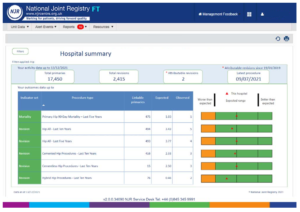
Example extract from NJR Management Feedback reporting function in NJR Connect – Data Services

Price benchmarking

With a view to improving the cost effectiveness of joint replacement surgery, the NJR’s implant price benchmarking service gives hospitals the information they need to benchmark the price they pay for hip, knee, ankle, elbow and shoulder implants against the ‘best’ national prices achieved across all hospital implant procurement services. This service enables hospitals to drill down into their pricing data, including the additional capability to give surgeons individual reports relating to their own implant use. The NJR’s enhanced implant price-benchmarking service, EMBED, supports hospitals to understand, in greater detail, their use of joint replacement implants in terms of cost, evidence and trends in comparison to the national picture. This service provides clinicians, management, procurement and finance teams with an objective set of data and analysis to inform their decision-making. With a focus on cost and value alongside procedure outcomes, it also underpins the Getting It Right First Time (GIRFT) and NHS England’s Model Health System initiatives.

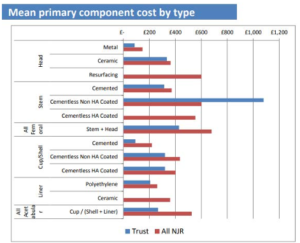
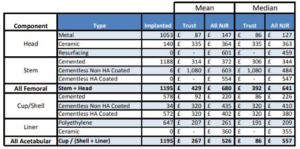
A sample of the EMBED price bench-marking report

Shared decision-making in a clinical setting

Patient information and knowledge is vital for hospitals to ensure understanding, confidence, manage expectations and contribute to shared decision-making. We publish hospital-level information about patient outcomes following joint replacement surgery that enables patients to understand what to expect from their treatment and to inform their decision about where to be treated: The National Joint Registry – Surgeon and Hospital Profile (njrcentre.org.uk).

We also produce guidance from NJR’s Annual Report to provide patients with digestible data on the type and quality of joint replacement surgery undertaken, to increase patient awareness and patient choice: The National Joint Registry reports (njrcentre.org.uk).

The NJR patient support tool

Additionally, the NJR Patient Decision Support Tool is a freely available online tool that was developed using NJR data on hip and knee surgery, to help those considering joint replacement surgery to better understand the risks and benefits of having a hospital procedure. The patient enters simple details such as age, sex, height, weight, general health and how their joint disease affects them. The tool then uses NJR data from similar patient experiences to calculate how much better the patient will be likely to feel after surgery. The tool also calculates the risk of death after surgery, as well as the likelihood of repeat surgery being needed. Patients with a better understanding of their surgical procedure, their own risk level, and what will be happening to them are likely to be better prepared for their hospital procedure and to thereafter have better outcomes. The Patient Decision Support Tool is an example of how both patients and surgeons can make informed decisions jointly in their hospital consultation time, as an important part of patient-centred medicine. Developed as part of NJR’s supported research programme, it has been accessed by many tens of thousands of patients across over 110 countries to better understand their risks and benefits before surgery. With this brief overview, we hope we have given a flavour of some of the benefits that the NJR delivers to hospitals. By recording, monitoring, analysing and reporting on performance outcomes in joint replacement surgery, we are committed to supporting a continuous drive to improve service quality and enable research analysis – and, ultimately, improve patient outcomes.

About the National Joint Registry

Described as a global exemplar of an implantable medical device registry, the National Joint Registry (NJR), which covers England, Wales, Northern Ireland, the Isle of Man and Guernsey continues to be the largest orthopaedic registry in the world, with an international reputation and over 3.7 million procedure records submitted. They collect information on hip, knee, ankle, elbow and shoulder joint replacement surgery and monitor the performance of joint replacement implants.

More information: www.njrcentre.org.uk

This article was originally featured in HQIP’s quality improvement magazine, CORNERSTONE – to see more articles on topics such as healthcare inequalities and sustainability in healthcare, go to: www.hqip.org.uk/wp-content/uploads/2023/11/HQIP_Cornerstone_2024.pdf.

NHS England Quality Accounts List 2024-25 confirmed and available from HQIP website

30 Jan 2024

NHS Trust healthcare providers are required to publish a Quality Account report annually, covering the quality of their services. The NHS England Quality Accounts List comprises National Clinical Audits, Clinical Outcome Review Programmes and other national quality improvement programmes which NHS England advises Trusts to prioritise for participation and inclusion in their Quality Accounts for 2024-25.

The NHS England Quality Accounts List 2024-25, plus further information and guidance can be found on our website.

Latest news: January eBulletin

26 Jan 2024

Welcome to the latest round-up of clinical audit and programme news, events and updates from HQIP and other relevant healthcare organisations.

Contents

Read the eBulletin here.
Don’t forget to sign up: Keep up to date with our latest news, events and work programmes by subscribing to our mailing list today. You can also stay up-to-date by following us on X: @HQIP.

Clinical Audit Awareness Week 2024 announced

25 Jan 2024

We are delighted to announce the return of Clinical Audit Awareness Week (#CAAW24), which will take place from 24-28 June 2024. This national campaign is designed to share and celebrate the impact of clinical audit in healthcare, and plays an important part in promoting the value of this work. Run in collaboration with the National Quality Improvement (incl. Clinical Audit) Network (N-QI-CAN), this year’s campaign will again centre around the Clinical Audit Heroes Awards. Details on how and when to submit entries to these awards will be available in the following months, so keep an eye on our monthly eBulletins for updates.

Date for your diary

We will be launching #CAAW24 at a short online event on Wed 27 March from 12:30 – 1:00 pm. Speakers will include Chris Gush, HQIP CEO, and Professor Danny Keenan, who will share the broader value of clinical audit and details of how to enter the awards. To find out more please go to the Clinical Audit Awareness Week page. Please share: This year, we are keen to involve the wider health and care sector in this campaign. As such, we will be announcing events and activities aimed at promoting the benefits of translating data and evidence into meaningful quality improvement. We will also be sharing a toolkit to support you in organising your own events and activities. Please share news of 2024 Clinical Audit Awareness Week with teams throughout your organisation, and forward details to Communications teams to share via newsletters and websites.

Stay up-to-date

Online: Details on how to get involved in the Clinical Audit Heroes Awards and the wider #CAAW24 campaign will be made available on both HQIP and N-QI-CAN’s websites, as it becomes available. Newsletter updates: We will share updates in HQIP’s monthly eBulletins, while N-QI-CAN will provide updates via their enewsletter and ‘Forum’ (National Network and Sharing Forum, NNSF). Social media: You can also follow HQIP and N-QI-CAN on X, where information will be posted (look out for and use #CAAW24). In the meantime, make a note of the date of this campaign in your diaries and share this news on social media, using #CAAW24! More information: Clinical Audit Awareness Week

An ′umbrella approach′ to audit: sharing, efficiencies and results

24 Jan 2024

The National Cancer Audit Collaborating Centre (NATCAN) – one year on.

Caroline Rogers, Associate Director, Quality and Development (NCAPOP), HQIP and Dr Julie Nossiter, Director of Operations, NATCAN

In 2023, Professor Peter Johnson, National Clinical Director for Cancer at NHS England acknowledged the transformative power of healthcare data, saying: “We’re in the middle of a real data revolution in the health service”. It goes without saying that the clinical audit community plays a pivotal role in that ‘data revolution’. However, to best realise the potential of data in healthcare, it too is going through a transformation. We look at the National Cancer Audit Collaborating Centre (NATCAN), which takes a truly collaborative approach to clinical audit.

Healthcare improvement strategies will be the guiding light for each audit, providing targeted, measurable goals for cancer outcomes and patient experience

NATCAN was set up to make the most effective use of the cancer data available, in order to bring about improvements in the care provided to patients. The Centre, which celebrated its one-year anniversary in October 2023, heralds a new approach to commissioning national clinical audits; one with collaboration at its heart. The Royal College of Surgeons of England (RCS) – in partnership with the London School of Hygiene and Tropical Medicine – was contracted to run the Centre by the Healthcare Quality Improvement Partnership (HQIP) on behalf of NHS England and the Welsh Government.

Experts in relevant clinical disciplines, methodology, statistics, organisation, data, epidemiology and logistics have been brought together, with the aim of largescale healthcare assessment and improvement. More specifically, NHS England and the Welsh Government are providing £5.4 million over an initial three-year period for the Centre to manage new clinical audits covering all NHS hospitals in England and Wales that care for patients with:

  • Ovarian cancer
  • Pancreatic cancer
  • Non-Hodgkin lymphoma
  • Kidney cancer
  • Primary breast cancer
  • Metastatic breast cancer.

In addition, the following established audits, already hosted by the RCS, were also incorporated into the Centre:

  • Oesophago-gastric cancer
  • Bowel cancer
  • Prostate cancer
  • Lung cancer.

Within NATCAN, each clinical discipline has its own audit. The Centre focuses on ‘the three Rs’ of clinical audit best practice, ensuring that all its activities are:

  • clinically Relevant (asking the right questions, as a result of close collaboration between clinical and academic experts)
  • methodologically Robust (using the best epidemiological and statistical approaches to carry out fair comparisons between hospitals),
  • and  technically Rigorous (making sure data science is put to the best use, in order to drive quality improvement).

What are the aims of the new Centre?

The aim of NATCAN is to strengthen NHS cancer services and, ultimately, improve patient outcomes. People who have experienced, or are experiencing, cancer are important in this endeavour; and patients and patient charities are involved in all aspects of the Centre and its work. Each audit has its own Patient and Public Involvement (PPI), enabling patients to have a strong voice within the clinical committee. Everyone involved in cancer treatment knows it is complex. There may be multiple treatment options, including combinations of treatments, for different types of cancer. A patient’s treatment plan needs to take into account the stage of their cancer and how they respond to treatment. A key aim for each audit is to ensure that the information produced for cancer services recognises these differences, and supports hospitals to focus on specific parts of the care pathway. The Centre uses and links together the existing national datasets that are already routinely collected, reducing the burden and costs on the system as a whole. Organising clinical audits in this way creates a critical mass and capacity of experts, meaning that best practice can be shared.

So, what has been happening so far?

As of late 2023, each audit is drawing up its healthcare improvement strategy, which contains explicit quality improvement goals. These will be the guiding light for each audit – a set of targeted, measurable goals for cancer outcomes and patient experience. Meanwhile, staff and experts have been appointed, and applications made for the data required. As you would expect, the Centre will operate with the highest level of expertise in information governance and the rules surrounding the use of patients’ data; and robust processes are being put in place to support this.

When will we see the data?

The existing audits (lung, prostate, bowel and oesophago-gastric cancers) will continue to report data, while the new audits will produce analysed benchmarked results for each Trust and Health Board in 2024, to be released quarterly thereafter. From September 2024, summary annual ‘State of the Nation’ reports will be produced by each audit, containing key findings and national recommendations for improvements in cancer care. Alongside the data releases, the audits are each developing improvement tools that services can use to improve the care they provide.

Organising clinical audits in this way creates a critical mass and capacity of experts

As with any transformative change, taking a new approach in setting up this national centre of excellence has not been without challenges. But with benefits as significant as greater knowledge and best practice sharing, as well as efficiencies and economies of scale – and, of course, improved outcomes for patients – at stake, the team has worked hard to overcome them. We now look forward to strengthening NHS cancer services, using joined-up thinking and data to provide a wider understanding of cancer treatments and patient outcomes across the country.

This article was originally featured in HQIP’s quality improvement magazine, CORNERSTONE – to see more articles on topics such as healthcare inequalities and sustainability in healthcare, go to: www.hqip.org.uk/wp-content/uploads/2023/11/HQIP_Cornerstone_2024.pdf.

About NATCAN

The National Cancer Audit Collaborating Centre (NATCAN) was established as a new national centre of excellence in October 2022. It is a partnership between the Royal College of Surgeons of England and the London School of Hygiene and Tropical Medicine, and was commissioned for an initial three-year period by the Healthcare Quality Improvement Partnership (HQIP), on behalf of NHS England and the Welsh Government. NATCAN brings national cancer audits together in one place, enabling the sharing of best practice and clinical excellence as part of the overall strategy of improving healthcare.

Find out more: www.natcan.org.uk.

Further information and resources

Healthcare inequalities case study

15 Jan 2024

Mikaela Wardle, Senior House Officer at Sandwell & West Birmingham NHS Trust, in partnership with the Homeless Patient Pathway and Alcohol Care teams was a commended entry in the Healthcare Inequalities category of the 2023 Clinical Audit Heroes Awards (run as part of Clinical Audit Awareness Week). The Healthcare Inequalities award recognises clinical audits and projects that address inequalities in healthcare, and is one of five categories in this year’s Clinical Audit Heroes Awards.

The judges were pleased to commend Mikaela Wardle and the Homeless Patient Pathway and Alcohol Care teams, for an audit of homeless patients presenting to City Hospital Emergency Department – a population which has high rates of substance and alcohol dependence, hepatitis C and multiple morbidity, compared to the general population. This project identified multiple areas where changes to processes could significantly improve outcome including staff education, collaboration and resources.

Read the case study in full here.

New resources published January 2024

11 Jan 2024

We are pleased to announce that the following NEW resources have been published:
The reports are available to view and download, along with all other reports, on our dedicated reports webpage. Stay up to date: Join our mailing list to receive notifications when new reports are published.