Diabetes services for children and young people under growing pressure, new NPDA report finds
18 Nov 2026
The HQIP-commissioned National Paediatric Diabetes Audit (NPDA) has published its latest findings relating to the delivery of care, in a new report covering all Paediatric Diabetes Units (PDUs) in England, Wales and Jersey as of 31 March 2025.
The Royal College of Paediatrics and Child Health (RCPCH), who manages the audit, has shared the following update with its members, explaining how data from the audit reveals that paediatric diabetes services are facing increasing workforce pressures and staffing levels have not kept pace with rising demand. As a result, most services are operating below recommended workforce standards, and fewer children are receiving the recommended level of care.
Better staffed services tended to achieve better outcomes”
61% of children and young people (CYP) were offered the recommended four diabetes appointments each year, down from 77% in 2017/18. At the same time, more than half (54%) of PDUs reported at least one staff vacancy, compared to 39% in 2017/18.
Children living with type 1 diabetes require long-term specialist support to manage their condition. PDUs provide this specialised multi-disciplinary care including medical, dietary and psychological support. Since 2017/18, the number of children and young people receiving care from a PDU has increased by 20% across England and Wales (21% in England and 12% in Wales).
The audit also found gaps in specialist mental health provision. Whilst most services have access to a psychologist, many are unable to provide all the recommended interventions to support children. Around a quarter (24%) of services currently screen for eating disorders, despite young people with diabetes being at increased risk.
Despite these increasing workforce pressures, the NPDA concluded that services continue to provide comprehensive care considering the drop in CYP receiving the four recommended appointments. Of particular note is the fact that all PDUs provided structured education, while almost all delivered a transition clinic and provided 24/7 out-of-hours support.
This latest NPDA report highlights the value of clinical audits in improving healthcare.
Dr Neil Hopper, Consultant Paediatric Endocrinologist and Interim NPDA Clinical Lead, said: “The National Paediatric Diabetes Audit is a vital part of the national strategy to improve care and outcomes for children and young people with diabetes in England, Wales, Jersey and the Isle of Man. This workforce spotlight audit highlights the incredible hard work that the 172 paediatric diabetes units are doing day in and day out to support the patients and families under their care. Diabetes is a complex long-term condition that requires a skilled, well-resourced multidisciplinary team for each child and young person affected. Diabetes has become significantly more common in children and young people, compared to data from the audit since 2018, and this report highlights that staffing of the paediatric diabetes units across the country has not kept pace with the increase in numbers of patients. This will be of great interest to commissioners, diabetes teams, families and the charities that support children with diabetes in order to ensure that families affected by a child with diabetes have the support that they deserve.”
The report contains four recommendations for improvement:
Commissioners should proactively undertake regular reviews of their PDU workforce capacity
Commissioners and service providers should ensure that arrangements for funding paediatric diabetes services are transparent and regularly reviewed
There should be a review of the support available to children and young people with diabetes who are involved with safeguarding services
Guidance should be developed for PDUs on the identification, diagnosis, management and prevention of eating disorders in children and young people with diabetes.
HQIP’s CEO, Chris Gush, explains more about the role of this work in supporting improvements: “The resultant data from our programmes shine a light on where improvements will improve care and outcomes, supporting healthcare providers to implement changes that will have maximum impact.”
Diabetes: Find out more about our work to support improvements in diabetes care, through the Diabetes Hub on the HQIP website, which brings together reports, news and resources on this topic.
Paediatrics and child health: Find out more about our work to support improvements in care for children and young people, through the Paediatrics Hub on the HQIP website, which brings together reports, news and resources on this topic.
The National Paediatric Diabetes Audit (NPDA), commissioned by HQIP, aims to improve the quality of...
World Diabetes Day 2026: How data can transform diabetes care and outcomes
12 Nov 2026
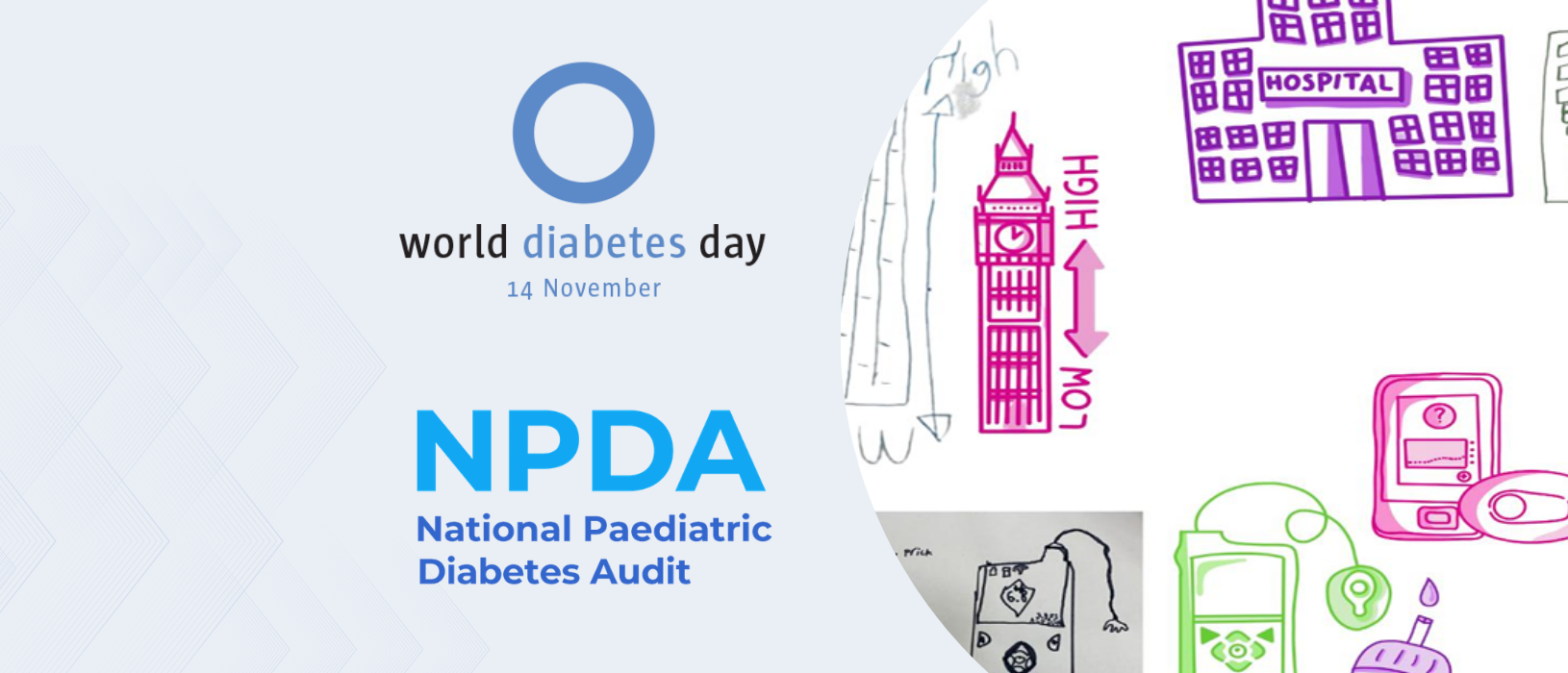
For World Diabetes Day, 14 November 2026, we highlighted how national clinical audit supports the improvement of care and outcomes for children and young people with diabetes.
World Diabetes Day raises awareness of diabetes, and the importance of earlier diagnosis as well as access to comprehensive care. Under the theme “Early action on diabetes”, it also provides an opportunity to look at the critical importance of national clinical audit data in improving care and transforming the lives of children living with diabetes here in the UK.
The HQIP-commissioned National Paediatric Diabetes Audit (NPDA), which is delivered by the Royal College of Paediatrics and Child Health (RCPCH), assesses the quality of care provided to children and young people (CYP) living with diabetes across England, Wales and Jersey. It provides clinical teams, commissioners and national bodies with robust evidence on what is working well, and where changes to care will have maximum impact. By tracking variation in outcomes over time, the audit helps drive improvements in clinical practice and service design for children and young people with diabetes.
Recent paediatric diabetes reports
The NPDA’s latest report, Workforce Spotlight Audit 2024/25, found that services continue to provide comprehensive care despite increasing workforce pressures. However, with a 20% growth in the number of CYP receiving care in England and Wales since 2017/18, its findings highlight a number of challenges covering areas such as workforce levels, funding, safeguarding and psychological support. Conversely, it also found that all Paediatric Diabetes Units (PDUs) provided structured education, and almost all delivered a transition clinic and provided 24/7 out-of-hours support.
The audit’s report on 2024/25 care and outcomes is based on 35,801 CYP with diabetes receiving care from 172 PDUs in England, Wales and Jersey during that period, marking a 29% increase in caseload over the preceding decade. It found issues such as the fact that many young people with diabetes are not receiving all six annual health checks (as recommended by NICE), and that there is persistent variation in care and inequalities, something we explore in our new article below…
Tackling health inequalities
New article: In HQIP’s article, Tackling inequalities in diabetes care for children and young people, we explore how the NPDA is helping care providers to understand – and address – issues such as additional financial pressures on families living with diabetes, and variation in access to diabetes technology.
77% of people living with diabetes say that the rising cost of living is negatively impacting how they manage their condition” Diabetes UK
This article shares how the audit supported a national roll-out of the Poverty Proofing® programme, initially developed by Children North East (CNE), to help health services understand how poverty affects patients’ access, participation and experience of care. It also explains how the NPDA is supporting improved access to hybrid closed loop (HCL), a technology that can minimise both the burden and the risk of medical emergencies.
The importance of patient voice in ensuring meaningful care
Interview: As part of the NPDA Youth Voice Communications Project, children and young people from across the UK came together to share their experiences and help shape how the audit communicates with young people and families. In another new article on the NPDA’s patient engagement, children and young people from the project share, in their own words, what they learned from taking part and why having a voice in healthcare matters.
Case study: In addition to the above article, we are also pleased to share a new case study about the NPDA’s Youth Voice Communications Project, which was a joint runner-up in the Equity and Patient Involvement category of the 2026 Excellence in Clinical Audit Awards (part of Clinical Audit Awareness Week). This project demonstrates how patient involvement can strengthen the impact of audits by ensuring that findings are not only reported to services, but are also communicated in ways that are meaningful and empowering for the people whose care they reflect.
Why it matters
The evidence generated by the NPDA, and the resultant improvements, matter. It provides the insights needed to support improvements and equity in care and outcomes, enabling services to measure performance, understand variation, and target improvement activity. World Diabetes Day is a timely reminder of the importance of action across the whole diabetes pathway, from prevention and rapid treatment to longer-term care.
Find out more
Diabetes: Find out more about our work to support improvements in diabetes care, through the Diabetes Hub on the HQIP website, which brings together reports, news and resources on this topic.
Paediatrics and child health: Find out more about our work to support improvements in care for children and young people, through the Paediatrics Hub on the HQIP website, which brings together reports, news and resources on this topic.
The National Paediatric Diabetes Audit (NPDA), commissioned by HQIP, aims to improve the quality of...
Tackling inequalities in diabetes care for children and young people
12 Nov 2026
ThisWorld Diabetes Day, on 14 November 2026, we share how the National Paediatric Diabetes Audit is supporting healthcare providers to provide equitable care.
Living with diabetes places significant demands on children and their families. Alongside the daily clinical challenges of managing the condition, families often face additional financial pressures stemming from reduced working hours and income, as well as inequalities in care such as variation in access to diabetes technology. That’s why the National Paediatric Diabetes Audit (NPDA), commissioned by the Healthcare Quality Improvement Partnership (HQIP) and delivered by the Royal College of Paediatrics and Child Health (RCPCH), is helping care providers to understand – and address – these issues.
77% of people living with diabetes say that the rising cost of living is negatively impacting how they manage their condition” Diabetes UK
A recent Children North East report estimated that the average out-of-pocket monthly cost of caring for a child with diabetes is more than £425, due to the additional costs incurred such as travel, specialist food and equipment, and time away from work. This is backed up by the NPDA’s work, which found that 30% of carers reported that they or their partner reduced their working hours following their child’s diagnosis. 11% said that they or their partner had even left employment altogether.
These findings demonstrate why addressing health inequalities is critical, as some families will inevitably be greatly impacted by these issues. By identifying variation in access, care and outcomes, the NPDA gives healthcare providers the evidence they need to target improvement where it will have the greatest impact. However, they are going a step further, by working with the sector to proactively reduce the barriers created by poverty. They are delivering training across the country, through a programme known as Poverty Proofing®, and they are supporting more equitable access to hybrid closed loops (HCL) – a technology that considerably reduces the need for regular manual monitoring and insulin adjustment.
Going national with Poverty Proofing® on diabetes care
Children North East (CNE) developed Poverty Proofing® to help health services understand how poverty affects patients’ access, participation and experience of care. This programme uses staff training, consultation and evidence-based guidance to identify changes that services can make to reduce financial barriers, and improve equitable access. The NPDA has been working with CNE to deliver a national Poverty Proofing® programme aimed at all 11 Children and Young People’s Diabetes Networks in England and Wales. Between January 2025 and April 2026, they delivered 24 workshops, with more than 925 staff working in paediatric diabetes services taking part. Covering topics such as barriers affecting access to appointments, treatment and technology, and using NPDA data to identify inequalities, these workshops raise awareness of the issues faced by families and help teams develop action plans for delivering equitable care.
Practical actions identified through the workshops included routinely asking families whether financial pressures affect diabetes management, and signposting them to food support, housing services and debt advice. Teams also looked closely at aspects of care that can create additional costs or difficulties for families, and included actions such as offering appointments in more accessible locations, and providing evening or satellite clinics, in their plans.
These are seemingly simple changes, but they are the difference between effective care, and not, for many families; they are a lifeline in many instances”
One of the paediatric diabetes teams involved in this work describes the difference it was making to families: “In one case, where we were struggling to get the family to engage in diabetes management, we discussed whether the financial impacts of travelling to clinic were a factor. We were able to offer support for travels costs, discussed financial pressures during clinic appointments, and subsequently referred them to a local food bank.”
Another service introduced three Poverty Proofing questions into its annual review process, developed a financial support leaflet, and used charities to provide mobile phones to families who needed them. It also asked GPs to prescribe items such as hypoglycaemia treatments and adhesive removers, reducing the costs that families might otherwise face.
These are seemingly simple changes, but they are the difference between effective care, and not, for many families; they are a lifeline in many instances. Financial hardship can be difficult for both families and healthcare professionals to discuss. Staff can worry about embarrassing families, but this training programme produced a notable change in knowledge and confidence. Before the training, 70% of participants reported a “good understanding” of poverty, while only 36% said they felt confident starting conversations about financial barriers. After the training, the percentage for both rose to 99%. This matters because routine conversations about sensitive matters can help teams to identify problems early, and connect families with appropriate support.
Improving access to hybrid closed loop (HCL) technology
Another important aspect of the NPDA’s work is to support efforts to reduce inequalities in diabetes care. This has involved working with organisations who are trying to improve access to hybrid closed loop (HCL) systems and reducing cost as a barrier for families. HCL technology combines a continuous glucose monitor with an insulin pump, adjusting the delivery of insulin automatically. Although users still need to manage some aspects of their care, the technology can minimise burden and the risk of medical emergencies. As such, it can reduce some of the demands placed on children and their families, supporting better sleep and relieving anxiety associated with day-to-day diabetes management.
Uptake of this life-changing technology has almost doubled in two years”
The NPDA has been working with NHS England (NHSE) for several years, introducing changes to its processes to support regular reporting on, access to, and adoption of HCL technology. The audit monitors the uptake of this technology, supplying the data to NHS England, who then reimburses Integrated Care Boards (ICBs) for a significant part of the cost of HCLs across their area. This encourages widespread use, and supports both a 2023 NICE recommendation and an NHS five-year implementation strategy. Before HCL became more widely available through the NHS, some families paid for the technology themselves. The estimated cost of this is currently £2-3,000 up front, followed by £1,500 each year for equipment. A such, self-funding was not possible for many families, and resulted in significant inequities in care. By taking on the role of reporting HCL uptake to NHS England, the NPDA also reduces the burden of doing this on clinical teams, and avoids the need for the same information to be entered into multiple systems.
NPDA data has demonstrated a substantial increase in the use of HCL technology among children and young people in England. In March 2024, uptake was down at 38% but, by March 2025, it had increased to over 64%. Provisional data for March 2026 indicates uptake at over 75%. In other words, uptake of this life-changing technology has almost doubled in two years. Furthermore, all minority ethnic groups and those living in deprived areas increased their uptake, with the gap in access between socioeconomic groups narrowing.
This increase in HCL uptake has coincided with an improvement in median HbA1c, an important measure of average blood glucose over time. The median HbA1c for children and young people in England in March 2024 was 60.5mmol/mol, and this fell to 58mmol/mol by March 2025 (with provisional data for March 2026 showing a further reduction to 56mmol/mol). While the target is <48 mmol/mol, this is a substantial improvement on previous years; since the HCL roll-out, this figure has reduced by 2 mmol/mol per year.
Data as a tool for improvement and equity
Both the Poverty Proofing® and the HCL implementation programmes serve the same underlying purpose: to reduce avoidable inequalities in diabetes care and outcomes. They illustrate the power of clinical audit as a tool for targeted improvement. In addition, while these programmes are focused on paediatric diabetes, much of the learning from them could be applied to other areas of healthcare. After all, issues such as inflexible appointments, limited access to technology and uncertainty about financial support are not unique to diabetes. Routinely considering these issues could help other services to become more accessible, equitable and responsive to the needs of patients. In other words, when evidence from national programmes like the NPDA is used alongside the collective expertise of the healthcare sector, we are able to identify people at greatest risk of unequal care, understand the barriers they face, and ultimately save and improve patients’ lives. Or, as one Poverty Proofing Coordinator stated, when reflecting on the value of this work on a national scale: It is “a valuable opportunity to take this work further and see its impact on a much larger scale.”
Dr Dita Aswani, NHS England GIRFT Clinical Advisor for Children and Young Adult’s Diabetes, explains more about the value of the national paediatric diabetes audit in tackling inequities in healthcare: “In an era of widening health inequalities, the NPDA is far more than an audit. Its greatest strength is not that it measures average performance, but that it reveals who is missing out. Through its unparalleled completeness and granularity, the NPDA enables services, systems and national programmes to identify inequalities that might otherwise remain hidden, whether in care processes, access to technology or health outcomes. The data drives improvement from individual clinics to national policy. Most importantly, the NPDA has helped shift thinking from accepting variation as inevitable, to understanding its root causes and taking action. In other words, using evidence to ensure that every child receives high-quality diabetes care, regardless of their background or where they live.”
NPDA Workforce Spotlight report
The NPDA has released its latest report, which sought to understand how the structure and delivery of care in paediatric diabetes services, including staffing provision, has changed over time and the relationship this has with diabetes care and outcomes.
The National Paediatric Diabetes Audit (NPDA), commissioned by HQIP, aims to improve the quality of...
Our Voice Matters: What We Learned from the NPDA Youth Voice Communication Project
12 Nov 2026
The National Paediatric Diabetes Audit (NPDA), commissioned by HQIP, aims to improve the quality of care for children and young people living with diabetes. As part of the NPDA Youth Communications Project, children and young people from across the UK came together to share their experiences and help shape how the audit communicates with young people and families.Here, NPDA children and young people from the project share, in their own words, what they learned from taking part and why having a voice in healthcare matters:
“When people think about healthcare, they often imagine doctors, nurses and researchers making all the important decisions. But what about the children and young people who actually live with the condition every day?
We are a group of children and young people living with diabetes and, through the NPDA Youth Voice Communication Project, we had the chance to share our experiences, speak up about what matters to us, and help make diabetes health care better for other children and young people.
What is the NPDA?
The NPDA looks at how children and young people living with diabetes are cared for across England, Wales, Jersey and the Isle of Man. Every year, it collects information from diabetes clinics and checks whether young people are getting the care and support they need. The main goal is to make diabetes care better and make sure everyone gets the best possible support, no matter where they live.
The NPDA doesn’t just look at numbers. It also wants to hear from children and young people because we are the ones living with diabetes every day.
What Was the Youth Voice Communication Project?
The NPDA funded a six-month project that brought together children and young people from across all four nations. The aim was simple: help the NPDA find better ways to explain what it does and why it matters to children, young people and families.
We worked together in online and face-to-face workshops to share ideas and create resources that young people would actually want to use.
The project helped create:
New guides and tips for diabetes teams
Images and resources for children and young people
Easy-to-understand information about the NPDA
New ways to raise awareness about diabetes care and the audit
Most importantly, it gave us the opportunity to use our voices.
Why Was It Important?
Before this project, many of us had never heard of the NPDA.
We didn’t know there were opportunities where young people could help improve healthcare. We didn’t realise our opinions could influence the way information is shared or how services develop in the future.
One thing every one of us in the project agreed on was that all children and young people living with diabetes should know about the NPDA. Knowing about the NPDA helps us understand the care we should be receiving. It helps us feel more confident, informed and empowered. It reminds us that our experiences matter.
Sometimes it can feel like healthcare is something that happens to us. This project showed us that we can be part of the conversation too.
Meeting Other Young People with Diabetes
For many of us, the best part of the project was meeting other young people who also live with diabetes.
Having diabetes can sometimes feel lonely. You might be the only person in your school, class or friendship group who has it. It can be hard to explain blood sugar levels, carb counting, insulin injections or sensor alarms to people who don’t experience them themselves.
But in this project, everyone understood.
We shared stories, learnt from each other and talked about challenges that only someone with diabetes would really get. Meeting people with similar experiences helped many of us feel less alone. It reminded us that there are lots of young people facing the same challenges and finding ways to manage them every day.
Spreading Awareness
Another topic we talked about a lot was awareness. Many people still don’t understand the difference between Type 1 and Type 2 diabetes. Some young people have experienced awkward questions or misconceptions because people simply don’t know enough about diabetes.
We think schools could play a bigger role in teaching students about diabetes and other health conditions. Better awareness would help reduce stigma, increase understanding and make schools more inclusive for everyone. A little more knowledge can make a big difference.
Creating Resources for Young People
One thing we learnt during the project is that information doesn’t always need to be a long report full of complicated words. Let’s be honest, most young people aren’t going to sit down and read pages of statistics.
That’s why we explored lots of different ways to share information, including:
Videos
Podcasts
Leaflets
Drawings
Visual resources
The design days were some of the most exciting sessions because we got to be creative and think about what would actually grab children and young people’s attention.
The project showed that there are many different ways to communicate important information. When resources are designed with young people in mind, they’re much more likely to be useful.
Looking Ahead
Although the project only started in 2024, it has already achieved a huge amount. From online sessions and workshops to design days and national events, young people have been involved every step of the way.
All the ideas, feedback and resources we have created have now been shared with the NPDA team. They will use them to make information more accessible and easier for children and young people to understand. We also presented the project at the NPDA annual conference and met with HRH Princess Royal to tell her about the work we have done.
The biggest thing we have learnt is that children and young people want to get involved. We care about our healthcare. We want to share our experiences. We want to help improve our services for others.
The problem isn’t that we don’t want to take part. Sometimes we just don’t know where the opportunities are. Projects like the NPDA Youth Voice Communication Project show what can happen when young people are given the chance to speak and are genuinely listened to.
Our voices matter. And when young people are included in conversations about diabetes care, everyone benefits.
We look forward to the next steps of the project.“
Related case study: NPDA Youth Voice Communication Project
Get in touch with the NPDA children and young people team, RCPCH &Us: and_us@rcpch.ac.uk
More articles on using healthcare data to improve and save lives
How HQIP supports organisations to use clinical audit and healthcare data to drive improvement – from strategy development to implementation or training
This World Diabetes Day, on 14 November 2026, we share how the National Paediatric Diabetes...
New improvement reports published
12 Nov 2026
We are pleased to announce that the following NEW RESOURCES to support improvement in healthcare, from HQIP’s audits and programmes, have been published:
Pleural procedures; Medical and Surgical Clinical Outcome Review Programme (NCEPOD)–A Shared Aspiration is a review of the quality of care provided to adults who underwent a chest drain insertion or pleural aspiration.
Vascular care; National Vascular Registry (NVR) –State of the Nation report reviews vascular care delivered across NHS services during 2025, focusing on variation.
Stroke care; Sentinel Stroke National Audit Programme (SSNAP) –State of the Nation Report 2025-26 highlights continued improvements across several areas of stroke care, while identifying important opportunities to reduce variation and improve patient outcomes further.
Paediatric diabetes; National Paediatric Diabetes Audit (NPDA) – Workforce Spotlight Audit 2024/25 report highlights workforce findings in relation to paediatric diabetes care.
Child mortality:National Child Mortality Database (NCMD) – Child Death Review data release 2026. This data release summarises information about child deaths in England up to 31 March 2026, and the findings of reviews carried out by a Child Death Overview Panel (CDOP) on or before 31 March 2026.
Further data
In addition, note that the following data is also expected to be available from our programmes: