

This report reviews vascular care delivered across NHS services during 2025, focusing on variation. In 2025, more than 24,000 surgeries were recorded in the NVR, across the four procedure types: lower-limb revascularisations, major amputations, abdominal aortic aneurysm (AAA) repairs, and carotid endarterectomies.
There were opportunities to improve cardiovascular risk management for 20-30% of vascular patients
While overall surgical outcomes remained good and postoperative mortality rates were generally low, the report notes that procedural volumes for elective AAA repair and carotid surgery have fallen considerably over the past decade.
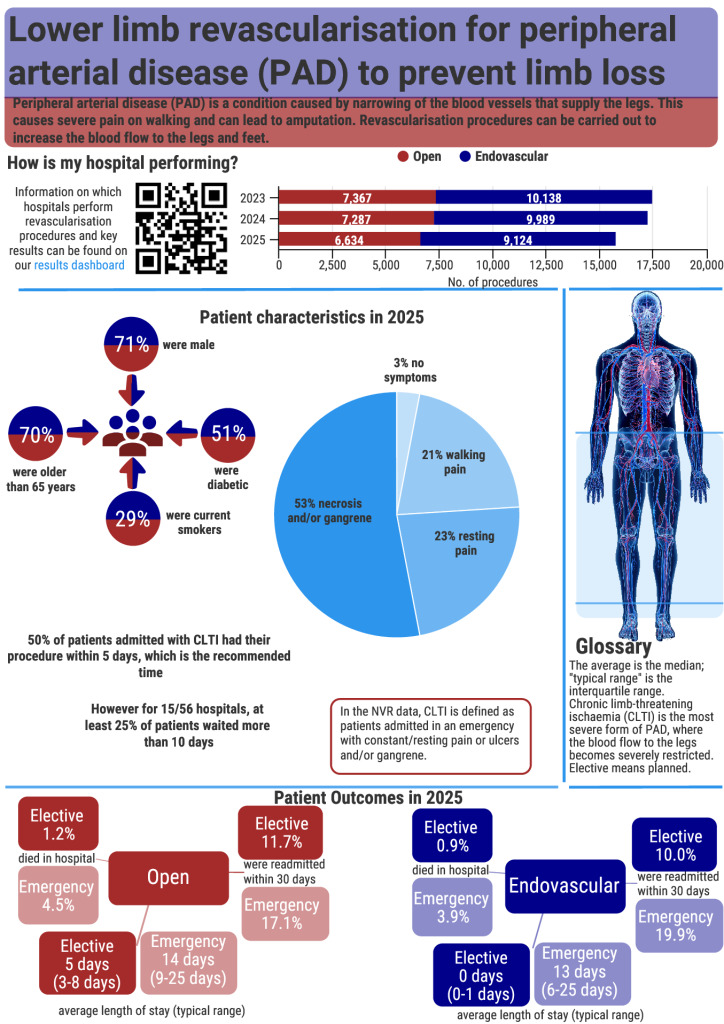
A major theme is the difficulty many services face in meeting national waiting-time standards. Only around half of patients received carotid endarterectomy within 14 days of symptoms, or revascularisation for chronic limb-threatening ischaemia within five days of admission. Only 35% of patients received elective AAA repair within the recommended eight-week timeframe. In each case, this represents similar performance to the previous year in proportions of patients receiving their operations within the target time-frame. The wait times also vary across different units.
For the first time ever, the NVR reports on secondary prevention among surgery patients. The analysis shows that 70% to 80% of vascular patients were receiving antiplatelet and statin therapy at the time of their admission for surgery, suggesting opportunities to improve cardiovascular risk management for the remaining 20-30%. These medications play a central role in reducing the risk of adverse cardiovascular events (such as stroke and myocardial infarction) and are appropriate for most people with vascular disease. Prevention is a key target for the NHS 10 Year Plan, and patients admitted for elective procedures could have been prescribed these prior to the admission.
Stay up-to-date: For notifications of future reports from HQIP, sign up to our mailing list.