Diabetes services for children and young people under growing pressure, new NPDA report finds
18 Nov 2026

The HQIP-commissioned National Paediatric Diabetes Audit (NPDA) has published its latest findings relating to the delivery of care, in a new report covering all Paediatric Diabetes Units (PDUs) in England, Wales and Jersey as of 31 March 2025.
The Royal College of Paediatrics and Child Health (RCPCH), who manages the audit, has shared the following update with its members, explaining how data from the audit reveals that paediatric diabetes services are facing increasing workforce pressures and staffing levels have not kept pace with rising demand. As a result, most services are operating below recommended workforce standards, and fewer children are receiving the recommended level of care.
Better staffed services tended to achieve better outcomes”
61% of children and young people (CYP) were offered the recommended four diabetes appointments each year, down from 77% in 2017/18. At the same time, more than half (54%) of PDUs reported at least one staff vacancy, compared to 39% in 2017/18.
Children living with type 1 diabetes require long-term specialist support to manage their condition. PDUs provide this specialised multi-disciplinary care including medical, dietary and psychological support. Since 2017/18, the number of children and young people receiving care from a PDU has increased by 20% across England and Wales (21% in England and 12% in Wales).
The audit also found gaps in specialist mental health provision. Whilst most services have access to a psychologist, many are unable to provide all the recommended interventions to support children. Around a quarter (24%) of services currently screen for eating disorders, despite young people with diabetes being at increased risk.
Despite these increasing workforce pressures, the NPDA concluded that services continue to provide comprehensive care considering the drop in CYP receiving the four recommended appointments. Of particular note is the fact that all PDUs provided structured education, while almost all delivered a transition clinic and provided 24/7 out-of-hours support.
This latest NPDA report highlights the value of clinical audits in improving healthcare.
Dr Neil Hopper, Consultant Paediatric Endocrinologist and Interim NPDA Clinical Lead, said: “The National Paediatric Diabetes Audit is a vital part of the national strategy to improve care and outcomes for children and young people with diabetes in England, Wales, Jersey and the Isle of Man. This workforce spotlight audit highlights the incredible hard work that the 172 paediatric diabetes units are doing day in and day out to support the patients and families under their care. Diabetes is a complex long-term condition that requires a skilled, well-resourced multidisciplinary team for each child and young person affected. Diabetes has become significantly more common in children and young people, compared to data from the audit since 2018, and this report highlights that staffing of the paediatric diabetes units across the country has not kept pace with the increase in numbers of patients. This will be of great interest to commissioners, diabetes teams, families and the charities that support children with diabetes in order to ensure that families affected by a child with diabetes have the support that they deserve.”
The report contains four recommendations for improvement:
- Commissioners should proactively undertake regular reviews of their PDU workforce capacity
- Commissioners and service providers should ensure that arrangements for funding paediatric diabetes services are transparent and regularly reviewed
- There should be a review of the support available to children and young people with diabetes who are involved with safeguarding services
- Guidance should be developed for PDUs on the identification, diagnosis, management and prevention of eating disorders in children and young people with diabetes.
HQIP’s CEO, Chris Gush, explains more about the role of this work in supporting improvements: “The resultant data from our programmes shine a light on where improvements will improve care and outcomes, supporting healthcare providers to implement changes that will have maximum impact.”
Read the report in full: Paediatric diabetes – Workforce Spotlight Audit 2024/25
Find out more
- Diabetes: Find out more about our work to support improvements in diabetes care, through the Diabetes Hub on the HQIP website, which brings together reports, news and resources on this topic.
- Paediatrics and child health: Find out more about our work to support improvements in care for children and young people, through the Paediatrics Hub on the HQIP website, which brings together reports, news and resources on this topic.
Also see:
- World Diabetes Day 2026: How data can transform diabetes care and outcomes
- Article: Tackling inequalities in diabetes care for children and young people
- Interview: Our Voice Matters – What We Learned from the NPDA Youth Voice Communication Project
- Case study: Equity and Patient Involvement (NPDA Youth Voice Communication Project, paediatric diabetes)
- National Paediatric Diabetes Audit (NPDA)
- All reports from the NPDA
Other news
World Diabetes Day 2026: How data can transform diabetes care and outcomes
For World Diabetes Day, 14 November 2026, we highlight how national clinical audit supports the...
Tackling inequalities in diabetes care for children and young people
This World Diabetes Day, on 14 November 2026, we share how the National Paediatric Diabetes...
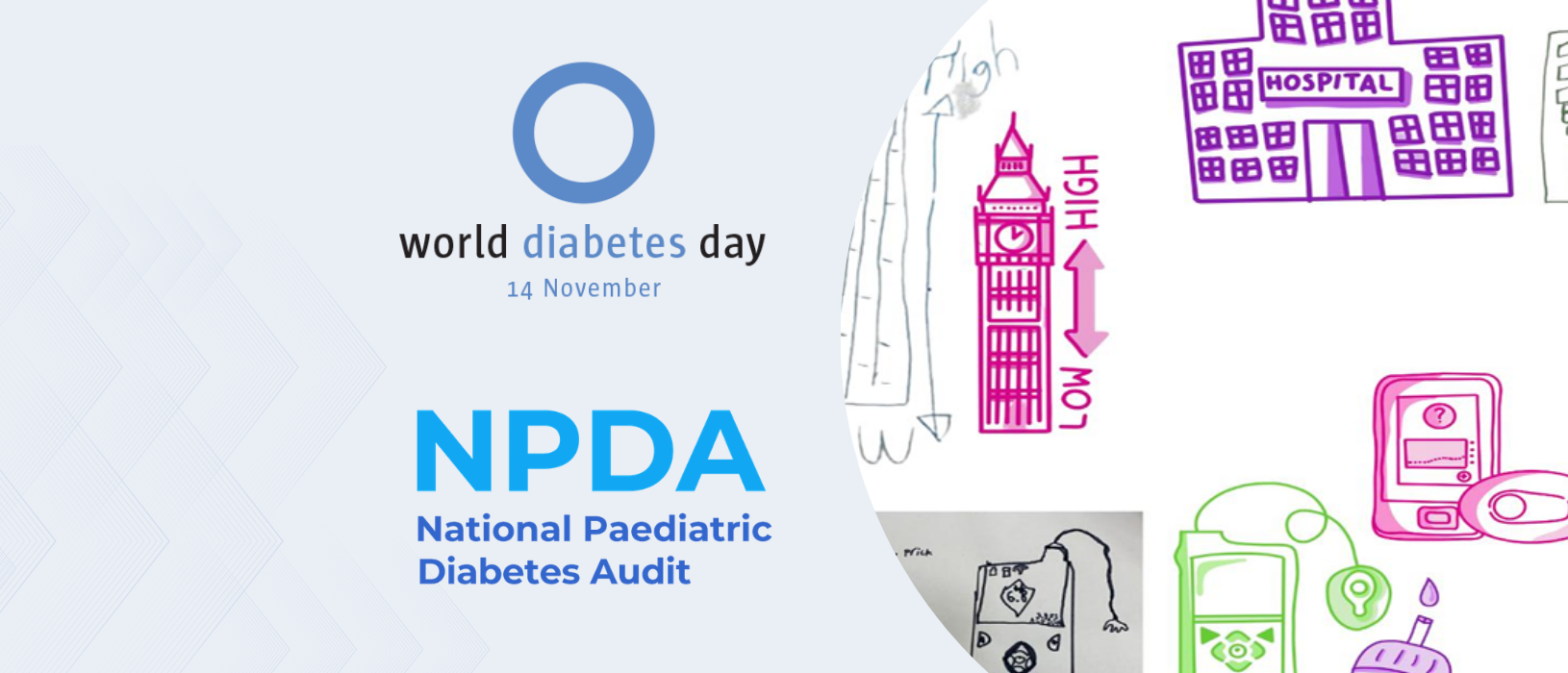
Our Voice Matters: What We Learned from the NPDA Youth Voice Communication Project
The National Paediatric Diabetes Audit (NPDA), commissioned by HQIP, aims to improve the quality of...