


10 Sep 2026
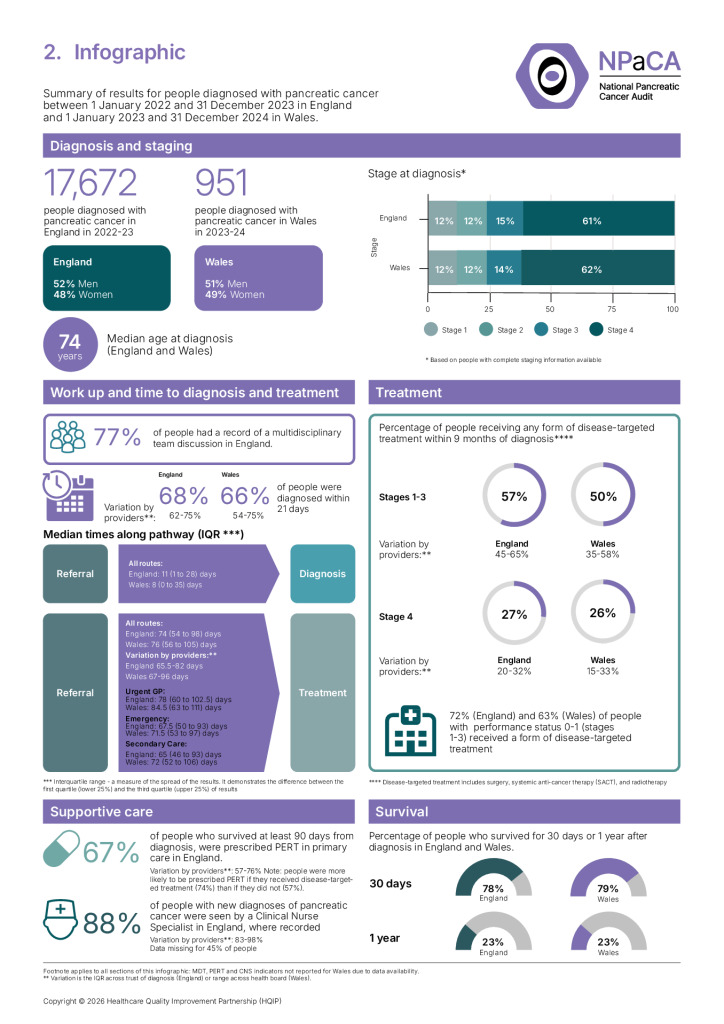
This report, which evaluates pancreatic cancer diagnosis, treatment, supportive care and outcomes, is an audit of care received by people diagnosed with pancreatic cancer. It found that most patients are diagnosed late, and treatment and supportive care remain variable. Overall, survival remains low, with one-year survival at 23% in England and Wales, and two-year survival at 11% in England.
Most people with pancreatic cancer in England and Wales continue to be diagnosed at an advanced stage
Other key findings include:
- In England and Wales, over two-thirds of people (68% in England, 66% in Wales) diagnosed with pancreatic cancer were diagnosed within 21 days of referral from a GP, emergency or secondary care.
- People who went on to receive disease-targeted treatment typically waited over two months (median 74 days in England, 76 days in Wales) from referral to start treatment. Median time from referral to treatment varied across providers (IQR of medians): 65.5 to 82 days in England, 56 to 105 days in Wales.
- Over half of people diagnosed with non-metastatic (stage 1-3) pancreatic cancer (57% in England, 50% in Wales) received a form of disease-targeted treatment (surgery, radiotherapy and/or systemic anti-cancer therapy) within 9 months of diagnosis. This figure varied across organisations (NHS trusts or local health boards), IQR: 45% to 65% in England, 35% to 58% in Wales.
- Around a quarter of people diagnosed with metastatic (stage 4) pancreatic cancer (27% in England, 26% in Wales) received disease targeted treatment.
- Among people undergoing surgical resection for pancreatic cancer in England, the percentage who receive chemotherapy or chemo-radiotherapy prior to surgery has increased from 6% in 2015 to 17% in 2023.
The report also includes recommendations to: reduce delays; strengthen MDT review; and improve treatment rates, CNS access and PERT use.
Stay up-to-date: For notifications of future reports from HQIP, sign up to our mailing list.