


This report evaluates the quality of care and outcomes for people diagnosed with bowel cancer in England and Wales during 2024. It examines the patient pathway from diagnosis through surgery, oncology and longer-term outcomes, highlighting areas where variation between providers remains substantial and where further quality improvement is needed.
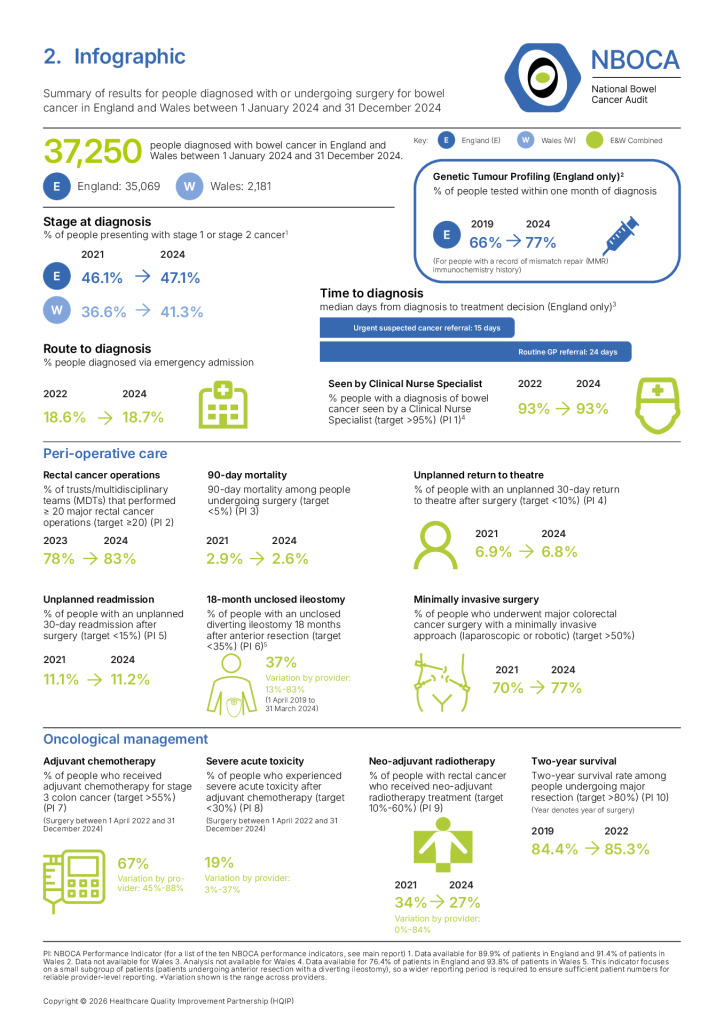
Approximately one-third of people have an unclosed diverting ileostomy [temporary stoma] 18 months after anterior resection, meaning that fewer than 40% of NHS trusts/MDTs met the local target
The proportion of people aged under 50 diagnosed with bowel cancer increased from 6.3% in 2021 to 7.6% in 2024, adding to concerns about rising rates of early-onset bowel cancer. These patients were more likely to present as emergencies and, with advanced disease, were disproportionately represented among socioeconomically deprived populations. Improving treatment pathways and outcomes for this patient group remains an important focus of this audit.
The report highlights continued progress in several areas of bowel cancer care, alongside persistent variation in practice and outcomes. Peri-operative outcomes remain strong overall. Ninety-day mortality following major bowel cancer resection was 2.6% in 2024, and two-year survival after major resection has improved to 86.4%. However, people undergoing emergency surgery continue to have substantially worse outcomes, with 90-day mortality more than six times higher than after elective surgery.
A major area of concern remains ileostomy closure after rectal cancer surgery. Only 37% of NHS trusts met the target for timely closure, with rates of unclosed ileostomy at 18 months ranging from 13% to 83%. The audit has therefore launched the “Close It Quick” quality improvement initiative to address this persistent problem. Additionally, substantial variation remains in adjuvant chemotherapy use for stage 3 colon cancer and neo-adjuvant radiotherapy for rectal cancer.
Recommendations include:
- Improve timely ileostomy closure after anterior resection, e.g.by participating in quality improvement initiatives including the “Close It Quick” collaborative
- Increase appropriate use of adjuvant chemotherapy in stage 3 colon cancer
- Optimise rectal cancer pathways, including radiological staging and use of neo-adjuvant therapies
- Improve genomic testing
- Ensure timely treatment decisions following diagnosis, regardless of referral route.