


10 Sep 2026
Based on data between 1 January 2023 and 31 December 2023 in England, and 1 January 2024 and 31 December 2024 in Wales, this report assesses diagnosis, treatment, toxicity and outcomes for people with non-Hodgkin lymphoma (NHL). It found that emergency presentation remains common, while delays and treatment toxicity concerns remain.
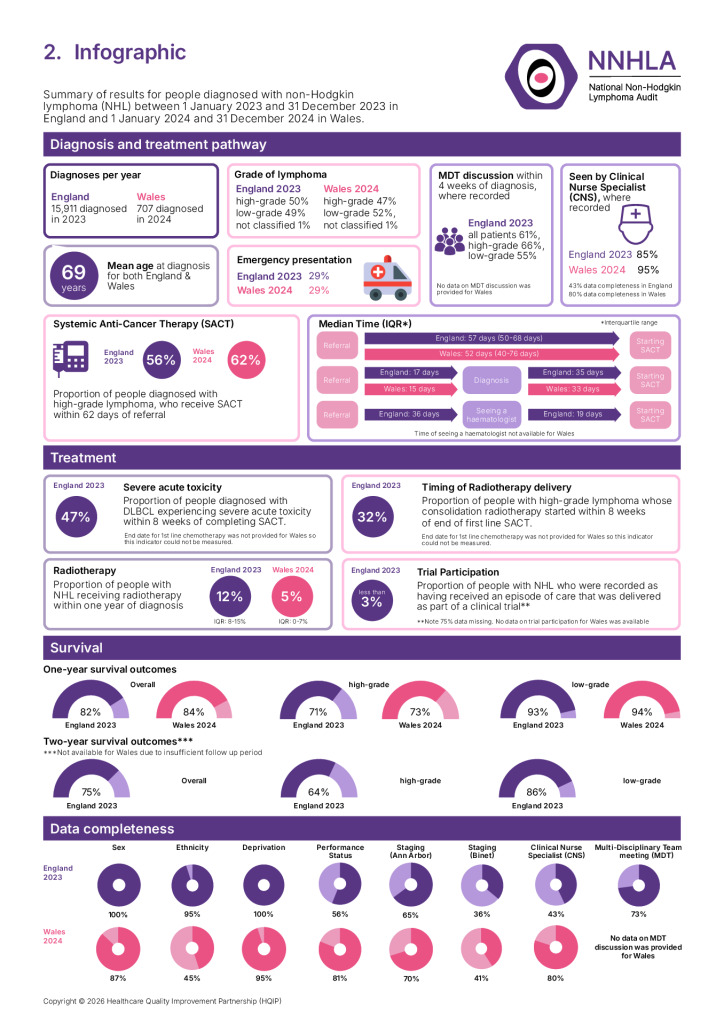
29% of people with NHL presented as an emergency; survival was substantially poorer for the people in this group
The report states that two-year survival was around 70% for all NHL cases in England, reducing to around 60% for high-grade cases and around 84% for low-grade cases in England. It also found that 47% of diffuse large B‑cell lymphoma (DLBCL) patients experienced severe acute toxicity after first-line treatment.
Other key findings include:
- When recorded, over half of people with NHL presented with stage 4 disease in both England and Wales, except chronic lymphocytic leukaemia (CLL), where the majority presented at the earliest stage.
- Around 60% of people with NHL in England were discussed at an MDT within 4 weeks of diagnosis, with performance declining over time, indicating the need for action to ensure timely MDT discussion for all newly diagnosed cases, particularly those with high-grade disease.
- 56% and 62% of people with high-grade lymphoma started systemic anticancer therapy (SACT) within 62 days of referral in England and Wales respectively. The longest median time intervals within the pathway were from referral to seeing a haematologist (36 days), highlighting opportunities to reduce system-level delays.
- The majority of people with high-grade lymphoma received an acceptable first-line SACT regimen, reflecting generally good adherence to recommended treatment pathways.
- Only around a third of people with high-grade lymphoma who were due to receive radiotherapy following first line SACT started radiotherapy within 8 weeks, with delays worsening over time.
The report also includes recommendations to: reduce emergency presentations; shorten delays; improve radiotherapy timeliness; increase trial participation; and monitor toxicity.
Stay up-to-date: For notifications of future reports from HQIP, sign up to our mailing list.