
- National Audit of Primary Breast Cancer (NAoPri),
- National Cancer Audit Collaborating Centre (NATCAN)


10 Sep 2026
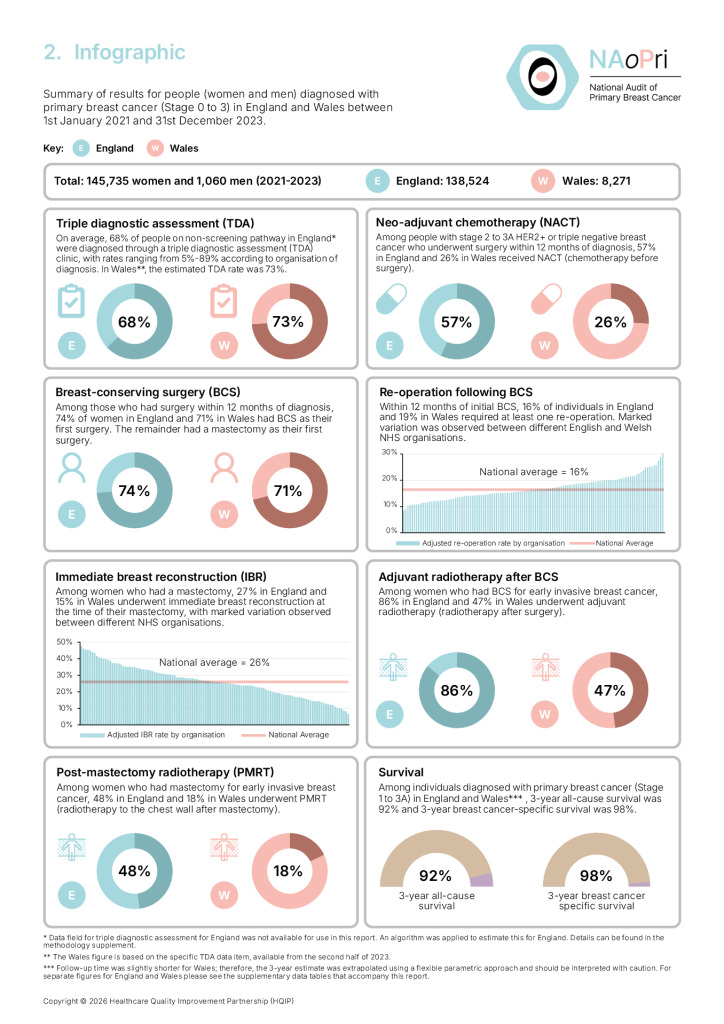
This report assesses the quality of care for people diagnosed with primary breast cancer in England and Wales between 2021 and 2023. Overall, 67.4% of people diagnosed outside breast screening were recorded as diagnosed through triple diagnostic assessment (TDA) clinic, with rates ranging from 5.3% to 89.3% according to organisation of diagnosis.
Triple diagnostic assessment in a single visit, a key tenet of breast cancer service provision, was received by roughly 70% of newly diagnosed individuals, but rates varied substantially across NHS organisations
Since 2018, neoadjuvant chemotherapy has been recommended for people with stage 2A to 3A breast cancer, particularly those with HER2-positive or triple-negative disease. This report found increased use of NACT over the last decade, with 56% of people with stage 2 to 3A triple-negative or HER2-positive breast cancer receiving NACT. However, variation in practice remains between NHS organisations.
Other key findings include:
- Across England and Wales, 74.0% of women with early breast cancer (stage 0 to 3A), underwent breast-conserving surgery (BCS) as their first operation within 12 months of diagnosis. Adjusted BCS rates varied between NHS organisations, ranging from 59.1% to 90.3%.
- Across England and Wales, just over a quarter of women undergoing mastectomy had immediate breast reconstruction. Rates of immediate breast reconstruction (IBR) have gradually recovered since the COVID-19 pandemic. Adjusted IBR rates between organisations varied from 5.9% to 46.8%.
- Almost 5,000 people annually in England and Wales required reoperation following breast-conserving surgery, equivalent to around 1 in 6 people. Reoperation rates varied substantially between units, ranging from approximately 1 in 13 in units with the lowest rates to 1 in 3 in those with the highest rates.
- Among people diagnosed between 2021 and 2023, 84.8% of those undergoing BCS for invasive breast cancer received adjuvant radiotherapy, while 46.9% of those undergoing mastectomy. Radiotherapy use decreased in people over 70 years old and varied between organisations.
The report includes recommendations to: improve access to TDA; review breast-conserving surgery rates; reduce reoperations; improve reconstruction access; and review neoadjuvant chemotherapy pathways.
Stay up-to-date: For notifications of future reports from HQIP, sign up to our mailing list.