
Congratulations on your engagement!
17 Jan 2023

How can we involve patients to improve healthcare?
Kim Rezel, Head of Patient and Carer Engagement, HQIP
Has the way we engage with patients, carers, people and communities changed? Well, the first thing to say is that I hope so! There are some great examples of best practice across health and social and community care, but they’re not widespread. So, how can we learn from these exemplars and what are the reasons and benefits behind engaging with patients, carers, people and communities?
When I first started working in the area of ‘service user involvement’ it was in social care, and the focus was on service users advocating to be involved in their own long-term treatment plans, and having a role in improving the services they use. On moving into healthcare – and specifically quality improvement (QI) – I realise that the same role can apply to patients and carers. However, we can go even further; helping patient advocates by giving them the knowledge, data and resources to improve their own care, and champion improvements, both locally and nationally.
Being involved in improving the quality of our care and services makes me feel like I’m making a difference”
We can ask the question ’what are the areas of concern for you?’ and incorporate their responses into national clinical audits, so that the results support patient champions on the ground. Their involvement ensures that the services provided are meaningful to those who use them, and it enriches the work we do. And this is mutually beneficial. Adrian Hardy, a member of HQIP’s Service User Network (SUN) comments: “Being involved in improving the quality of our care and services makes me feel like I’m making a difference for not only myself but for other patients and carers. I believe that my experience brings a relevance to what could otherwise be considered as meaningless numbers. It can also ensure that recommended actions have a real impact on patient care and outcomes.”
In fact, there are a number of well-documented reasons as to why it’s important to work with the people and communities that we serve. The NHS England statutory guidance Working in partnership with people and communities builds on HQIP’s guide to patient and public involvement in quality improvement regarding the benefits of involvement, namely:
- Improved health outcomes – Ensuring that the care provided meets people’s needs can improve both experience and outcomes. We all have knowledge and skills to contribute to our own health and wellbeing, and working in partnership with service users contributes to shared aims that meet the needs of the communities we serve. This is particularly relevant in reducing health inequalities.
- Value for money – Engaging people to design the care and services they use will more effectively meet their needs, and is therefore a better use of NHS resources. This improves health outcomes, reducing the need for additional care or treatment because needs weren’t met the first time around.
- Better decision-making – When insight from local people is used alongside financial and clinical information to inform the case for change, it adds practical ‘weight and context’ to data and fills gaps through local intelligence and knowledge.
- Improved quality and safety – Community engagement results in services that are designed and delivered more appropriately, and personalised to meet needs of local people (you can’t make the right changes without their insights). It also improves safety by giving people a voice to raise problems which can be addressed early and consistently.
- Accountability and transparency – Organisations should be able to explain how decisions are made and how people’s views have been taken on board. Getting patients involved in governance helps to make the service providers accountable to communities.
- Participating for health – Involving patients can reduce isolation, increase confidence, and improve wellbeing. Involvement in your own care can be the start of wider involvement at service or organisational level, and can even lead to employment in services. Being part of a community and in control is good for our health.
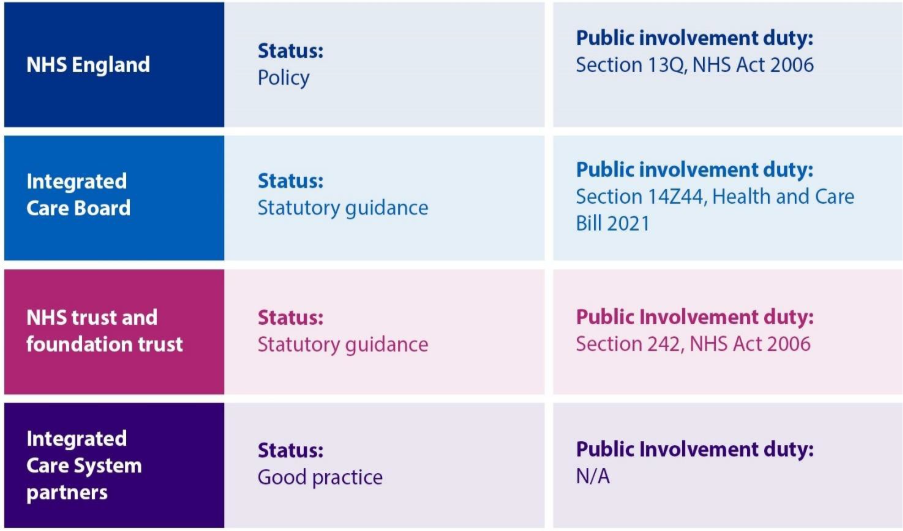
All of these benefits encourage patients to speak up and legitimises their views, but we must then ensure that their voices are heard and actions followed. If that isn’t enough reasons, we also have a legal duty to engage with patients, people and communities. In fact, failure to do so risks legal challenge and substantial costs, not to mention damaging relationships between providers and the communities they serve. The following table is reproduced from NHS England’s Working in partnership with people and communities guidance and is a useful reminder of our duty of care in relation to public involvement:
So, that’s the ‘why’, but what about the ‘what’? Let’s bring our attention back to those examples of best practice we referred to at the beginning. For some fantastic case studies, take a look at the Patient Experience Network National Awards or the NHS England resources. Here are a few choice examples that relate to recent trends in healthcare…
Firstly, healthcare inequalities. We are more aware than ever that people experience health care differently, so more effort is being made to ensure that people from marginalised communities are involved to support better understanding of how all people experience care.
SPOTLIGHT: Healthcare inequalities – The Health and Wellbeing day for the Black community in Lambeth offered residents the chance to receive COVID-19 and flu vaccinations, key health checks, and important advice and support – all at an event aimed at bringing people together. Music, food stalls and family activities kept things fun and feedback from the event in October 2021 was so positive that the organisers hope to do it regularly.
Next, there’s digital inclusion. While there have been some real benefits to moving online and being able to receive healthcare services without leaving our homes, we need to ensure that those who are digitally excluded are taken into consideration.
SPOTLIGHT: Digital inclusion – Through the Picture This project, the Mental Health Foundation created fun ways to teach basic IT skills to people through art and drawing. Focusing on training people over 65, the project teaches them how to send an e-mail, how to connect with family and friends remotely and attend events, how to use Facebook and other social media channels, and how to order shopping online. These skills enhanced social interactions for participants, and supported mental wellbeing.
Then, there is a growing trend around reward and recognition. Much involvement work offers out-of-pocket expenses only (which is the least that should be done when working with volunteers). However, there is a trend towards changing how we pay people for their time eg many organisations have offered varied honorariums for certain types of work. Guidance from the National institute for Health and Care Research (NIHR) from 2021 should be considered in the project design.
HQIP’s programmes have seen some fantastic examples of involving patients and carers. The National Asthma and COPD Audit Programme (NACAP, now NRAP), is an example that has demonstrated a genuine collaborative approach to working with charities, forums and patient panels. NACAP asked their patients and carers about what matters to them, and produced the following resources to empower patients of all ages to know what to expect from their care (which, in turn, improves the quality of the care they receive):
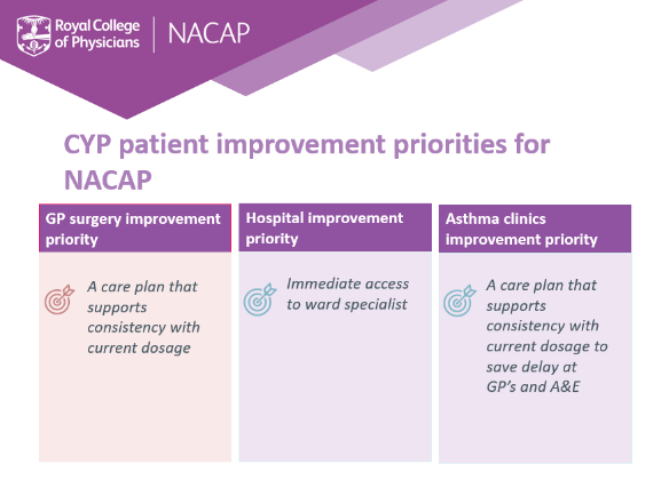
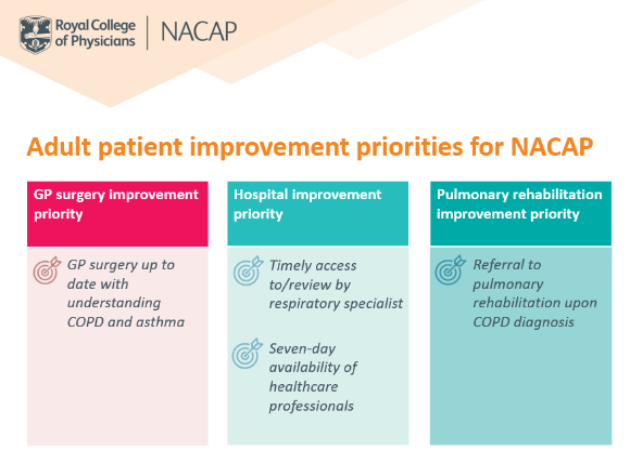
Finally, I want to finish with a few words from a patient (this is all about patients and carers, after all!). This quote, from a patient representative in the NACAP award entry, sums up perfectly why we should put patients and carers at the heart of healthcare design, and reminds us that their health is the very reason for the service in the first place: “The surgery is my first port of call when my asthma is playing up, and I need to be sure that the doctors and nurses are going to be able to give me the best care possible. I want to get the most I can out of life despite having a lung condition, and I know that if the GPs are up to speed with new interventions and treatments, I have a better chance of doing so”.
How to engage patients and carers
How do we go about effectively involving patient, carers and communities in the healthcare services they receive? In HQIP’s guide Developing a patient and public involvement panel in quality improvement, we outline some simple steps to engage communities (and this can be used as the basis for an action plan):
Leadership buy-in
- Make sure you have all your ‘ducks in a row’ before taking a proposal/business plan to senior teams.
- Consider what you want to involve people in.
- Draft out the process of how the involvement will work.
- Consider what it will cost.
- Talk to patients and other key stakeholders, and ask what they might want from this involvement.
Recruitment
- Where will you find people to involve?
- What communication channels already exist that you can use initially?
- Where can you share information (posters/bulletins/leaflets/events) that will enable you to reach out to wider communities?
- Again, talk to people; what will people want and gain from being involved, and ask community leaders to support recruitment.
Training – it’s very important to measure the impact of patient and carer involvement to demonstrate success and identify lessons learned for:
- the project
- the team
- the people involved, and
- for the long term (can the project be repeated or extended to other areas of work?).
Patient and Carer Engagement at the Healthcare Quality Improvement Partnership – HQIP is committed to involving, engaging and informing patients and their representative organisations throughout our work. We ensure that patients and carers are reflected in all aspects, from commissioning programmes through to resource development: Find out more about how HQIP engages patients.
This article was originally featured in HQIP’s quality improvement magazine, CORNERSTONE volume 1.
Other news

My breast cancer story: From heartbreak to hope
As part of Breast Cancer Awareness Month, patient representative, advocate and author of ‘Why Me?...
CAAW26 Equity and Patient Involvement award winners announced
Find out who won the Equity and Patient Involvement category of the Excellence in Clinical Audit Awards 2026, part of Clinical Audit Awareness Week.
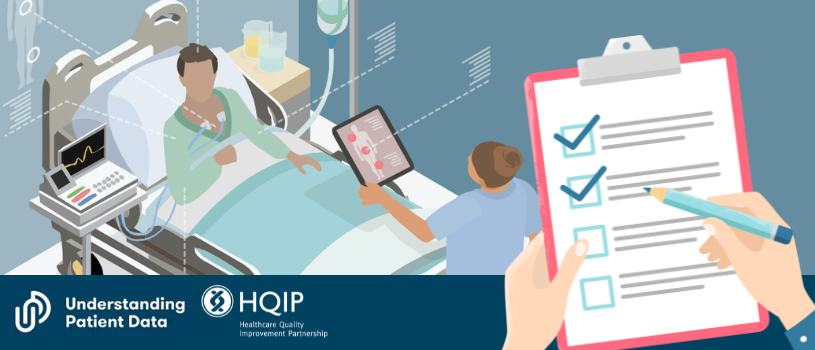
Survey now open: Inform our system analysis of Patient and Public Involvement and Engagement (PPIE) in Health Data
Patient and Public Involvement in health data - survey now open until Monday 18 May 2026.