

HQIP-commissioned PICANet data reveals inequalities in children’s intensive care
11 Jul 2025
New research published in The Lancet Child & Adolescent Health has used data from the Paediatric Intensive Care Audit Network (PICANet), commissioned by HQIP, to highlight inequalities for children admitted to intensive care in the UK. It found that that children of minority ethnicities and those living in poverty were disproportionally affected following admission to paediatric intensive care units (PICUs).
Informed by 14 years of national data, the study found that these groups were more likely to die after admission. More specifically, it showed that children living in areas with higher poverty were more severely ill on arrival to intensive care, while those from non-White ethnic backgrounds were more likely to need to stay longer in intensive care and to be readmitted unexpectedly after discharge.
Children of minority ethnicities and those living in poverty were disproportionally affected following admission to paediatric intensive care
These findings underline an urgent need for targeted interventions in intensive care for children. By analysing this data, health care providers and policy makers can gain a deeper understanding of what is happening, and focus on improving the care provided to all children. As such, studies like these bring the importance of national clinical audit to the fore. Chris Gush, HQIP’s CEO adds: “Every child in intensive care represents a family in crisis, and this data shows that some face even greater challenges than others. National clinical audit helps us see where change is most needed, giving us the evidence to act with compassion and focus. It’s about making care fairer and outcomes better for every child, no matter their background.”
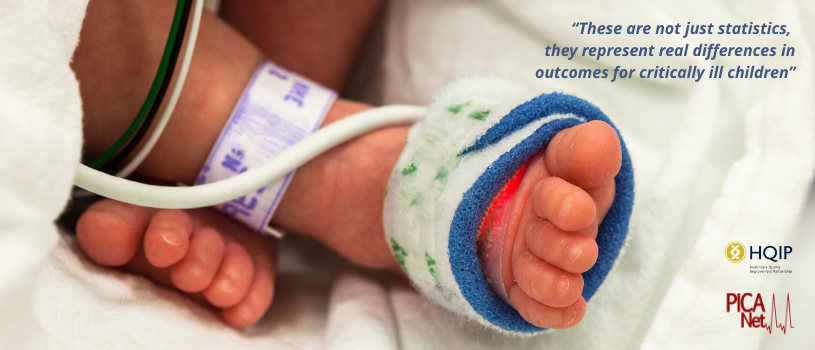
Armed with this information, policymakers and healthcare leaders have the opportunity to improve access to healthcare, and deliver urgent and sustained action to improve care and reduce child deaths. This national-scale evidence is especially important, given that 4.5 million children are now growing up in poverty in the UK*. One of the study leads, Associate Professor Sarah Seaton, PICANet and the University of Leicester, expands on this point: “Since paediatric intensive care offers the highest level of support for the sickest children, we must act with urgency. These are not just statistics – they represent real differences in outcomes for critically ill children.”
PICANet is a collaboration between the Universities of Leeds and Leicester, established to improve how we treat and care for children in critical care. It collects data from a range of paediatric critical care providers, auditing the quality of care delivered against relevant standards including those from the Paediatric Critical Care Society (PCCS). Its value to the healthcare community is far-reaching. While this study focused on UK-based PICU admissions from PICANet, the findings have international relevance – highlighting the need for health systems globally to consider the social context in which critically ill children present for care.
Read the paper in full
Hannah K Mitchell, Sarah E Seaton, Khurram Mustafa, Gareth A L Jones, Hannah Buckley, Peter Davis, Christopher Leahy, Richard G Feltbower, Padmanabhan Ramnarayan; Contribution of ethnicity and deprivation to paediatric critical care outcomes in the UK, 2008–21: a national retrospective cohort study, The Lancet, July 2025, https://www.thelancet.com/journals/lanchi/article/PIIS2352-4642(25)00156-7/fulltext.
Copyright: © 2025 The Author(s). Published by Elsevier Ltd. This is an Open Access article under the CC BY 4.0 license.
Further information
- National paediatric critical care report (PICANet): PICANet’s 2024 State of the Nation report summarised paediatric critical care activity within designated Level 3 paediatric intensive care units (PICU) and Specialist Paediatric Critical Care Transport Services in the UK and Republic of Ireland between 2021 and 2023. It found that there were 18,498 admissions to PICU in 2023, averaging around 50 per day, with respiratory admissions being the most common primary diagnosis (making up just under 30% of all PICU admissions in 2023). Read in full: 2024 PICANet report.
- Further information about PICANet: www.hqip.org.uk/a-z-of-nca/paediatric-intensive-care-audit-picanet (scroll to the bottom of the page for all PICANet reports).
- PICANet is part of a wider programme of audits and outcome reviews (NCAPOP), commissioned by HQIP, on a range of clinical disciplines, from asthma to vascular care: All HQIP-commissioned reports.
Other news

New resources published May 2026
We are pleased to announce that the following NEW RESOURCES to support improvement in healthcare,...

Mental health: Using evidence to improve care
HQIP’s CEO, Chris Gush, explains why data is pivotal to the national review of services...

Measure, Learn, Improve: Audit data and continuous learning in the NHS
Across the NHS, clinicians and teams collaborate every day to provide safe, effective, and compassionate...