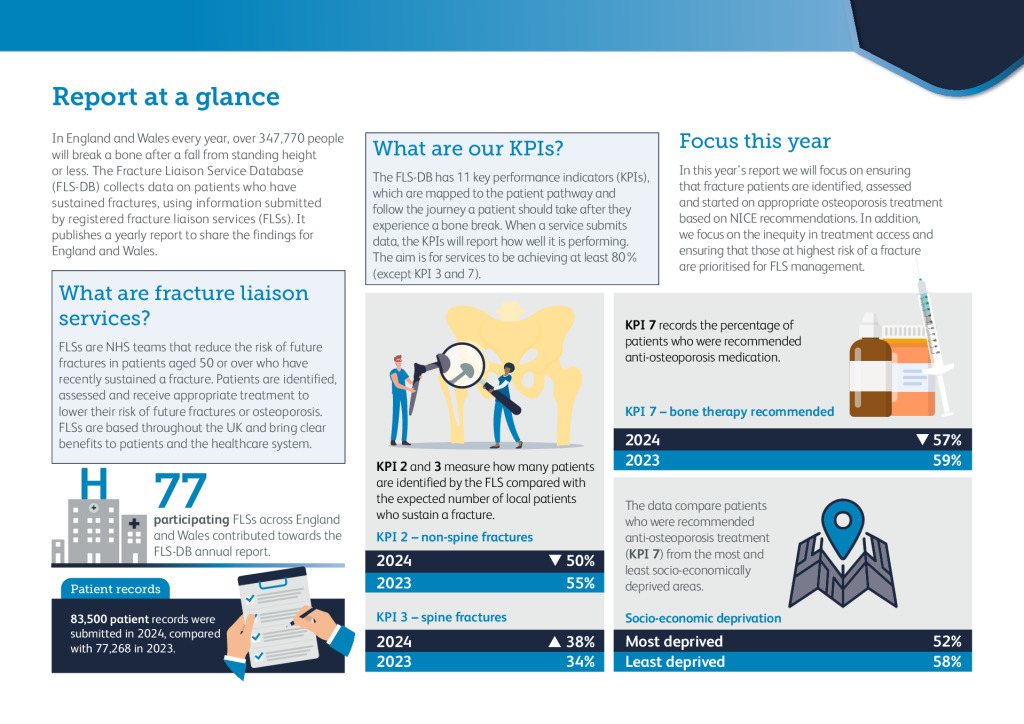


The Fracture Liaison Service Database (FLS-DB), part of the Falls and Fragility Fracture Audit, has published a new report: Steps to fracture liaison service effectiveness: importance of treatment recommendations. Based on 2024 data, it focuses on whether fracture patients and those at highest risk of osteoporotic fractures are prioritised and provided with appropriate treatment to prevent future fractures.
Audit participating services represent 63% coverage of all acute hospitals in England and Wales that treat adults with fragility fractures
This report contains a number of key messages, in addition to five recommendations for improvement, calling for Integrated care boards (ICBs) and Welsh health boards to support FLSs to:
- Increase patient identification, ensuring that both spine and non-spine fracture caseload identification is 80% or above
- Ensure that a greater proportion of patients who have sustained a fracture receive a bone health assessment within 90 days
- Incorporate the NICE CG2491.3 stage 1 falls assessment questions into all FLS assessments with clear signposting post assessment
- Have the capability and capacity to deliver bone therapy within NICE guidelines
- Have sufficient capability and capacity to provide adequate care to those at the highest risk of a fragility fracture.
In addition, this report highlights the inequity in treatment access among FLSs, despite the presence of NICE guidelines on bone treatment. Given the NHS prioritisation for prevention, FLSs are encouraged to review their local pathways for high fracture risk patients. They are also encouraged to utilise NHS-recommended quality improvement (QI) tools to improve service delivery and case finding of adults with higher risk fractures.
Read the full report: You can view the report by clicking the button below.
Stay up-to-date: For notifications of future reports from HQIP, sign up to our mailing list.
More information: For further information and related reports, go to the programme page on this website.