


9 Oct 2025
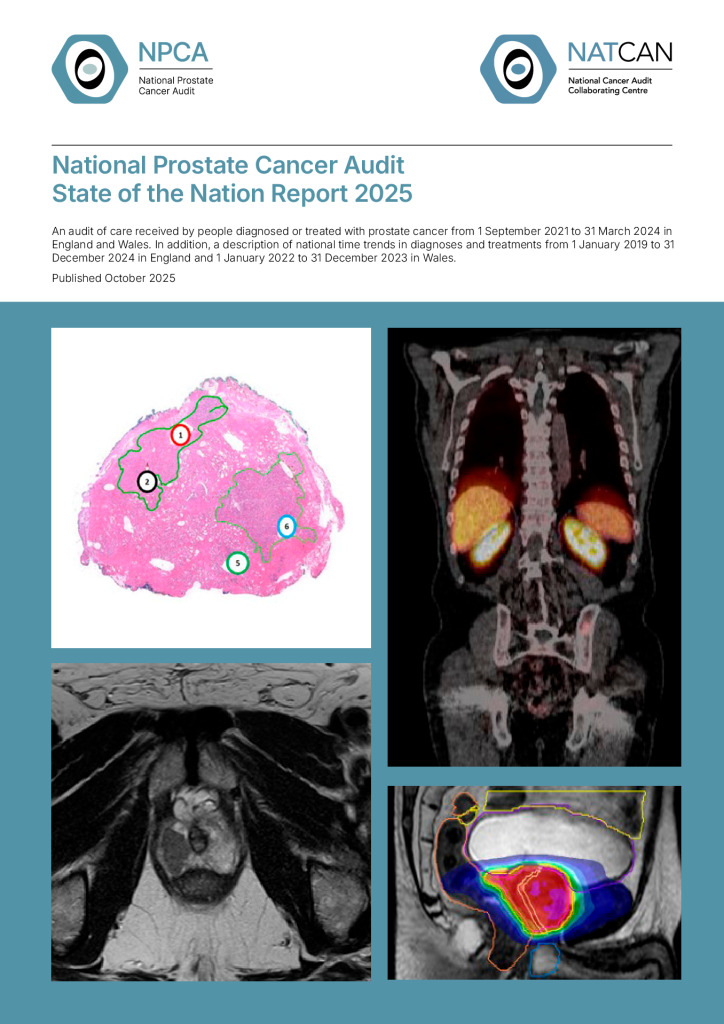
The National Prostate Cancer Audit (NPCA), part of the National Cancer Audit Collaborating Centre (NATCAN), has published a report on care received by people diagnosed or treated with prostate cancer from 1 September 2021 to 31 March 2024 in England and Wales.
The continued expected increase in the number of men diagnosed with prostate cancer will lead to a rise in the burden of diagnosis, investigations and clinical workload
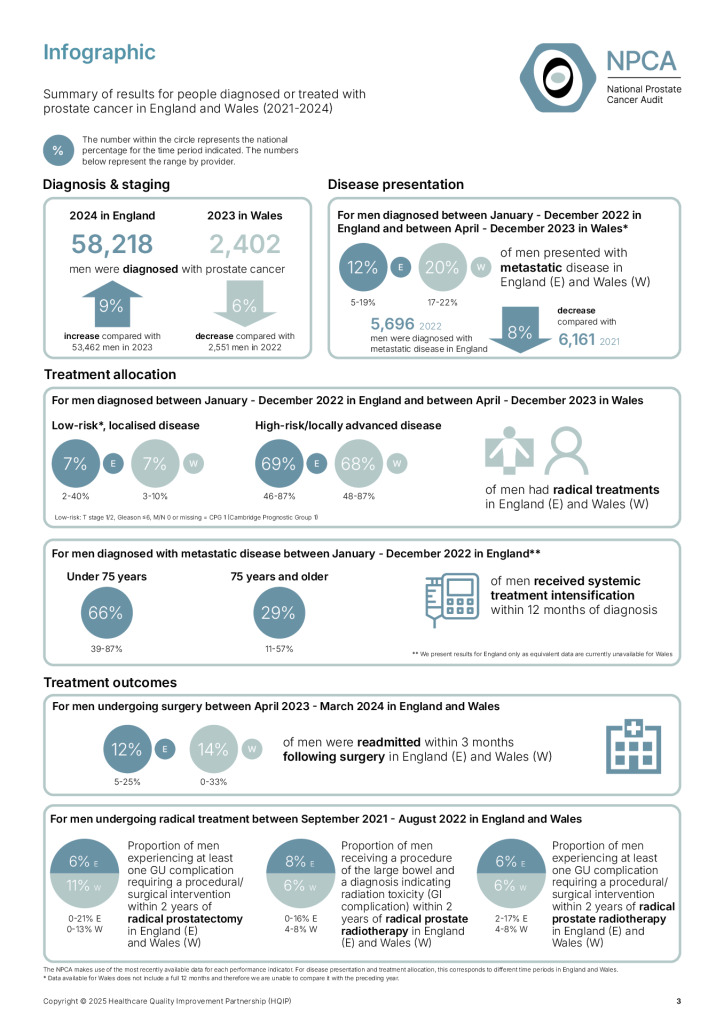
This report found that there was an increase in the overall number of prostate cancer diagnoses in 2024 in England, compared to the previous year. It also found that the proportion of men potentially receiving over- and under-treatment remains stable year-on-year. However, there continues to be wide variation in the use of appropriate treatment between different hospitals. For example, 69% of men in England, and 68% in Wales, with high-risk or locally advanced disease have radical treatment – but hospitals differ in this proportion from 46% to 87%.
In addition to a recommendation that aims to improve data quality, this report makes four clinical recommendations:
- Investigate why men with high-risk, locally advanced disease are not considered for radical treatment and aim to reduce that proportion, if appropriate
- Review variation between providers in rates of genitourinary/gastrointestinal (GU/GI) complications and 90-day readmission rates
- Decisions regarding diagnosis and treatment should consider life expectancy and co-morbidity, balancing the treatment benefits and risks, to ensure equitable care
- Better understand why men with newly diagnosed hormone-sensitive metastatic prostate cancer are not being treated with systemic treatment intensification therapy.
Read the full report: You can view the report by clicking the button below.
Stay up-to-date: For notifications of future reports from HQIP, sign up to our mailing list.