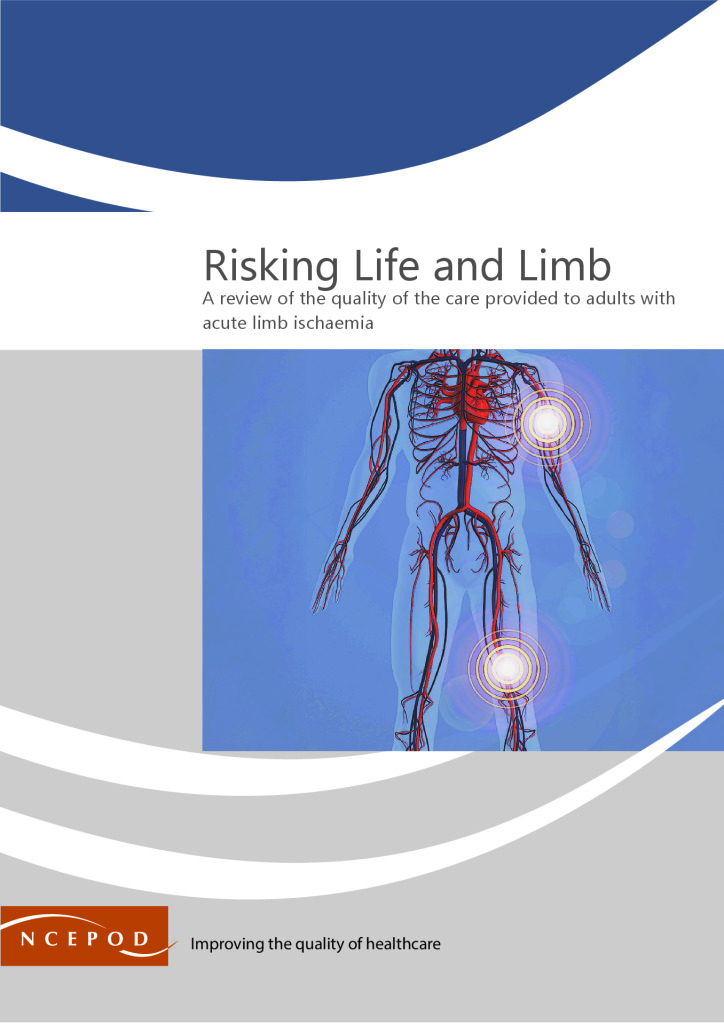


The National Confidential Enquiry into Patient Outcome and Death (NCEPOD) has published Risking Life and Limb, a review of the quality of the care provided to adults with acute limb ischaemia (ALI)*.
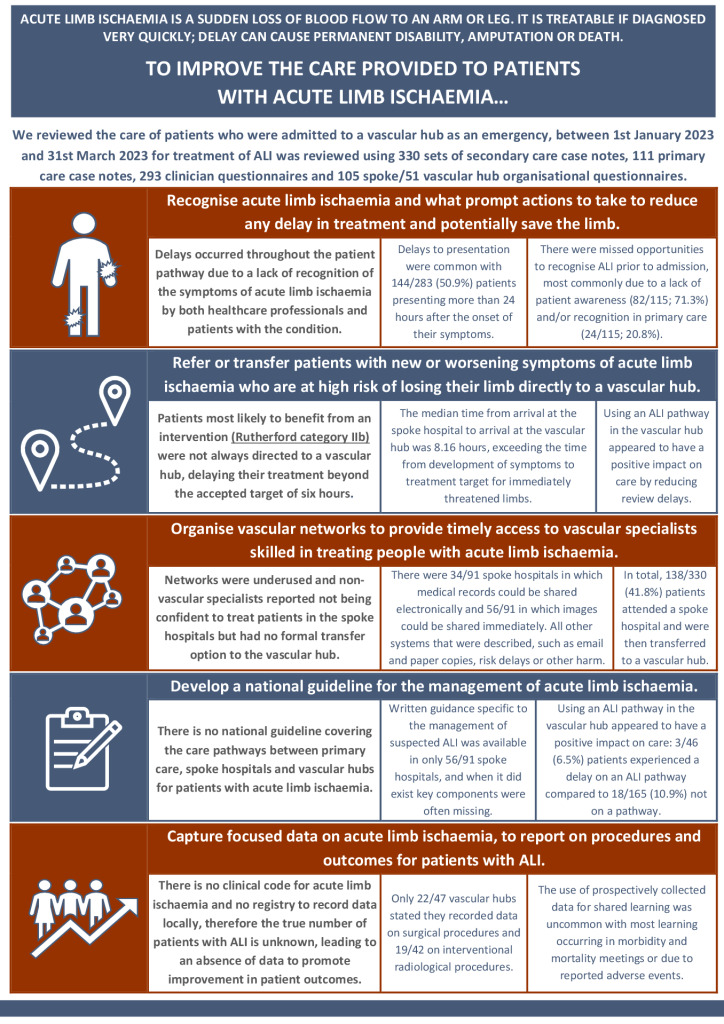
Delays occurred due to acute limb ischaemia not being recognised and the underuse of vascular networks
The study found that the overall quality of care was good for 52.8% of patients, with room for improvement in the clinical and/or organisation of care for 47.2%.
Delays were identified as a key area of concern in improving ALI care: 49.4% of patients who had a procedure experienced a delay at some stage between their initial presentation and first procedure. Excluding the patient-related delays in presenting, 46.2% patients were delayed at some point in the pathway. National data collection for ALI would aid benchmarking and monitoring of the delays occurring throughout the entire ALI pathway. This could also focus resources as well as educational opportunities.
Use of vascular hubs were identified as contributing to delays in patient presentation, initial assessment, recognition of ALI, and imaging for ALI. Additional challenges included a limited number of vascular surgical beds, the lack of a hybrid theatres, and too few interventional radiologists.
*ALI is a sudden loss of blood flow to an arm or leg
Read the full report: You can view the report by clicking the button below.
Stay up-to-date: For notifications of future reports from HQIP, sign up to our mailing list.
More information: For further information and related reports, go to the programme page on this website.