

This report from the National Vascular Registry (NVR) provides an audit of care received by people who had vascular procedures during 2024 in NHS hospitals in England, Wales, Scotland and Northern Ireland, and highlights the continuing challenges experienced by NHS vascular services.
The reduction in the number of major amputations is encouraging, although the reasons for this are unclear
The times from vascular assessment and admission to treatment for lower limb revascularisation, abdominal aortic aneurysm (AAA) and carotid endarterectomy (CEA) remain longer across the NHS – with only a minority of vascular units managing to treat more than half of their patients within target time scales. More positively, the adverse outcomes reported by vascular units remain low, and demonstrate the safe delivery of vascular interventions. Also, the mix of vascular procedures continues to change. Over the last three years, the number of procedures for infra-renal AAA repair and repair of ruptured AAA have decreased, along with the number of carotid endarterectomies, which may reflect a reduction in the incidence of the indications for these procedures.
In addition to other key findings, this report contains five key recommendations to support improvement:
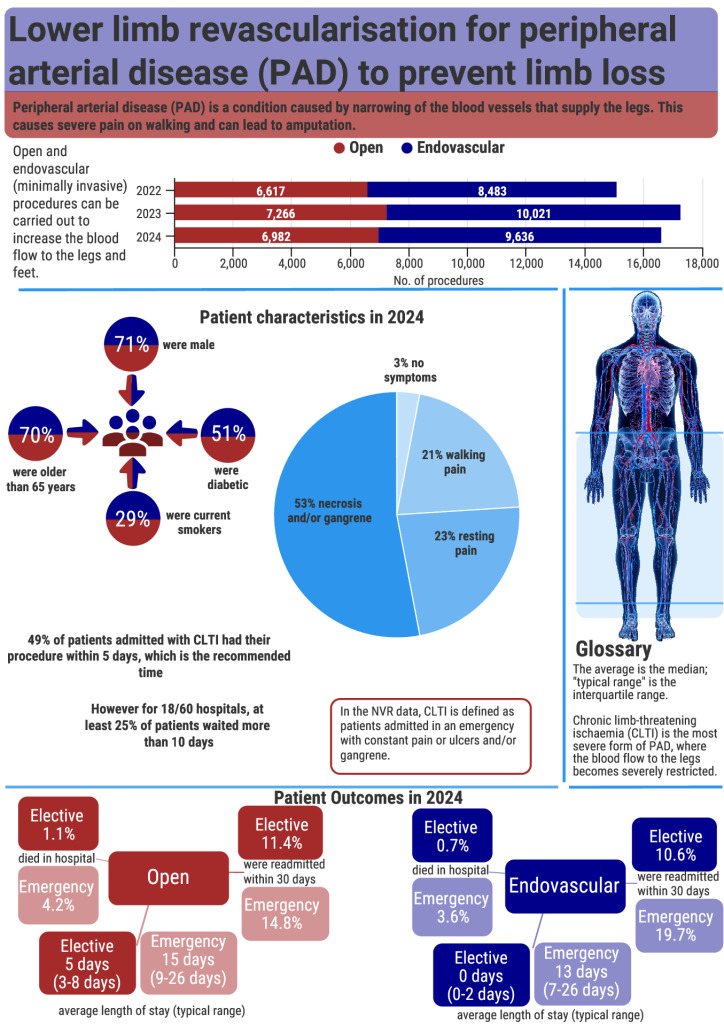
- Evaluate strategies for reducing long delays to revascularisation for people with chronic limb threatening ischaemia (CLTI)
- Ensure measures to remove causes of avoidable delay are prioritised for people requiring elective aortic aneurysm repair and CEA
- Examine coordination of vascular and supporting services so that people have timely access to major lower limb amputation
- Ensure there is coordinated multidisciplinary approach which enables seamless management of people with diabetes who require vascular interventions across primary and secondary care
- Accelerate review of network pathways and working arrangements across vascular surgery, interventional radiology and anaesthesia to ensure endovascular repair of ruptured aortic aneurysms is available for suitable patients.
Read the full report: You can view the report by clicking the button below.
Stay up-to-date: For notifications of future reports from HQIP, sign up to our mailing list.