

The NACEL 2025 Mental Health Spotlight Audit examines the quality of end of life care provided to adults who died from natural causes while receiving inpatient mental health care in England, Wales, and Jersey. Based on data from 54 organisations, 179 case note reviews and 597 staff surveys, the report highlights the unique challenges and opportunities associated with delivering end of life care in mental health settings, including the recognition of dying, access to specialist palliative care and the needs of people living with severe mental illness and dementia.
Recognising deteriorating health and the dying phase is essential for timely, person-centred end of life care
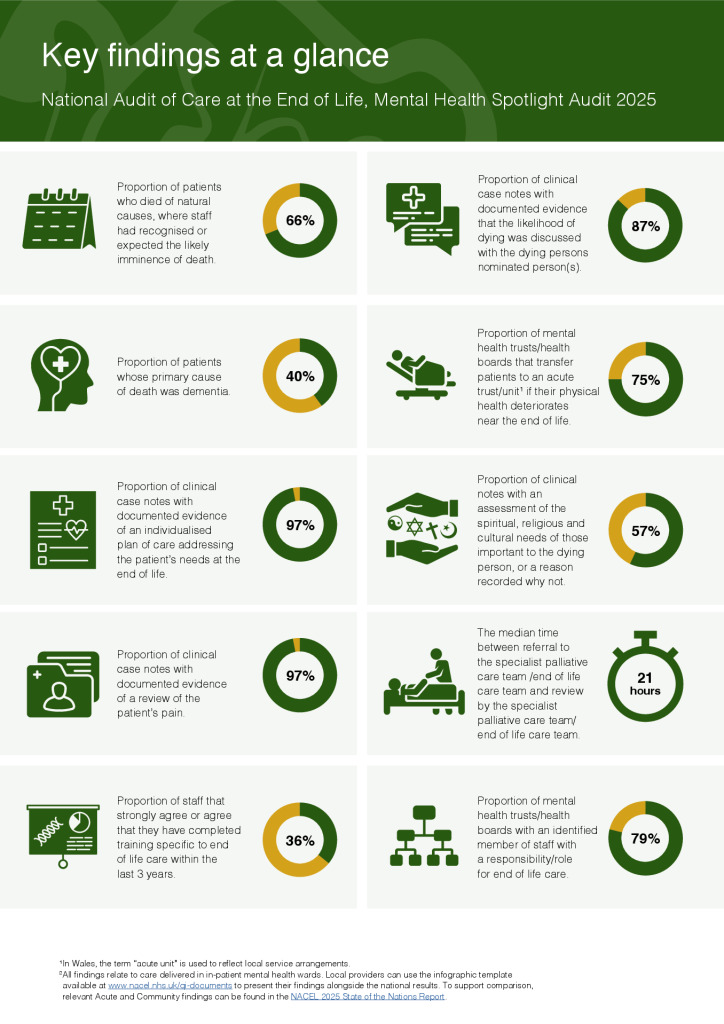
The audit found that staff recognised or expected death in 66% of patients who died from natural causes during their admission to a mental health inpatient ward. Once dying was recognised, communication with those important to the patient was generally good, with documented discussions about the likelihood of dying taking place in 87% of cases. Dementia was the most commonly recorded primary cause of death, accounting for 40% of patients included in the audit, highlighting the importance of high-quality end of life care for people with dementia in mental health settings.
Findings also demonstrate strengths in personalised care planning and symptom management. Ninety-seven per cent of patients had an individualised plan of care addressing their end of life needs, an increase from 82% reported in the previous Mental Health Spotlight Audit. Assessments of spiritual, religious and cultural needs were documented in 57% of cases, while 97% of patients had evidence of a review of their pain and 96% had hydration options reviewed during the last phase of life.
The report identifies opportunities to improve access to specialist support and workforce capability. While all participating trusts reported access to specialist palliative care services and 66% provided face-to-face specialist palliative care seven days a week, the median time from referral to specialist review was 21 hours, compared with three hours in acute and community hospitals. Only 36% of staff reported having completed end of life care training within the previous three years, and 21% of organisations did not have a designated lead for end of life care. The audit recommends stronger support for recognising dying, reducing avoidable transfers to acute hospitals, improving access to specialist palliative care, and ensuring every mental health trust has a named lead responsible for end of life care.
Stay up-to-date: For notifications of future reports from HQIP, sign up to our mailing list.