

This report from the Maternal, Newborn and Infant Clinical Outcome Review Programme, delivered by MBRRACE-UK, presents the latest findings and lessons learned regarding maternal deaths and severe maternal morbidity. The report focuses on haemorrhage, infection, neurological conditions, general medical and surgical disorders, and critical care, highlighting key areas for improving the safety and quality of maternity care across the UK and Ireland.
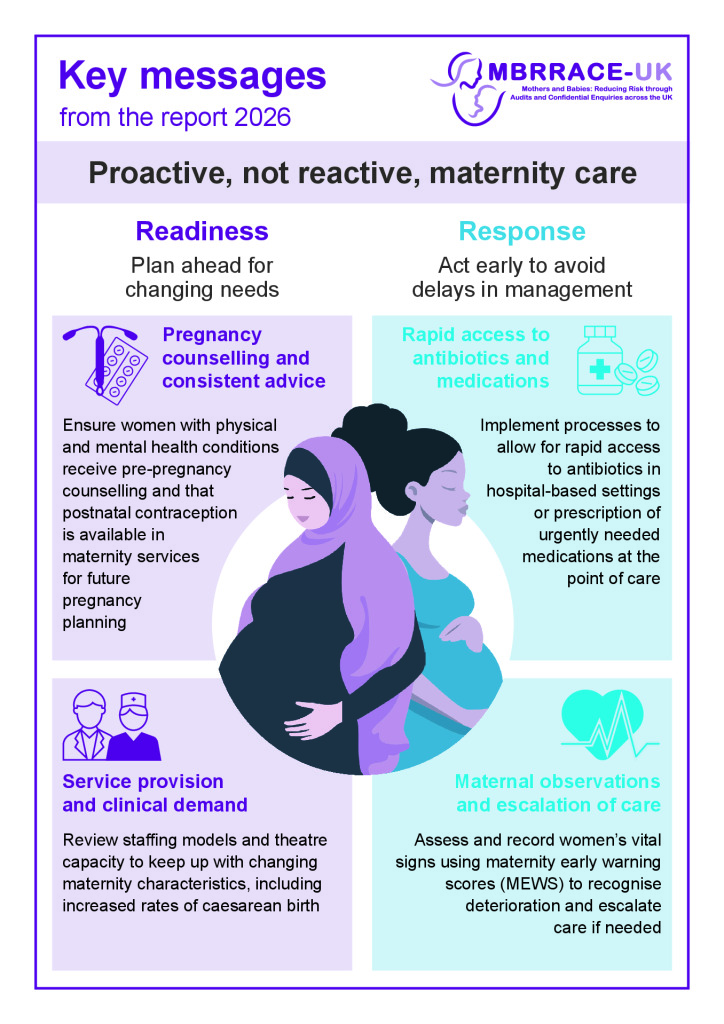
Service provision must keep pace with increasing maternal complexity and clinical demand with regular review of capacity across emergency triage, staffing and operating theatres
The programme found that 252 women died during pregnancy or up to six weeks after pregnancy in the UK between 2022 and 2024, equivalent to a maternal mortality rate of 12.8 per 100,000 maternities. Although there was no statistically significant change compared with the previous reporting period, maternal mortality remains around 20% higher than in 2009-11. Thrombosis and thromboembolism remained the leading cause of maternal death, followed by cardiac disease and psychiatric conditions. Maternal suicides also remained the leading cause of death occurring between six weeks and one year after pregnancy.
Persistent inequalities are a major theme throughout the report. Black women experienced a maternal mortality rate nearly three times higher than White women, while women living in the most deprived areas had almost double the mortality rate of women living in the least deprived areas. The report also highlights the growing influence of multiple disadvantages, including domestic abuse, mental health problems and substance use, among women who died. These findings reinforce the importance of safeguarding, personalised care and addressing wider determinants of health as part of maternity services.
Several national recommendations focus on improving maternity service capacity and access to timely care. The report calls for a review of theatre and workforce capacity planning to address increasing demand associated with rising maternal complexity and caesarean section rates. It also recommends ensuring rapid access to antibiotics for suspected sepsis, implementing processes for urgent prescribing when medication changes are required, enabling postnatal contraception to be prescribed and administered within maternity services, and strengthening multidisciplinary care for women with complex medical conditions. Across all areas of care, the report emphasises the need for proactive, joined-up working between specialties, consistent use of maternity early warning scores, and better communication across healthcare settings to improve outcomes for mothers and babies.
Stay up-to-date: For notifications of future reports from HQIP, sign up to our mailing list.