The National Oesophago-Gastric Cancer Audit (NOGCA) has published its latest annual report. Based on data from April 2018 to March 2020 in England and Wales, the report focuses on the care received by patients diagnosed with invasive epithelial cancer of the oesophagus, gastro-oesophageal junction (GOJ) or stomach, or high-grade dysplasia (HGD) of the oesophagus.
Based on 20,319 patients diagnosed with oesophago-gastric cancer between 2018 and 2022, the majority of whom were male. The report found that 13% of patients were diagnosed after an emergency hospital admission (a rate that has remained largely unchanged over the last five audit years). Other key findings include:
Patients with stomach cancer are more likely to be diagnosed following an emergency admission than patients with oesophageal cancer
Rates of 30- and 90-day mortality after curative surgery were within the expected range from the national average for all NHS surgical centres
87% of oesophageal cancer patients and 85.6% of stomach cancer patients survived at least one year after surgery, and
Among patients with nutritional data, the majority (79.9%) received dietetic support, while 20.1% were not seen by a dietitian – either because no dietitian was available (2.2%) or it was assessed that one was not required (17.9%).
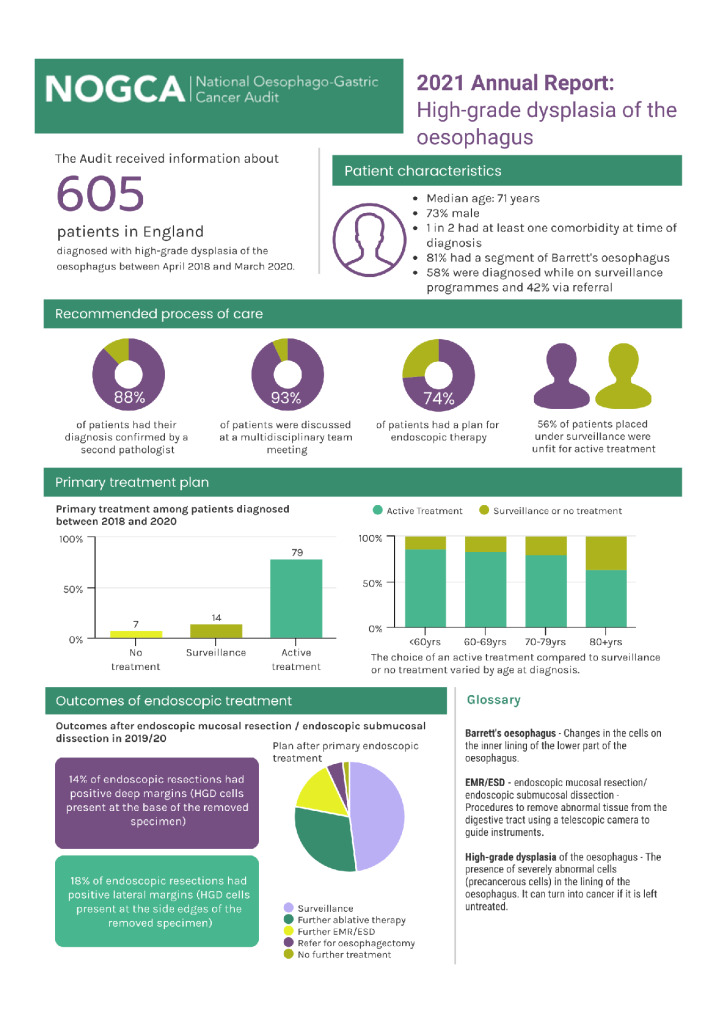
Data from 605 patients in England diagnosed with high-grade dysplasia of the oesophagus was also reported on, finding that 79% had a plan for active treatment (14% had a plan for surveillance with endoscopic follow-up, while 7% had no planned surveillance or active treatment).
The report goes on to make a number of recommendations including a call for Trusts and local health boards to identify ways to improve the time patients take from referral through to diagnosis and treatment, to support implementation of the OG cancer timed diagnostic pathway (NHS England 2019a).
Read the full report: You can read the report by clicking on the link below.
Stay-up-to-date: For notifications of future reports from HQIP, sign up to our mailing list.