

The National Confidential Enquiry into Patient Outcome and Death (NCEPOD) has published Recovery Beyond Survival, a review of the quality of rehabilitation care provided to patients following an admission to an intensive care unit.
My physical needs were just the start, but I soon came to realise that my cognitive function and mental health needed support too
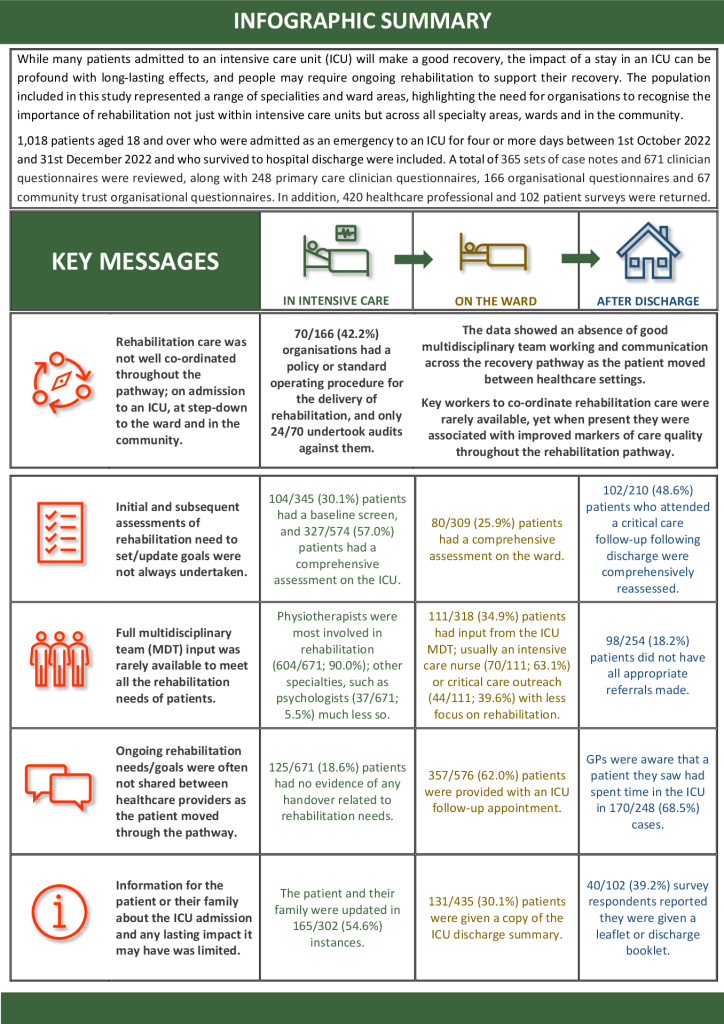
Based on 1,018 patients aged 18 and over who were admitted as an emergency to an ICU for four or more days between 1st October and 31st December 2022 (and who survived to hospital discharge), this report covers a range of specialities and ward areas, and identifies areas for improvement. Themes that emerge include the need for co-ordinated multidisciplinary care and good communication between professional groups, patients and their families. It also contains examples of excellent practice, such as early assessment for rehabilitation, the setting of short-term rehabilitation goals, the use of patient diaries, providing a leaflet on discharge with information about the availability of ongoing support, and the provision of follow-up appointments with the critical care team.
This report goes on to make recommendations to support national and local quality improvement initiatives:
- Improve the co-ordination and delivery of rehabilitation following critical illness at both an organisational level and at a patient level
- Develop and validate a national standardised rehabilitation screening tool to be used on admission to an intensive care unit
- Undertake and document a comprehensive, holistic assessment of the rehabilitation needs of patients at risk of morbidity
- Ensure that multidisciplinary teams are in place to deliver the required level of rehabilitation in intensive care units and across the recovery pathway
- Standardise the handover of rehabilitation needs and goals for patients as they transition from the intensive care unit to the ward, and ward to community services
- Provide patients and their family/carers with clear information.
Read the full report: You can view the report by clicking the button below. You can also find a set of resources based on this report on the NCEPOD website.
Stay up-to-date: For notifications of future reports from HQIP, sign up to our mailing list.