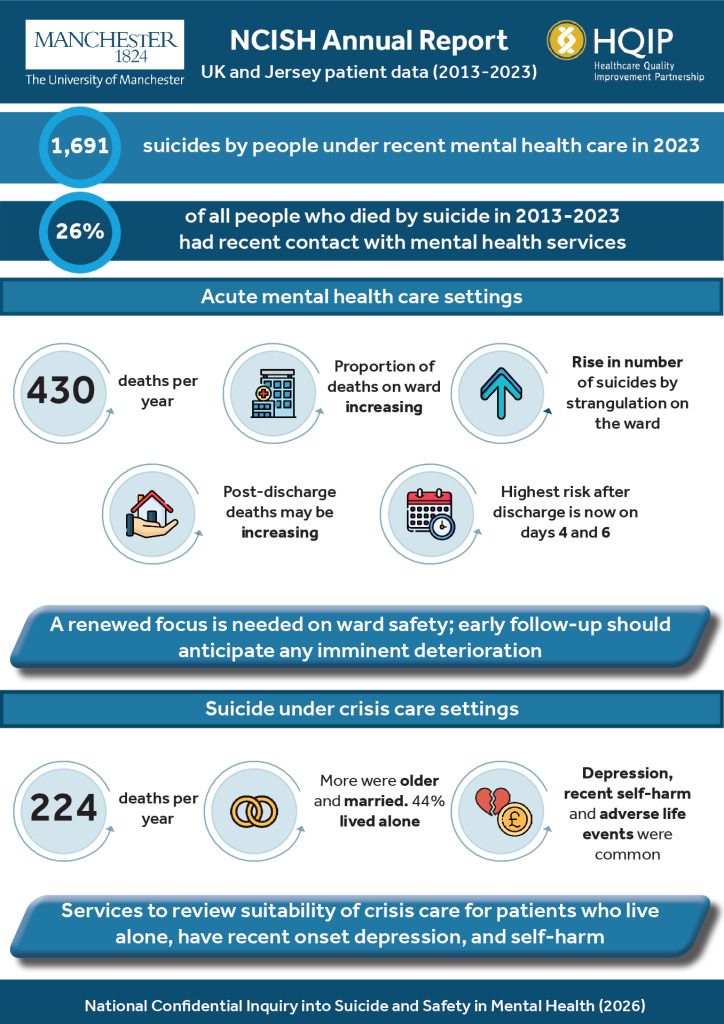


This latest report from the National Confidential Inquiry into Suicide and Safety in Mental Health (NCISH) found that there were 18,602 suicides by patients in the UK and Jersey over 2013-2023, an average of 1,691 deaths per year (26% of all general population suicides). Nearly half of all patients who died by suicide lived alone or were unemployed, and 17% had recently experienced serious financial problems. The majority (61%) had a history of self-harm, and nearly a third had self-harmed in the previous 3 months.
A renewed focus on ward safety is needed; early follow-up should anticipate any imminent deterioration
In relation to clinical care, there were 4,735 patients who died by suicide in acute mental health care settings, with an estimated 66 suicides by mental health in-patients in 2023 (around 4% of all patient suicides in that year). There were an estimated 205 deaths by suicide in the 3 months after discharge from mental health in-patient care in 2023, 12% of all patient suicides in that year. The most common primary diagnosis was depressive disorder.
In addition to further key findings about crisis care settings, people aged 75 and above, anxiety disorders, and recent migrants, this report includes five clinical messages for healthcare providers, in relation to:
- The rising proportion of deaths of mental health in-patients occurring on the ward
- Patients who die by suicide under crisis care settings
- The risk profile of older patients who die by suicide, whereby depression, physical illness, isolation and bereavement are prominent
- Anxiety disorder, which carries significant risk of suicide despite fewer conventional risk factors such as self-harm and substance misuse
- Social adversity in mental health patients who die by suicide after living in the UK for a relatively short time.
NOTE: This report contains details that may be distressing for some readers.
Version 2: Published March 2026. This version of the report includes refinements to the wording of three of the clinical messages for clarity in the infographics on pages 3 and 4. The clinical findings of the report have not changed.
Read the full report: You can view the report by clicking the button below.
Stay up-to-date: For notifications of future reports from HQIP, sign up to our mailing list.