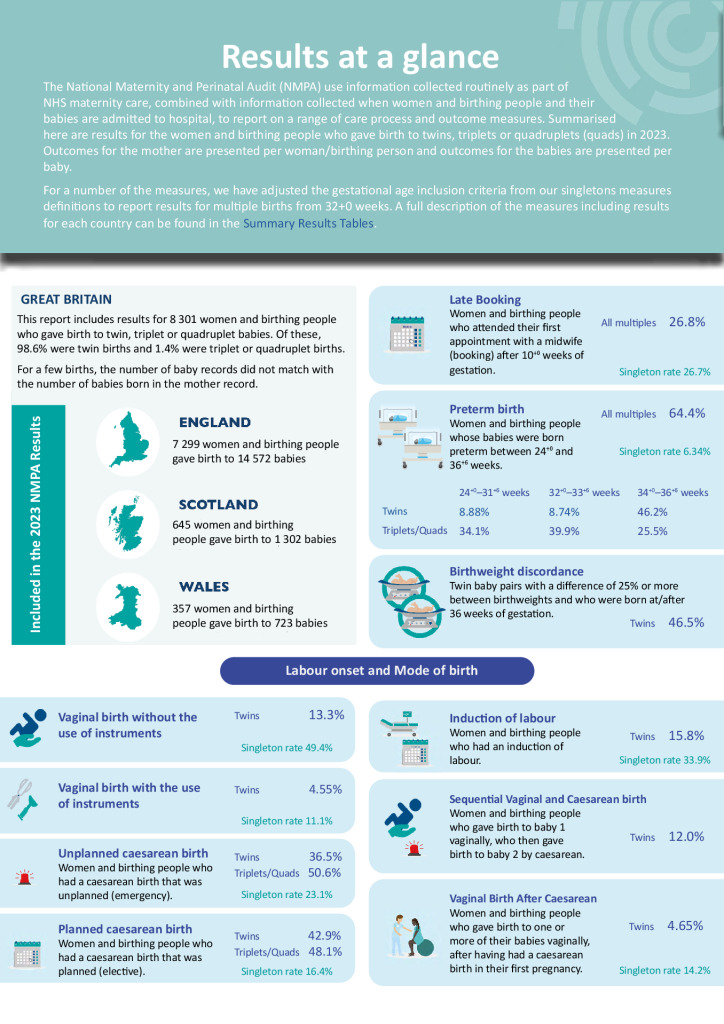


This report, from the National Maternity and Perinatal Audit (NMPA), is based on multiple births in NHS maternity services in England, Scotland and Wales during 2023. Of the 600,907 babies in the NMPA dataset for 2023, 2.76% of them were multiples. A total of 16,597 babies were born to 8,301 mothers. Of these, 98.5% were twin, 1.4% were triplet, and 0.1% were quadruplet pregnancies.
Of those who gave birth vaginally to baby one, 12% went on to give birth to other(s) by caesarean
It found that the mode of birth options differed, based on the number of babies, how many placentas and amniotic sacs there were, and if there were any complications. For example, the rates for vaginal modes of birth for twins differed from singleton rates. Vaginal birth without the use of instruments was 13.3% for twins, compared with 49.4% for singletons; while vaginal birth with the use of instruments was 4.55% for twins, compared with 11.1% for singletons.
Other key findings relate to caesarean birth rates, postpartum haemorrhage, and preterm birth. Of all babies born from multiple births, the majority (64.4%) were born preterm before 37 weeks of gestation, compared with 6.34% of singleton births. As such, the report contains a recomendation to check that maternity providers’ local policies, procedures and care planning for multiple births are aligned with relevant national guidance. Other recommendations are:
- NICE should review, and update where appropriate, current methods used in clinical practice for monitoring adequate fetal growth in multiple births, and the use of singleton estimated fetal weight centile charts
- NIHR should review existing and emerging evidence for estimated fetal weight charts customised for multiple births, plan research to assess optimal fetal growth in multiple births, and develop birthweight centile charts for multiple births babies
- Improve the recording of how many placentas there are (chorionicity) in maternity datasets
- Government health departments should ensure the digital maternity record standards are updated to include assisted conception as a mandatory item.
Read the full report: You can view the report by clicking the button below.
Stay up-to-date: For notifications of future reports from HQIP, sign up to our mailing list.